

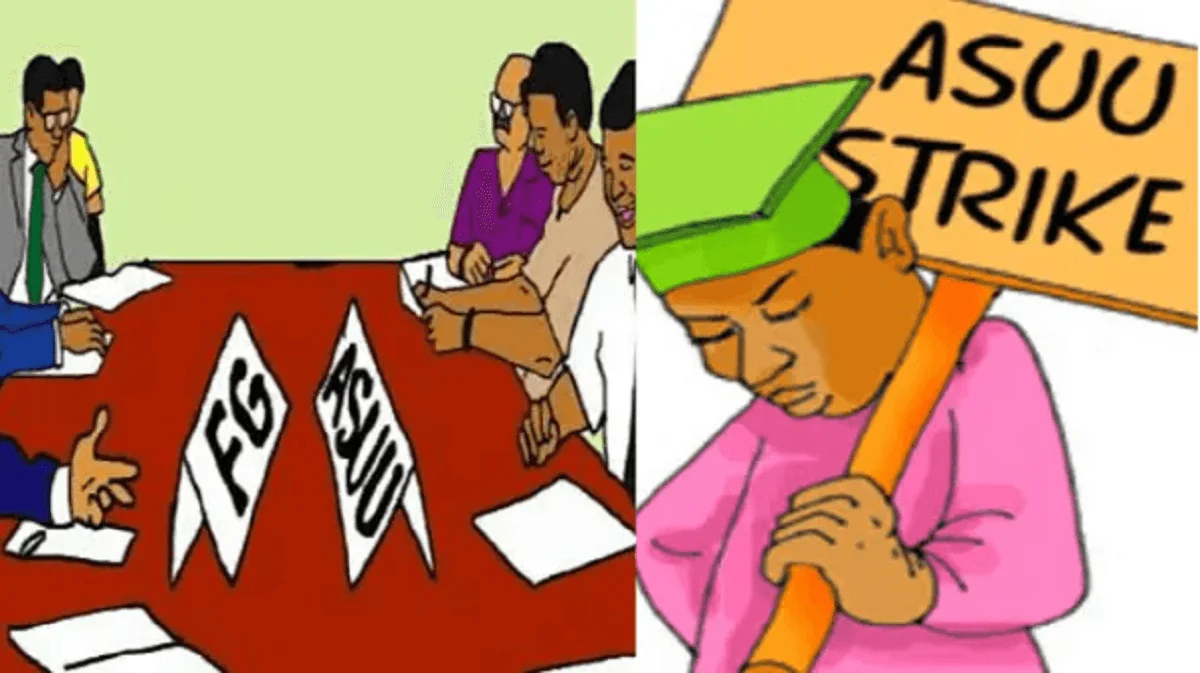
Once again, Nigeria’s education sector has been thrown into uncertainty as another strike action emerges from the university system. This time, the University of Lagos is already feeling the impact. The question echoing across the country remains simple yet deeply troubling: what kind of leadership is Nigeria truly running?
It is difficult to understand how authorities can approve salary increases for university lecturers and then expect universities themselves to bear the financial responsibility without providing the necessary funding. How can such a policy be announced without a clear financial framework for its implementation? This contradiction reflects the policy inconsistency that continues to cripple Nigeria’s higher education system.
Universities in Nigeria depend heavily on government allocations to sustain their operations. When new financial obligations are introduced without corresponding support, institutions are left struggling under unrealistic expectations. The outcome is almost always predictable: disputes with academic unions, protests, and ultimately strikes that shut down academic activities.
Sadly, the greatest victims of these recurring crises are the students. Their academic calendars are disrupted, their ambitions delayed, and their futures placed in prolonged uncertainty. Degrees that should ordinarily take four or five years to complete often stretch far longer because of repeated disruptions.
This cycle has become a national embarrassment. Every few years, Nigerian universities grind to a halt while government officials and union leaders exchange blame. Agreements are reached with public fanfare, only to be ignored months or years later. Promises are made, yet implementation remains painfully absent.
A country that toys with its education system is, in effect, gambling with its future. Universities are meant to be hubs of innovation, research, and intellectual development. Instead, Nigeria’s institutions of higher learning have become battlegrounds of unresolved disputes and administrative inconsistencies.
True leadership demands foresight, responsibility, and the courage to make decisions that strengthen institutions rather than weaken them. Unfortunately, what Nigerians continue to witness in the management of the education sector reflects the opposite.
If Nigeria genuinely seeks sustainable progress, then education must no longer be treated as an afterthought. Adequate funding, sincere engagement with stakeholders, and consistent policy implementation are not luxuries—they are necessities.
Until leaders begin to treat education as the foundation of national development, strikes like the one currently affecting UNILAG will continue to recur. And each time it happens, the damage goes far beyond the university walls—it affects the nation’s growth, productivity, and global competitiveness.
Nigeria deserves better. Its students deserve better. And the country’s future depends on leaders who understand that a nation that neglects education ultimately mortgages its destiny.
