

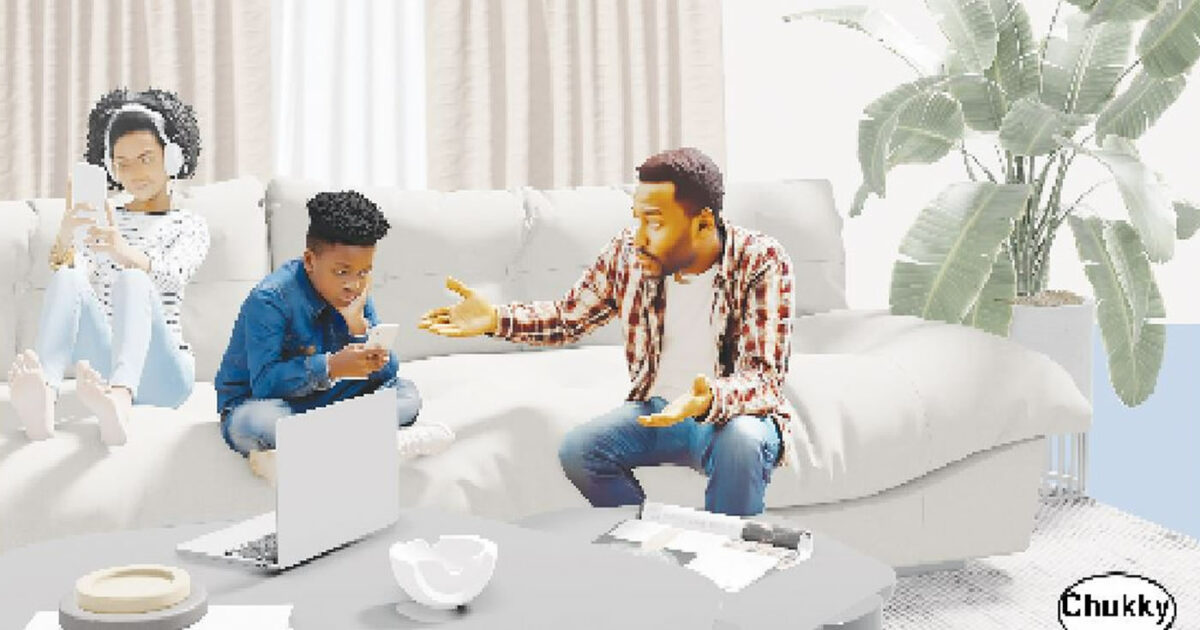

Safeguarding children online requires open conversations, digital education, and guidance on privacy, pornography, and safe Internet habits rather than relying solely on parental controls, JUSTICE OKAMGBA writes
Kids are no longer safe online, and that is a big problem that needs serious attention. In an era where they can now access the Internet from the palm of their hands, online safety has become a paramount concern for parents, educators and guardians.
While the internet opens doors to learning, creativity and social interaction, it also exposes children to risks such as pornography, violent content, cyberbullying, scams and online predators. Experts agree that protecting kids online requires more than just technological barriers. They said it requires active guidance, education and open communication.
A specialist in sexual assault prevention education, Valerie Bock, highlights how dramatically the landscape has changed over the years.
“I’m going to wade in here, with limited credentials, as I got to raise my kids in the days before small devices. Back then, all we had to do was keep one computer in a public area of the house, and all that took care of itself,” she said.
Bock stresses that today’s environment is far more complex. She points out the need for parents to talk openly with their children about sexuality, particularly pornography.
“Pornography is a form of entertainment which bears very little resemblance to actual sex between responsible adults who respect one another and care about each other’s feelings. Porn generally caters to fantasies about sex being for just one participant and being a magical situation where what pleases one person is automatically what the other craves.”
She emphasised that real-life sexual experiences involve mutual respect, contraception, disease prevention and frank discussions about pleasure for both parties. Parents, she adds, must also educate children on the dangers of sharing intimate images.
“Possession of images of underage children in a state of even partial undress, even by other underage children, constitutes felony child pornography in many jurisdictions. Teens should never solicit nude pictures of other teens, produce them, or share them. If they receive one from a friend, they should immediately delete it and send a text stating that they do not want such pictures,” Bock advised.
She also points out the risks of digital communication. “Important things that children wish to keep private are best not shared in any ‘media’ because other, possibly untrustworthy people are in the middle. Kids should know that transcripts of texting strings are kept by wireless companies and can be subpoenaed by law enforcement. Deleted messages are not actually destroyed; they are recoverable by trained IT professionals.”
A massage therapist, Melinda Sanchez, adds another layer to the conversation. She warns that a parent’s own attitudes towards sex can shape how children navigate online content.
“If you behave like a crazy stalker on Facebook, your kids will inappropriately view the private content of others. If you are repressed and weird about sex and sexual matters, your kids will be uncomfortable with sex education and dating, and they will definitely watch porn,” she explained.
Sanchez believes in raising children to be mature and tolerant. “As for toxic sites that have sexist, racist, or homophobic content, if you raise your kids to be tolerant and mature, they will find these sites boring and stupid.
“I have never used parental software that spies on or restricts children’s Internet usage. My son subscribes to ContraPoints on YouTube, and he shared the content with me because he thought I would find it interesting. My son is not at all interested in content that objectifies or degrades people,” she said.
She adds, “If you are open and sincere with your kids, they will be the same with you. Being sexually squeamish, repressed, and prudish is not a useful position from which to parent teens. Being open about sex and practising self-respect and self-control is a balancing act, but it’s worth getting right.”
An IT professional, Jeremiah Hendon, focused on practical digital safety. “What you aren’t teaching them by using parental control tools is what to watch out for and how to respond to it. Worse still, those tools may give you a false sense of security,” he said. Hendon shared his experience guiding his daughter through online gaming.
“My daughter spends most of her online time either playing Minecraft, downloading mods, or watching YouTube videos about mods. My primary concern is viruses; most mod sites are ad-based download portals, which are notoriously bad about misleading links and pop-ups. So, I taught her to research mods, identify trustworthy sites, and check compatibility. I also showed her how to install, uninstall, and manage her mods safely.
She’s now self-sufficient and has learnt computer skills that go far beyond Minecraft,” Hendon explained.
He also teaches privacy in online interactions. “When we started playing an MMO, the first lesson was don’t use your real name, age, or location. You are your character, and your identity stays private. By being involved, parents can tailor lessons to something their child cares about while spending quality time together.” Hendon still enforces rules, like keeping laptops in shared spaces when possible, which also helps with general supervision and safety.
A clerk, Marion Goriak, stresses the psychological aspect of exposure. Having learnt my lesson, I once watched a video of a man committing suicide and read American Psycho. I caution my children that ‘once you see something, you cannot unsee it.’
“When my oldest was 13, she asked to see R-rated movies. I told her, ‘I trust you to make good decisions, but torture porn and sexual violence aren’t healthy for you, so please avoid those.’ She’s well-rounded and mature, makes good choices, and doesn’t have nightmares. You can’t barricade the cesspool, but you can put warning signs on it,” she said.
