

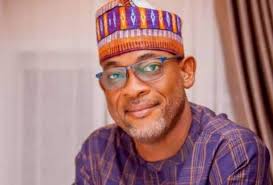

Without resorting to unnecessary hyperbole, Hon. Kolade Alabi David is a rare personality—a man whose presence is defined not by noise, but by nuance, not by spectacle, but by substance.
In the unfolding political conversation ahead of the 2027 election to represent Shomolu Federal Constituency in the Green Chamber, a compelling argument continues to gather momentum among the populace: The cap fits Alabi Kolade David.
David’s story is not the typical tale of a career politician groomed solely within the familiar corridors of local power. Rather, it is a narrative shaped and moulded by deep involvement in governance at both national and international levels.
He served as president of the Association of Local Governments of Nigeria for five years—the longest-serving president in the history of the association. Beyond Nigeria, he represented West Africa as an Executive Member of United Cities and Local Governments of Africa, served as vice chairman of the Commonwealth Local Government Forum, and was a steering committee member of Nigeria’s National Development Plan.
His deep understanding of politics, intellectual depth, and exposure across these platforms have equipped him with a refined sense of service, strategic thinking, economic diplomacy, and exceptional man-management skills.
On the global stage, David has consistently projected both Nigeria and grassroots governance with distinction. He participated in international engagements on adaptation to climate change in Rotherham, contributed to discussions on localising global gateways in Brussels in collaboration with the Committee of the Regions, and also took part in a session at the European Parliament. Notably, he represented UCLG-Africa at the United Nations, where he addressed global stakeholders on issues of local governance and development.
At the grassroots level, David’s bold and decisive interventions in bridging infrastructural gaps in Bariga LCDA during his tenure as chairman played a critical role in attracting even non-committed progressives into the growing APC family in Bariga, Shomolu, and beyond. His success in improving the economic fortunes of Bariga as one of the fastest-growing local economies in Lagos is noteworthy, as the area continues to experience rapid urbanisation.
Perhaps what makes his profile particularly compelling is his unparalleled and remarkable achievements during his tenure as Chairman of the Bariga Local Council Development Area. His firm grasp of grassroots politics is evident in his service as Executive Secretary, Vice Chairman, and two-term chairman of the LCDA.
His record of service was further affirmed by Governor Babajide Sanwo-Olu, who described his performance in office as sterling.
Shomolu Federal Constituency, like many others in Nigeria, stands at a crossroads. The demands of a youthful population, the urgency of economic diversification, and the pressing need for infrastructure and innovation have created a climate where conventional leadership approaches are being questioned.
David’s measured approach to issues affecting the people stands out. He is deliberate, composed, and strategic—traits honed through years of navigating complex terrains, particularly in communities as dynamic as Shomolu.
He is not easily drawn into unnecessary theatrics; instead, he builds consensus, nurtures alliances, and focuses on long-term impact. This uncommon attribute is precisely what is required to represent a constituency as diverse as Shomolu in addressing the multi-layered challenges of modern governance.
David’s ability to bridge divides—between generations, between traditional structures and modern aspirations, and between the rich and the poor—positions him uniquely within the current discourse. He builds on the past, refines it, and aligns it with the demands of a new era.
Under his stewardship, Bariga LCDA witnessed significant and unprecedented infrastructural and socio-economic advancements, further reinforcing his credentials as a results-driven leader.
For many observers, the symbolism of his aspiration extends beyond the individual. It represents a broader shift—a recalibration of what representation should look like in contemporary Nigeria: competence over charisma, vision over verbosity, and substance over style.
Beyond being a grassroots figure, Alabi David’s educational background sets him apart. His journey began at Agunbiade Primary School and St. Peter’s Primary School. He proceeded to Igbobi College, where he obtained his West African Senior School Certificate.
He later earned a degree in Law from Lagos State University, Ojo, and proceeded to the Nigerian Law School. Demonstrating an enduring commitment to knowledge, he further obtained two master’s degrees from the University of Lagos, with M.Phil. and PhD qualifications in view.
Of course, no political narrative in Shomolu is complete without acknowledging the complexity of its terrain. Yet, his track record and enduring legacy projects in Bariga LCDA testify to his readiness to serve on a broader platform.
He remains deeply connected to his roots. His developmental programmes reflect his commitment to the people. His impact on the youth is visible, with previously underserved areas transformed into centres for engagement and development.
Legacy projects executed during his tenure include over 80 paved roads, modern primary healthcare centres, well-equipped schools, the establishment of Bariga LCDA Fire Service with fire trucks, remodelled and equipped LCDA Secretariat and regular empowerment and welfare programmes.
With all eyes on the 2027 elections, the people of Shomolu Federal Constituency are united in their call for credible and effective representation. They seek a bridge-builder, a grassroots leader, and a man with proven capacity.
David is the man for whom the cap fits.
Olu Omotosho, a public affairs analyst, writes from Lagos
