

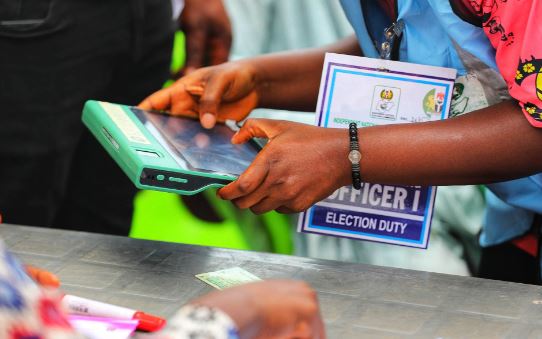

Elections are widely regarded as the lifeblood of any democratic system. In advanced democracies, robust institutional safeguards are designed to protect electoral processes from undue interference or manipulation. Allegations of Russian interference in the 2016 United States presidential election, for instance, became a defining political issue which underscores how seriously electoral credibility is treated. This reinforces a simple truth: electoral integrity is foundational to democratic legitimacy. In Nigeria, however, the persistent erosion of that integrity has produced one of the most pressing challenges to our democracy: voter apathy. The Republic reported that Nigeria has the 9th lowest voter count in the world. Yet a critical question remains: What lessons have we truly learned from past elections? Or are we simply trapped in a cycle of repetition? In the just-concluded area council elections in the Federal Capital Territory, it was widely reported that the voter turnout was extremely low. This piece interrogates what makes a ballot “Nigerian”, examining the historical and structural factors shaping our elections and exploring what must be done to restore trust in the electoral process.
Nigeria’s formal electoral history is often traced to 1922 with the introduction of the Clifford Constitution, the first to permit limited electoral participation but restricted to a small, property-owning class in Lagos and Calabar. However, democratic practices in Nigeria predate colonial rule. Pre-colonial societies developed indigenous governance systems grounded in participation and accountability. In the Oyo Empire, for instance, the Oyo Mesi played a decisive role in selecting the Alaafin. Among market women, leadership positions such as the Iyalode were determined through structured processes, with such leaders participating in broader political councils.
Similarly, in parts of South-Eastern Nigeria, age-grade systems enabled community-based representation, where leaders emerged through collective selection and were accountable to their constituents. While not without limitations, these systems were organic and contextually suited to their societies. British colonial rule disrupted these frameworks, replacing them with centralised structures often detached from local realities. Although early constitutions attempted to integrate traditional institutions, Nigeria eventually transitioned into Western-style parliamentary governance and later a presidential system in 1979, further distancing political practice from indigenous roots.
The 1962 Western Region elections marked a critical turning point in Nigeria’s electoral history. It was against the backdrop of widespread allegations of malpractice that the fragility of the country’s democratic institutions was highlighted. Although irregularities had been reported earlier, particularly in the 1959 federal elections. The aftermath of the 1962 elections proved especially consequential. Political tensions escalated into violent reprisals, culminating in what became known as Operation Wetie, where political opponents engaged in widespread arson and destruction of homes and people. This episode set a dangerous precedent. Electoral contests became existential struggles, often accompanied by violence, intimidation, and systemic manipulation. These patterns have persisted, shaping Nigeria’s electoral culture for decades.
The events of June 12, 1993, remain one of the most defining moments in Nigeria’s democratic history.
Following years of military rule, General Ibrahim Babangida initiated a transition programme to civilian governance. The presidential election that followed was widely regarded as free, fair, and credible, arguably the most credible in Nigeria’s history. Chief Moshood Abiola emerged as the presumed winner, enjoying broad national support that cut across ethnic and regional divides. For many Nigerians, the election symbolised unity and genuine democratic possibility. However, the annulment of the election fundamentally altered public perception of democracy. A moment of collective hope quickly turned into widespread disillusionment. Abiola’s subsequent declaration of himself as president led to his arrest and detention, culminating in his death in 1998. For many Nigerians, this sequence entrenched a deeply cynical view of elections not as instruments of change, but as performative exercises. This moment marked a psychological rupture. It planted the seeds of distrust that would later manifest as widespread voter apathy in the Fourth Republic.
One of the most significant recent developments in Nigerian democracy is the rise of youth political engagement, particularly during the 2023 elections. The emergence of Peter Obi as a presidential candidate catalysed a new political movement. Although not new to the political landscape, his candidacy resonated strongly with young Nigerians seeking an alternative to established political structures.
Notably, Obi’s earlier political trajectory, including his eventual recognition as Governor of Anambra State after a prolonged legal battle, had already contributed to electoral jurisprudence, particularly in shaping the concept of off-cycle elections. However, off-cycle elections across states such as Anambra, Osun, Ekiti, Ondo, and Bayelsa have had unintended consequences. They increase the frequency of elections, making sustained voter participation more demanding, especially given the logistical and economic burdens associated with voting in Nigeria.
Young Nigerians are particularly affected. The costs, time, resources, and effort required to obtain voter registration and participate consistently create structural barriers to engagement.
Despite these challenges, the 2023 elections saw a surge in first-time voters, many under the age of 30. This demographic shift disrupted traditional political calculations. Contrary to expectations, Obi secured over six million votes, significantly outperforming previous third-force candidates. Yet, this surge in participation was followed by familiar patterns, contested results, prolonged litigation, and eventual judicial affirmation of President Bola Ahmed Tinubu’s victory. This cycle reinforces a troubling dynamic: mobilisation followed by disillusionment. Voters engage, but outcomes often fail to align with their expectations, deepening scepticism.
Campaign activity for the 2027 elections has effectively been underway since the 2023 inauguration. Early mobilisation, coalition-building, and political realignments suggest a highly competitive cycle ahead. President Bola Ahmed Tinubu has consolidated political influence, particularly through alliances with key political actors and state governors. Meanwhile, Atiku Abubakar remains a central opposition figure, with indications of a broad coalition effort under emerging political platforms. The future of the Obidient Movement remains uncertain, particularly regarding party alignment and coalition dynamics. However, its impact on political consciousness—especially among young voters—cannot be understated.
Ultimately, elections in Nigeria are determined not by the majority of citizens, but by those who choose to participate. In 1993, Nigerians demonstrated what collective participation could achieve. In 2023, there were signs of a similar resurgence, particularly among young voters. However, democracy is not sustained by isolated moments of engagement; it requires consistency. Persistent participation, even in the face of setbacks, remains essential. Political figures such as Muhammadu Buhari and Atiku Abubakar exemplify endurance in the pursuit of political goals. While their trajectories differ, they underscore a key principle: persistence shapes outcomes. Voter apathy, while understandable, ultimately cedes power to a minority. The structure of democracy does not reward disengagement; it amplifies participation. Some will say that what Nigeria becomes will not be determined by chance, but by the choices of those who show up. However, what will INEC and government officials do to guarantee that the electoral process is worthwhile? Electoral violence and intimidation have become commonplace. Votes are bought in public glare, all of which undermines the entire process. Electoral officers refuse to upload results in real time or accept bribes to distort the process.
We need deliberate efforts in building a sustainable electoral system, one that becomes a true reflection of us as a people. This will go a long way toward addressing the apathy and disillusionment we currently face.
Kupoluyi, is a corporate commercial lawyer, writes from Lagos
