

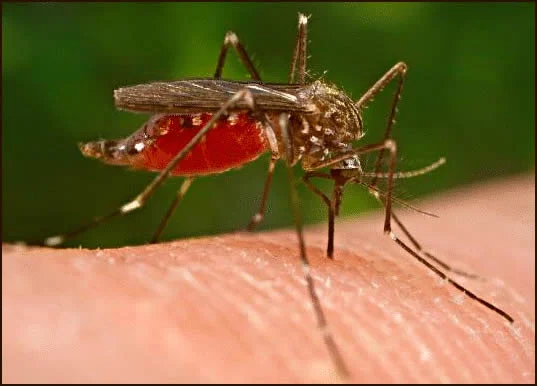
Recurring malaria infections are draining Nigerians’ finances and productivity, with households repeatedly spending on treatment as illness keeps them away from work. Despite being preventable, the disease still kills nine persons every hour, while misdiagnosis, self-medication, poor sanitation, and weak health systems continue to stall elimination efforts, JANET OGUNDEPO reports
For Chidinma Onyenucheya, a teacher in Ikotun, Lagos, malaria is not an occasional inconvenience. It is a relentless, recurring visitor that has shaped the rhythm of her life, drained her finances, disrupted her career and, at its worst, forced her to pack her bags and return to her parents’ home for care.
She falls ill with malaria at least five times a year, and each episode costs her close to N50,000 on drugs, tests and hospital treatment.
This means that in a year, Onyenucheya spends about N250,000, an amount more than three times the N70,000 monthly minimum wage, battling a disease that has been declared preventable.
Beyond the financial toll, the preventable and treatable disease, transmitted through the bites of infected female Anopheles mosquitoes, also disrupts her productivity at home and at work.
“Once I come down with malaria, it weakens me; I cannot do anything. Before I got married, my mother and siblings would do the chores I was supposed to do. It also affected me academically. Now that I am married, my husband does all the chores. But once the malaria is severe, I have to move to my parents’ house for proper care,” she told PUNCH Healthwise.
As a teacher, Onyenucheya said she has had to seek formal permission from her school’s management just to take time off to treat herself, a process that still does not guarantee full recovery.
“When I was schooling, I missed classes. Even now that I am working, I have to take permission from the school management so I can treat myself properly. Sometimes, despite the treatment, I still feel feverish and have body pains,” she said.
Although Onyenucheya initially visits a nearby pharmacy to purchase Artemisinin-based Combination Therapy whenever she notices symptoms, she turns to the hospital for proper testing, diagnosis and treatment when self-medication fails.
“The hospital is the last resort because drugs from the pharmacy don’t always work. I end up going there for complete treatment,” she said.
Meanwhile, the area where Onyenucheya lives is a major source of her constant exposure to mosquitoes.
However, adopting preventive measures such as sleeping under Long-Lasting Insecticide-Treated Nets and using mosquito repellents has not been feasible for her due to poor power supply and adverse reactions to the products.
“We know how dirty Lagos is. Residents do not dispose of their waste properly, and the drainages are not cleared, making mosquitoes breed there. At night, there is no light, and you have to open your windows for air. This is how mosquitoes enter the rooms. I do not use mosquito nets and repellents because I have difficulty breathing in them. I also experience nosebleeds. So I cannot risk it,” the Ikotun resident said.
She reserved particular frustration for waste management operators and government at all levels, arguing that the persistence of malaria in a city like Lagos is less a medical failure than that of governance.
“The government needs to ensure the environment is clean. The PSP operators are not helping because they continue to dispose of waste improperly. You see their dirty trucks, which they do not clean, parked in residential areas, and this is very bad because of the horrible smell,” she said.
The teacher believes a clean environment is key to reducing mosquito breeding. Onyenucheya urged the government to “emulate what is done in other African countries. In South Africa, you cannot find the roads dirty. Residents also need to imbibe the habit of cleanliness. Unhealthy habits will come back to haunt us.”
Mosquito bites, malaria strikes
For Mariam Durojaye, an entrepreneur in Ogba, the burden is even heavier, with malaria occurring several times a year.
“Around five times or more in a year,” she said, adding that each episode costs her about N30,000.
The repeated illness affects both her strength and ability to work.
“It makes me feel very weak and restless, which affects my ability to work and carry out daily activities effectively,” she lamented.
Durojaye disclosed that she has missed work and school for up to two weeks due to malaria, sometimes requiring hospitalisation.

“I’ve had repeated malaria and sometimes felt like the treatment didn’t fully work. I usually go back to the hospital to get further treatment,” she added.
Like Onyenucheya, she linked the persistence of malaria to environmental factors.
“Malaria is still common because of poor environmental sanitation, stagnant water and a lack of proper mosquito control measures,” she said, advocating improved drainage, regular cleaning and preventive practices.
No work when malaria hits
When malaria strikes, Mariam Adegbite’s sewing machine goes silent.
For the Surulere-based fashion designer, the illness does not just bring fever and body pain; it brings her work to a halt.
“I usually have malaria once or twice a year, and I spend around N25,000 to N30,000 each time on tests and drugs at the hospital,” she told PUNCH Healthwise.
“Malaria affects my productivity a lot. I feel weak, have body pains and headaches, and I won’t be able to stand or sit for long. It slows down my business and daily activities.”
For at least a week each time, Adegbite is unable to work, leaving orders pending and income disrupted. Sometimes, even after treatment, recovery drags.
“I have had cases of repeated malaria and felt unwell even after treatment. I just give my body time to rest before going back to work,” she added.
Adegbite blamed poor drainage and sanitation in her area for constant exposure to mosquitoes, calling for regular environmental sanitation and fumigation.
Nine deaths every hour
Malaria, according to the World Health Organisation, is a life-threatening but preventable and curable disease caused by Plasmodium parasites, transmitted through the bites of infected female Anopheles mosquitoes.
Symptoms include high fever, chills and flu-like illness. Prevention involves avoiding mosquito bites by sleeping under long-lasting insecticide-treated nets, applying repellents and maintaining a clean environment to eliminate breeding sites. Treatment is primarily through Artemisinin-based Combination Therapy.
Africa, especially Sub-Saharan Africa, bears a high burden of the global malaria epidemic due to climatic and environmental conditions that favour mosquito breeding, resulting in year-round transmission.
Other factors include weak health infrastructure, limited access to treatment and insecticide resistance.
The region accounts for 95 per cent of the global 265 million malaria cases and 95 per cent of malaria-related deaths in 2024.
Nigeria alone accounts for 27 per cent of global malaria cases and 31 per cent of deaths, according to the World Malaria Report 2024 by the WHO.
A report by the Society for Family Health further revealed that malaria kills nine Nigerians every hour and accounts for 30 per cent of child deaths and 11 per cent of maternal deaths annually.
It also noted that the disease is responsible for about 110 million clinically diagnosed cases each year.
The WHO aims to reduce malaria incidence and mortality rates by at least 90 per cent by 2030, eliminate the disease in more than 35 countries, and prevent its resurgence.
However, malariologists told PUNCH Healthwise that Nigeria may not meet the 2030 target.
$1bn spent annually
The Severe Malaria Observatory reports that Nigeria receives funding for malaria control from the Global Fund, the US President’s Malaria Initiative and other partners.
It added that the Federal Government secured credits from three multilateral banks: the World Bank, African Development Bank and Islamic Development Bank, totalling $364m to fund health sector interventions in 13 states between 2020 and 2024.
Despite these interventions, malaria still kills nine Nigerians every hour, with households spending an estimated N1.7tn annually on treatment.
$1.1bn GDP lost annually
The cost of treatment, lost productivity, and reduced economic output remains significant.
In 2024, the Coordinating Minister of Health and Social Welfare, Muhammad Pate, described malaria as a pressing economic and developmental emergency.
He said the disease costs Nigeria over $1.1bn in annual losses to its Gross Domestic Product.
This figure, alongside healthcare costs and lost productivity estimated at $1.6bn, could rise to $2.8bn by 2030 if current trends persist.
According to Gavi, the Vaccine Alliance, achieving the WHO target of a 90 per cent reduction in malaria by 2030 would avert 600,000 deaths and boost Africa’s GDP by $126.9bn, or about $16bn annually.
It added that Nigeria’s economy could gain $35bn, while international trade could increase by $80.7bn within the same period.
“Nigeria’s economy would see a boost of $35bn if malaria targets were met,” a 2024 report by Oxford Economics Africa and Malaria No More UK noted.
Three out of 10 staff affected
To assess productivity losses, PUNCH Healthwise spoke with human resources managers.
A HR professional, Stephen Bello, said it is common to have at least one staff member down with malaria at any given time, often requiring three to five days off to recover.

He noted that recurring illness disrupts workflow, especially in small and medium-sized organisations where limited staff strength means others must take on additional responsibilities, leading to slower output.
Bello added that while companies may struggle to quantify exact financial losses, the impact is evident in delayed projects and reduced revenue when workers are absent.
Another HR professional, Aderonke Agunbiade, said malaria remains a recurring challenge, affecting attendance and workplace efficiency.
Drawing from her experience managing about 40 staff, she noted that cases are frequent, with several employees falling ill monthly.
“On average, out of about 40 staff, at least three in 10 may have malaria in a month. For some, it is once; for others, it happens more frequently. I even have a colleague who treats malaria almost every other month. Some still come to work despite the pain, while others self-medicate,” she said.
Agunbiade added that urban work conditions, including long commutes and stress, increase vulnerability to illness.

“You don’t always realise the exposure. Leaving home early, spending hours in traffic and returning late takes a toll. That routine can trigger illnesses, including malaria,” she said.
Agunbiade noted that workplace culture also contributes, as excessive workloads without adequate rest weaken the body and compromise the immune system.
“Malaria affects productivity because when staff are sick, they may be absent, weak or unable to give their best. Tasks slow down, others come under pressure, and deadlines may be missed. Over time, this reduces output and increases costs,” she said.
Why malaria persists
World Malaria Day is commemorated annually on April 25 to raise awareness, mobilise resources and strengthen efforts to combat the disease.
Speaking with PUNCH Healthwise, the Director, Centre for Malaria Research and Phytomedicine, University of Port Harcourt, Dr Hamilton Opurum, said Nigeria remains far from eliminating malaria despite some progress.

“The message is clear but uncomfortable. Progress has been made, yet Nigeria is not close to ending malaria. Despite the optimistic global theme, the country remains the epicentre of the disease,” he said.
Purum noted that Nigeria accounts for about a quarter of global cases and nearly a third of deaths.
“This is an alarming share that keeps millions at risk each year,” he added.
Opurum acknowledged that some areas, particularly cities like Lagos, are making progress due to improved use of treated nets, better testing and new tools such as the R21 malaria vaccine.
However, he stressed that progress remains uneven, adding, “These gains are not uniform. Rural communities still face intense transmission, making Nigeria a story of pockets of progress rather than nationwide success.”
On the economic burden, he added that repeated infections continue to strain households and weaken productivity.
“For many Nigerians, malaria is an economic burden. People spend thousands of naira several times a year on treatment. Repeated illness drains household income and reduces productivity,” he said.
Malaria leading cause of hospital visits
Reacting to claims that malaria accounts for 70 per cent of hospital visits, the expert said the figure is likely exaggerated, although the disease remains a leading cause of illness.
Speaking on this year’s theme, Driven to End Malaria: Now We Can. Now We Must, Opurum said, Nigeria must move beyond isolated successes and scale up interventions nationwide.
“The bottom line is that Nigeria is not yet in the ‘end malaria’ phase. The priority now is simple: scale up control, strengthen health systems, and turn scattered progress into national momentum,” he said.
50% of those treating malaria don’t have it
A Professor of Biochemical Pharmacology at the College of Medicine, University of Ibadan, Oyo State, Olusegun Ademowo, has said many Nigerians who frequently treat malaria may not actually be suffering from the disease, warning that misdiagnosis and self-medication are fuelling unnecessary treatment and costs.

The don noted that while malaria remains endemic in Nigeria, not every fever or illness should be attributed to it, stressing the need for proper diagnosis before treatment.
According to him, repeated malaria treatment could be driven by a mix of misdiagnosis, weak immunity, exposure to infected mosquitoes, and the use of substandard or inappropriate medications.
He added that although stress may contribute to frequent illness by weakening the immune system, it cannot directly cause malaria without exposure to the parasite.
Ademowo, who is also a researcher on malaria pathogenesis and molecular resistance, said World Malaria Day serves as a reminder of the persistent burden of the disease and the need for sustained efforts toward its elimination.
“Well, as you know, World Malaria Day is an annual event, and it helps us reflect on how to control malaria. Malaria is always with us, and sometimes we call malaria our friend and also our foe. But nobody wants to have any form of disease that will slow them down. That is why we are always willing to eliminate malaria in our environment,” he said.
The don noted that eliminating malaria remains challenging, particularly in tropical regions such as sub-Saharan Africa, where environmental conditions favour transmission.
“But unfortunately, those of us in tropical regions, especially in sub-Saharan Africa, face significant challenges. It is not completely impossible to eliminate malaria, but it is difficult. Every year we continue to reflect on that, and maybe someday we will get there,” he added.
Ademowo explained that a major issue contributing to frequent malaria treatment is the misconception that all fevers are malaria.
“People say they have malaria all the time when they have all kinds of fever and symptoms that overlap with malaria. However, malaria is a disease caused by the presence of Plasmodium. If there is no Plasmodium, it is not malaria. Not all fevers are malaria, but because of our environment, where malaria is common, everything is attributed to it,” he said.
The don added that evidence shows that a large proportion of those who repeatedly treat malaria may be suffering from other illnesses.
“For many people who say they treat malaria all the time, more than 50 per cent of them do not actually have malaria. They may have other infections—viral, bacterial, or even parasitic infections such as worm infestations. That is why it is important to always confirm that you truly have malaria before taking treatment,” he stated.
Ademowo, who is the Head of the Drug and Genetic Research Unit at the Institute of Advanced Medical Research and Training, said that while rapid diagnostic tests are widely used, they are not entirely accurate.
“The test most people do now is the rapid diagnostic test, but it is not 100 per cent sensitive or specific. It gives a good idea, but it is not the gold standard. The gold standard remains microscopy. Even microscopy has limitations because there is what we call sub-microscopic malaria, which can only be detected by molecular methods like PCR, but those are mainly used for research,” he explained.
The don also warned against the use of substandard drugs and incorrect dosages, noting that such practices could lead to persistent symptoms and perceived treatment failure.
He said, “Sometimes people take drugs that are not properly formulated or are in suboptimal doses. The active ingredient may be far less than what is required, so the treatment will not be effective, even though the person believes they have taken the right medication.”
On concerns about resistance to antimalarial drugs, he noted that while standard treatments remain largely effective, vigilance is required.
“We know that the standard treatment now is artemisinin-based combination therapy. There are concerns about possible treatment failure in some cases, but we are cautious about declaring resistance at this stage. What we see may be due to other factors. If treatment fails and malaria is confirmed, patients can switch to another recommended combination,” he added.
The professor further explained the role of stress in malaria occurrence, noting that while it does not directly cause the disease, it can increase susceptibility.
“What stress does is that it reduces immunity. It leads to depletion of antioxidants and increases inflammation, which weakens the body’s defence. So, to that extent, stress can be a factor because when immunity is compromised, infections can set in more easily. But no matter how stressed you are, you must be exposed to the parasite for malaria to occur,” he said.
Speaking on the economic burden of repeated malaria treatment, Ademowo noted that frequent illness could significantly reduce productivity and income.
“Any form of sickness will reduce an individual’s productivity. It slows down activities and affects every aspect of life. That is why prevention is very important,” he said.
Eliminate contact with mosquitoes
Ademowo emphasised the need to break the cycle of transmission by reducing contact between humans and mosquitoes.
“Malaria does not have legs or wings. It is the mosquito that carries it. So, we need to reduce or eliminate contact between mosquitoes and humans. That is key to preventing malaria,” he said.
Ademowo also stressed the importance of proper diagnosis and rational drug use.
“If you have taken antimalarial drugs and you are not getting better, go for proper testing to know exactly what is wrong. You should not keep treating malaria when the illness may be bacterial, viral, or even stress-related. There must be rational use of drugs,” he said.
On out-of-pocket spending, the don advocated wider adoption of health insurance to reduce financial strain on patients.
“People should have health insurance. If they are insured, they will not have to spend money from their pockets on tests and treatment. It helps individuals and society at large,” he said.
The professor urged Nigerians to prioritise their health despite busy schedules.
“People must create time for their health just as they create time for work and other activities. We live in a fast-paced society, but health must not be neglected. They should visit health centres, get tested, and take medications appropriately,” he added.
Poor sanitation fuels malaria
A family physician with a special interest in primary care paediatrics and public health, Dr Rotimi Adesanya, said malaria remains largely driven by environmental conditions and poor health-seeking behaviour, stressing that the disease pattern has not significantly changed over time.

According to him, “There has been a lot of research and evidence-based studies over the years, but the causes of malaria have not really changed. What has improved is in the area of diagnosis and treatment. Statistically, Nigeria is not necessarily experiencing a sharp rise in malaria prevalence, but what people observe in their immediate environment may give that impression.”
He explained that persistent environmental risk factors such as open drains, stagnant water, and poor waste disposal continue to sustain mosquito breeding, leading to ongoing transmission.
“We are not yet where we should be in terms of environmental control. You see open drainages, stagnant water, grasses, and refuse everywhere. These are breeding grounds for mosquitoes. Until we address these environmental issues, we will continue to see new malaria cases daily,” Adesanya said.
The physician emphasised that malaria is still caused by the female Anopheles mosquito, noting that prevention must begin with eliminating breeding sites.
“The causes have not changed. Mosquitoes still breed in stagnant water, which is everywhere around us. If we remove these breeding sites, we reduce transmission significantly,” he added.
On diagnosis, Adesanya also warned against the widespread practice of presumptive treatment without testing, noting that many illnesses share similar symptoms with malaria.
“Many people treat malaria without testing. Fever, headache, weakness, joint pain, and loss of appetite can be caused by several illnesses, including viral infections. But in our environment, everything is labelled malaria. This is why the World Health Organisation recommends testing before treatment,” he said.
Adesanya noted that failure to confirm diagnosis contributes to drug misuse and resistance, drawing parallels with the decline of chloroquine efficacy.
“Drug abuse is a major issue. People who do not even have malaria are taking antimalarial drugs. That is how resistance develops. We saw this happen with chloroquine. Although ACTs are still effective, we do not want to get to that stage again,” he cautioned.
Adesanya added that improved training for laboratory scientists and healthcare workers is necessary to ensure accurate diagnosis, particularly with microscopy, which remains the gold standard.
“There is a need for continuous training. Some laboratory personnel may misinterpret what they see under the microscope. Refresher courses will improve accuracy and help ensure proper diagnosis,” he said.
Adesanya also highlighted gaps in malaria prevention efforts, including the misuse of insecticide-treated nets meant for vulnerable populations.
“Mosquito nets are supposed to be distributed free to pregnant women and children under five, but you still find them being sold in markets. That defeats the purpose,” he noted.
The physician acknowledged progress with the introduction of malaria vaccines, particularly for young children, but said broader systemic issues still limit impact.
On the economic burden, he said malaria remains costly for individuals, especially those paying out of pocket.
“At the primary care level, treatment may cost between N4,000 and N5,000, but in urban hospitals, you could spend N20,000 to N30,000 when you include consultation, tests, and drugs,” he added, noting that beyond financial costs, malaria significantly affects productivity and livelihoods.
“The burden is not just financial. People miss work and school. Daily wage earners lose income completely when they fall sick. You cannot even quantify the loss in productivity and human resources,” Adesanya explained.
He further warned against routine or unnecessary use of antimalarial drugs, noting potential health risks beyond resistance.
“Frequent use of these drugs can damage the liver. The liver is responsible for detoxification, and excessive drug use can lead to liver failure. That is why people should not self-medicate,” the physician said.
He called for stricter regulation of drug sales and encouraged testing before treatment, even at community pharmacies.
“In some countries, you cannot just walk into a pharmacy and buy antimalarial drugs. Here, it is easy. Pharmacies should conduct rapid tests before dispensing these drugs to ensure appropriate use,” Adesanya advised.
Copyright PUNCH
All rights reserved. This material, and other digital content on this website, may not be reproduced, published, broadcast, rewritten or redistributed in whole or in part without prior express written permission from PUNCH.
