

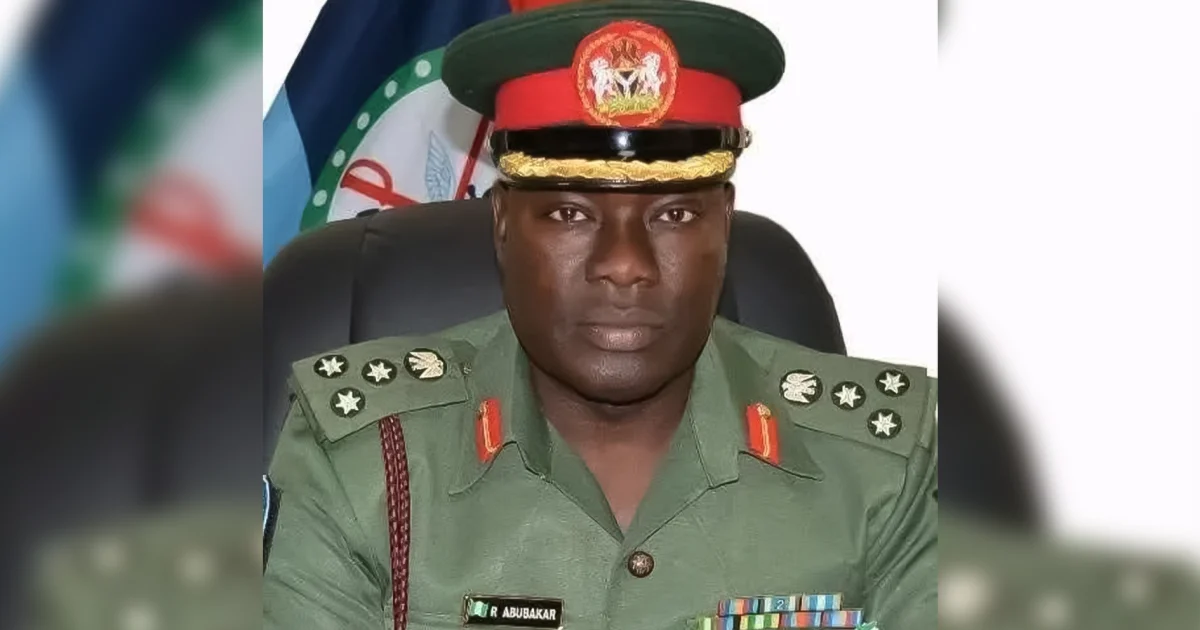

The death of retired Major General Rabe Abubakar in kidnappers’ custody should trouble the conscience of the nation.
Nigeria has, regrettably, become accustomed to tragic headlines. Reports of terrorist attacks on communities, banditry on highways, farmers abandoning their farmlands, and families paying ransoms for abducted relatives have become distressingly routine. Yet every so often, a particular incident forces society to confront uncomfortable truths about the depth of the country’s security crisis. The death of Abubakar is one such moment.
Abubakar was not an ordinary citizen. He was a retired senior officer of the Nigerian Army and a former Director of Defence Information. He belonged to a generation entrusted with safeguarding the country’s sovereignty and national security, and he spent a substantial part of his life in service to that duty.
Yet, while travelling with his wife in Katsina State, he reportedly fell into the hands of kidnappers. Days later, news emerged that he had died in captivity.
Expectedly, the nation mourned. Tributes flowed from government officials, colleagues, and citizens. Condolence messages acknowledged his years of service and sacrifice. But beyond the grief lies a question that Nigerians can no longer ignore: if a retired general can be abducted on a Nigerian road and die in the custody of criminals, what confidence should ordinary citizens have in the state’s ability to protect them?
This question should not be misconstrued as an indictment of the military institution. The Nigerian Armed Forces continue to demonstrate extraordinary courage in the face of daunting challenges. Thousands of military personnel have paid the ultimate price in defence of the nation, while many others serve under harsh conditions, far from their families, and exposed daily to grave danger.
The issue, therefore, is not one of bravery.
Rather, it is whether the structures responsible for national security are sufficiently equipped, effectively coordinated, and strategically positioned to respond to an evolving and increasingly complex threat environment.
The tragedy involving Abubakar did not occur in isolation. Over the years, Nigeria has witnessed the loss of distinguished military officers in the fight against insurgency. Lieutenant Colonel Muhammad Abu Ali, celebrated for his gallantry against Boko Haram, died in battle in 2016. Lieutenant Colonel Ibrahim Sakaba lost his life during terrorist attacks in Borno State. Colonel Dahiru Bako was killed during operations against insurgents. Brigadier General Dzarma Zirkusu fell while leading reinforcement efforts in the North-East. More recently, Brigadier Generals Musa Uba and Oseni Braimah joined the growing list of senior officers who died in the line of duty.
The repeated loss of experienced commanders is deeply troubling. Beyond the personal tragedies, these deaths represent institutional losses. Years of training, operational experience, leadership capacity, and strategic insight are extinguished with every fallen officer.
Even more concerning are repeated reports of attacks on military formations. Bases have been targeted, overrun, or temporarily occupied. Equipment has been destroyed, and personnel killed in assaults that reflect the growing sophistication of terrorist and bandit networks. These developments suggest not only persistence in the threat but also its adaptation.
For ordinary Nigerians, these realities carry profound implications.
The teacher travelling to a rural posting, the trader commuting between states, the student journeying to school, the cleric returning from religious duty, and the farmer working distant fields all rely, directly or indirectly, on the assumption that the Nigerian state possesses the capacity to guarantee a reasonable degree of safety.
When insecurity increasingly touches even those once entrusted with defending the nation, that assumption begins to weaken.
The consequence is not merely fear. It is the gradual erosion of public confidence in state institutions.
This should concern everyone.
No nation can thrive when citizens lose faith in the ability of public institutions to perform their most fundamental responsibility: the protection of lives and property. Economic activity suffers. Social cohesion weakens. Citizens retreat into survivalist instincts. Trust diminishes.
Yet acknowledging the gravity of the situation must not lead to fatalism.
Nigeria’s security challenges, though complex, are not insurmountable. However, confronting them requires honesty, innovation, and sustained political will. Intelligence gathering must improve. Inter-agency cooperation must deepen. Troop welfare must be prioritised. Defence spending must emphasise efficiency and accountability. Communities must be integrated into early warning systems. Technology must be deployed more strategically in addressing emerging threats.
Above all, national leadership must recognise that insecurity cannot be normalised.
The death of Abubakar should, therefore, represent more than another entry in the country’s growing list of tragedies. It should serve as a moment of reflection and a call for sober reassessment of Nigeria’s security architecture.
A nation owes a sacred obligation to those who dedicate their lives to its service. That obligation extends beyond ceremonial tributes delivered after tragedy. It includes creating conditions in which citizens—soldiers and civilians alike—can live without constant fear.
One army general lost to terrorism is one too many.
One retired general dying in kidnappers’ custody is one too many.
One soldier buried after defending the nation is one too many.
The challenge before Nigeria is not merely to mourn these losses, but to learn from them. The nation must ask whether enough is being done, whether existing strategies remain adequate, and whether the urgency demanded by the situation is reflected in official action.
Until convincing answers emerge, an unsettling question will persist in the minds of many Nigerians:
If the protectors themselves increasingly require protection, who protects the rest of us?
Ezeugonnwa, a Mass Communication scholar and political and current affairs analyst, writes via [email protected]
