

Nigeria’s public institutions exist to deliver education, healthcare, infrastructure, and essential services to millions of people. When talented young people consistently choose to build their careers elsewhere, those institutions lose something they cannot easily replace: fresh thinking, high expectations, and the energy of people who still believe things can be different.
I did not grow up planning to care about public service. My parents were public servants, and while I watched them show up for their careers with dedication, that path simply did not feel like mine. When I was thinking about my future, other options felt more exciting, more dynamic, more aligned with the kind of impact I wanted to make. I made my choice and moved on.
It was only much later in my career, working closely with public institutions through my role at the Aig-Imoukhuede Foundation, that I began to understand what I had not seen before. Public service is not a background feature of national development; it is the foundation of it. That realisation changed how I think, and it also made me wonder how many young Nigerians are where I once was, not indifferent to impact, but simply unable to see public service as a place where impact lives.
The data suggests quite a few. A 2021 study on public service perception by young and middle-aged Nigerians found that they view public service negatively, both in how it operates and what it offers. Final year undergraduates were the most pessimistic group of all. Ask a room of young Nigerian graduates where they want to build their careers, and you will hear entrepreneurship, tech, and the private sector. Public service rarely comes up. When it does, it is usually with a qualifier.
The Perception Gap

The reasons for this are not hard to find. Many young Nigerians have grown up around stories of bureaucracy, delays, and frustration. Those who have had direct experience with public institutions, through the National Youth Service Corps or simply as citizens trying to access services, do not always leave with their optimism intact. For a generation that moves fast and expects results, a system that appears to move slowly and reward patience over performance is not an easy sell.
But there is something important that this narrative misses. Institutions do not change only through sweeping, visible reform. Much of what actually moves them forward happens quietly, through incremental improvements made by people working steadily on the inside. The perception that nothing changes in public service is partly true, but it is also partly a story we tell ourselves because the changes that do happen are rarely the ones that make the news.
The challenge, then, is not only structural. It is also about belief.
The loudest stories about Nigeria’s public sector are stories of dysfunction. But they are not the whole story. Across public institutions, there are officials doing work that rarely attracts attention. Improving data systems, streamlining service delivery, reducing friction, and finding ways to make things work better within systems that were not always built for efficiency.
What We Lose When Talent Walks Away
Nigeria’s public institutions exist to deliver education, healthcare, infrastructure, and essential services to millions of people. When talented young people consistently choose to build their careers elsewhere, those institutions lose something they cannot easily replace: fresh thinking, high expectations, and the energy of people who still believe things can be different.
Over time, this creates a quiet but serious problem. Systems designed to serve a young, dynamic population end up shaped by fewer and fewer young voices. The gap between who builds public institutions and who those institutions are meant to serve keeps widening. And the consequences show up not in policy documents but in people’s daily lives, in how long they wait, how much they receive, and how much they trust the state to show up for them.
The Work Already Happening
The loudest stories about Nigeria’s public sector are stories of dysfunction. But they are not the whole story. Across public institutions, there are officials doing work that rarely attracts attention. Improving data systems, streamlining service delivery, reducing friction, and finding ways to make things work better within systems that were not always built for efficiency. These people exist, and their work is real. It simply does not travel as far as the stories of what is broken.
This matters because the narrative shapes the pipeline. If the only stories young people hear about public service are stories of stagnation, the most ambitious among them will continue to look elsewhere, and the institutions that need new energy will continue without it.
When young people turn away from public service, they are not turning away from impact. They are turning away from a system they believe is too difficult to change. The work of shifting that perception is not just a communications challenge. It is a governance challenge.
This is part of what drives our work at the Aig-Imoukhuede Foundation. We invest in strengthening public servants, building their skills, their confidence, and their capacity for systems-level thinking, so that government institutions can perform better and deliver more for citizens. It is not glamorous work in the way that launching a startup is, but over time, it is the kind of work that changes what public service looks and feels like from the inside. When institutions function better and produce results that people can actually see, they become more credible. They become spaces that ambitious, capable young people can imagine themselves in.
What Rebuilding Belief Actually Requires
If we want stronger public institutions in ten years, we need young people today who still believe those institutions are worth their talent. That means more than encouraging people to serve; it means showing them, with evidence and with stories, that public service is a place where committed people make real differences.
When young people turn away from public service, they are not turning away from impact. They are turning away from a system they believe is too difficult to change. The work of shifting that perception is not just a communications challenge. It is a governance challenge. It requires institutions that demonstrably improve, public servants whose contributions are visible, and a sustained effort to tell a fuller, more honest story about what public service in Nigeria actually looks like.
Institutions do not get better on their own. They get better when people decide they are worth staying in, worth improving, and worth fighting for from the inside. That decision starts with belief. And belief starts with the stories we choose to tell.
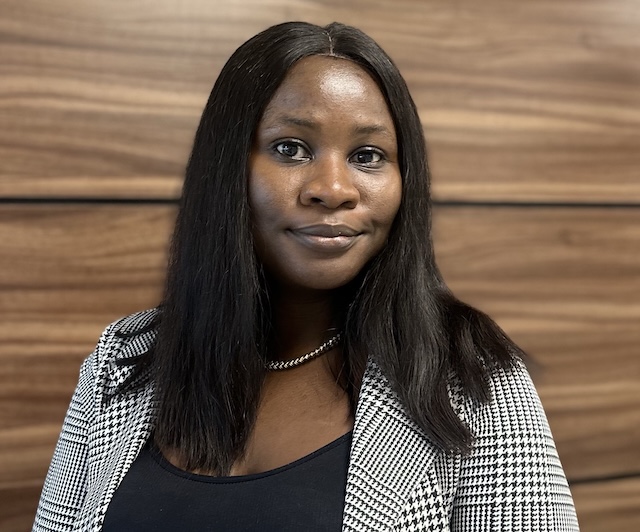
Chioma Bright-Uhara is the deputy director of communications, Aig-Imoukhuede Foundation.
