

There is something far more dangerous than a gun.
It is an idea.
An idea repeated so often that it begins to sound like the truth. An idea whispered in homes, shouted at political rallies, amplified on the radio, circulated on WhatsApp, rewarded on social media and eventually accepted by society.
The idea that some human beings are worth less than others.
Lately, I have watched with a heavy heart as Nigerians casually describe entire ethnic groups in language that should trouble every decent conscience. One comment in particular has refused to leave my mind. It declared that if one encountered a member of a certain tribe and a snake at the same time, the person should be killed before the snake.
Read that again.
Not because of anything that individual had done.
Not because of any crime committed.
Simply because of the tribe into which they were born.
If that does not frighten us, perhaps we have stopped paying attention to history.
Before Rwanda descended into genocide in 1994, hatred did not begin with machetes. It began with language. It began with labels. It began with the systematic dehumanisation of fellow citizens. Tutsis were repeatedly referred to as inyenzi—”cockroaches.” Once people cease to be seen as human beings, violence becomes easier to justify.
In one hundred horrifying days, more than 800,000 lives were lost.
History is not merely something we read.
It is something we ignore at our own peril.
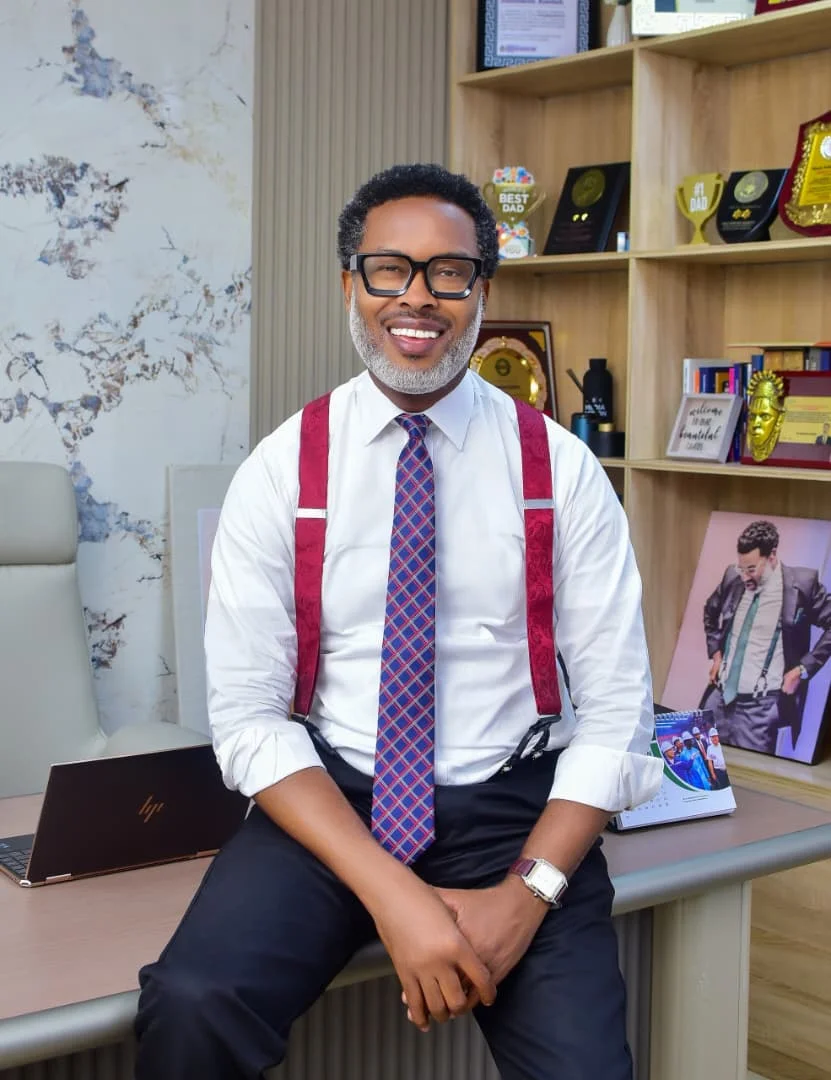
As a journalist, I have spent decades reporting on Nigeria. My work has taken me across communities, cultures and faiths. I have shared meals with strangers who became friends. I have been welcomed into homes by people who neither spoke my language nor worshipped the way I do. Some of the most generous people I have ever encountered came from places I had never visited before.
I have also experienced disappointment from people who looked like me, spoke my language, and shared my background.
That is why I reject, completely and without apology, the dangerous habit of judging millions of people by the actions of a few.
Character has no tribe.
Integrity has no religion.
Compassion has no ethnicity.
Neither does wickedness.
When we say an entire tribe is dishonest, violent or untrustworthy, we are not making an observation.
We are manufacturing prejudice.
The tragedy is that our politics often encourages this poison.
Too often, elections are fought not on ideas but on identity, not on competence but on ethnicity. Citizens are persuaded to vote out of fear rather than hope. After victory, some leaders surround themselves almost exclusively with people from familiar backgrounds, leaving others to feel excluded from the promise of equal citizenship.
Then, when another election approaches, they suddenly rediscover the language of unity.
Nigeria deserves better.
A governor is not elected to govern one town, one clan or one ethnic group. The oath of office does not recognise tribal boundaries. Every citizen deserves equal dignity, equal opportunity and equal protection.
The same principle applies in the National Assembly. While senators represent specific districts, the laws they debate shape the lives of over 200 million Nigerians. The national interest must always rise above ethnic loyalties.
This is why leadership that speaks to national concerns deserves acknowledgement. Senator Adams Oshiomhole, representing Edo North, has in recent times drawn attention for interventions on issues affecting Nigerians beyond his immediate constituency, including matters concerning citizens at home and in the diaspora. Whether one agrees with every position he takes or not, public service should consistently strive to place the wider national good above narrow interests.
That is the kind of leadership Nigeria should encourage.
I also speak today to my own profession.
The media must never become an accomplice to division.
Our responsibility is not merely to report events but to protect truth from manipulation. A microphone can educate, but it can also inflame. A headline can unite, but it can also divide. Every editor, producer, presenter, publisher and media owner must recognise that words carry consequences far beyond today’s news cycle.
We must never become another Rwanda because journalists abandoned ethics.
We must never become another Rwanda because politicians found hatred politically profitable.
We must never become another Rwanda because ordinary citizens chose silence.
As the 2027 elections draw nearer, we must ask ourselves a simple but profound question:
What kind of Nigeria do we want to leave behind?
One where children inherit suspicion before they learn to be friends?
One where surnames determine opportunity?
One where faith decides citizenship?
Or one where merit matters more than ancestry?
Nigeria’s diversity is not our greatest weakness.
It is our greatest strength—if only we have the wisdom to embrace it.
Our energies should be invested in building schools instead of stereotypes, hospitals instead of hostility, industries instead of insults, and institutions instead of intolerance. Every state capital should aspire to the highest standards of planning, infrastructure and public service. Nigerians deserve development, not division.
To every politician, I say this: stop feeding the fires you cannot control.
To every journalist, guard your credibility more jealously than your audience numbers.
To every religious leader, preach compassion louder than identity.
To every young Nigerian scrolling through social media tonight, refuse to inherit hatred from those who came before you.
Question it.
Reject it.
Rise above it.
No election is worth the blood of a single Nigerian.
No political ambition is greater than the survival of our Republic.
No tribe is our enemy.
Our true enemies are corruption, injustice, ignorance, poverty, intolerance and leadership that thrives on division.
One day, history will ask what we did when hatred knocked on Nigeria’s door.
May it never be said that we opened it.
May we choose dialogue over division.
Justice over prejudice.
Citizenship over ethnicity.
And Nigeria over everything else.
May God bless the Federal Republic of Nigeria.
