

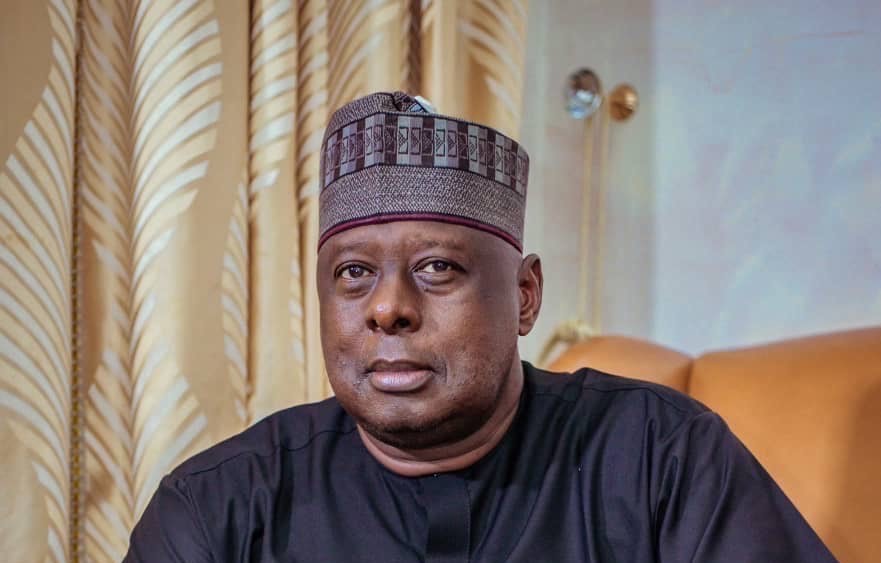
As Kaduna State moves steadily towards another governorship election, the African Democratic Congress (ADC)’s greatest challenge may not simply be to capitalise on the ruling APC’s declining popularity in some quarters. Rather it will be convincing voters that it possesses the internal cohesion, principled leadership and policy direction required to govern effectively. The choice of the party’s governorship candidate will therefore be decisive.
Regrettably, following the conduct of the party’s governorship primary election which initially produced Isa Ashiru Kudan as winner, the ADC has been plunged into an avoidable crisis that the party’s National Working Committee (NWC) appears either unwilling or too slow to resolve.
The NWC’s failure to address the controversy surrounding the authenticity of its governorship candidate despite the report of its National Appeal Panel which reportedly reviewed petitions submitted by aspirants, examined the evidence before it and declared Shuaibu Idris Mikati, as the party’s lawful gubernatorial candidate, has continued to generate concern among party faithfuls and many Kaduna State resident voters who see the ADC as a credible alternative ahead of the 2027 elections.
Many party supporters have described the situation as an attempt to impose a familiar candidate who has repeatedly fallen short at the polls. They argue that retaining Isa Muhammad Ashiru Kudan as the party’s flag bearer could undermine the ADC’s prospects of offering Kaduna State a genuine alternative to what they consider the underperformance of the APC-led administration. Such perceptions if left unaddressed do little to strengthen a party seeking to distinguish itself from both the ruling party and the established opposition.
Mr Ashiru’s candidature, many believe could prove politically costly for the ADC in 2027 for several reasons.
First, the political atmosphere in Kaduna State is increasingly shaped by the search for leadership that combines vision, competence and political dexterity. The state requires more than another familiar face. It needs a leader with fresh ideas, broad electoral appeal and the capacity to inspire confidence across its diverse ethnic, religious and regional communities.
Secondly, political parties aspiring to present themselves as credible alternatives must ensure that their leaders articulate a coherent vision while demonstrating genuine commitment to the organisation they seek to lead. Recent developments involving Mr Ashiru have however generated considerable debate within political circles.
A leaked audio recording allegedly attributed to him has raised questions among some party members regarding his commitment to the ADC, his disposition, and capability. In the recording he was reportedly heard speaking about the party in terms that some interpreted as suggesting it was merely a platform for achieving his governorship ambition rather than an institution founded on shared ideals and long-term political development.
If that interpretation is accurate it understandably raises concerns within the party. Political parties flourish when their leaders demonstrate loyalty to the organisation and confidence in its future. Aspirants perceived as treating a political party as merely a temporary vehicle for personal ambition may struggle to inspire confidence among grassroots supporters and stakeholders who have invested considerable time and resources in building the party.
The controversy has also extended to Mr Ashiru’s reported visit to former Kaduna State Governor Nasir El-Rufai, a prominent figure associated with the ADC’s emerging political coalition. While consultations among political leaders remain a legitimate feature of democratic politics, critics argue that publicly criticising the ADC while taking influential figures within its broader political ecosystem to the cleaners could send mixed signals to party members and prospective voters.
Indeed, the insensitive behaviour of Isa Ashiru Kudan to share photos taken with someone in government custody further dents his credentials and maturity. Was this action done intentionally to harm Nasiru Elrufai or just a damage control for political gains?
Thirdly, Mr Ashiru’s electoral record has become a recurring subject of discussion among party faithfuls and political observers.
Since 2014 he has repeatedly sought the governorship seat/position of Kaduna State without electoral success. He first contested the APC governorship primary but lost to Nasir El-Rufai at the primary election stage. He subsequently defected to the Peoples Democratic Party (PDP) where he secured the party’s governorship ticket on two successive occasions. Yet despite those opportunities victory at the polls has remained elusive.
Following each defeat, Mr Ashiru challenged the election results before the Election Petition Tribunal and pursued appeals to the Supreme Court. None of those legal challenges ultimately changed the declared outcomes.
Whether those outcomes are attributed to electoral dynamics, party structure, judicial decisions or other political factors, the reality remains that his governorship ambition has yet to materialise after several attempts. Many party members therefore question whether presenting the same candidate in 2027 would produce a different result.
In addition, questions have been raised in political circles regarding Mr Ashiru’s academic credentials including allegations reportedly made by fellow ADC aspirant Professor Muhammad Sani Bello, Mainan Zazzau, during their contest for the PDP governorship ticket in 2019. Mr Ashiru in turn threatened legal action against Prof Bello, if a retraction was not made. Till date neither Prof Sani Bello has retracted his allegation, nor Mr Ashiru gone anywhere near the courts to seek redress. Regardless of the veracity or otherwise of those claims the party would be prudent to consider any issue capable of becoming a distraction during what promises to be a highly competitive election.
Meanwhile as Kaduna inches closer to another election cycle there is little doubt that public dissatisfaction with the performance of the APC administration under Governor Uba Sani has become increasingly evident.
Across the state concerns over economic hardship, insecurity, infrastructure deficits and the rising cost of living have dominated public discourse. That growing discontent has created significant political opportunities for opposition parties particularly the ADC to attract voters seeking a credible alternative. However capitalising on that opportunity requires unity, discipline and candidates who genuinely embody the party’s ideals.
The ADC’s greatest challenge therefore is not merely to benefit from the APC’s declining popularity. Rather it is to convince Kaduna voters that it possesses the unity, principled leadership and policy direction necessary to govern effectively.
Supporters of Shuaibu Idris Mikati contend that he embodies these qualities and represents the party’s strongest chance of securing victory in 2027.

They describe him as a leader who approaches public service without ethnic or religious bias, an attribute many believe is indispensable for governing a state as diverse and politically sensitive as Kaduna.
Mr Mikati is also widely regarded by his supporters as intelligent, articulate, experienced technocrat, and forward-looking. They argue that he possesses the communication skills, intellectual capacity, global view of issues and innovative mindset required to confront Kaduna State’s complex developmental challenges while building consensus across different communities.
At a time when voters increasingly demand practical solutions rather than routine political promises, these qualities deserve serious consideration.
If the ADC presents a candidate who reflects those values while offering practical solutions to Kaduna state’s pressing challenges, it could emerge as a formidable political force in 2027. If however internal divisions and lingering questions over legitimacy continue to dominate public discourse, the opportunity created by growing public dissatisfaction may ultimately benefit rival political parties rather than the ADC itself.
The time has therefore come for the party to turn the page. Kaduna deserves a candidate who represents renewal rather than another chapter in a familiar political journey. Many supporters believe Shuaibu Mikati offers that opportunity.
Ultimately elections are about choices. The ADC must decide whether to proceed with a candidate whose governorship ambition has repeatedly failed to secure electoral success or embrace a fresh face capable of expanding the party’s appeal and offering Kaduna citizens a compelling alternative. One may want to argue that late President Muhammadu Buhari did try several times before he succeeded but President Buhari never had the type of mindset Isa Ashiru Kudan appears to have as evidenced by the leaked audios recently released and purported to have come from him.
In politics there comes a moment when experience must give way to renewal, when noise must give way to action/results. In my view that moment has arrived for the ADC in Kaduna State. If the party truly seeks to maximise its chances in 2027, its National Working Committee should respect the findings of its own internal appeal mechanism regarding the governorship primary election. To do otherwise would risk deepening internal divisions and diminishing the party’s prospects at a time when many Kaduna residents voters appear ready to embrace genuine political change. Indeed, should Mr Mikati head to court, a repeat of what happened in Zamfara State may be on the way. A stitch in time saves many!
*Jacob Ibrahim Ochocho wrote from Chikun Local Government Area, Kaduna State.
