Kenya’s startup boom has produced celebrated founders, billion-shilling valuations, and hundreds of millions of dollars in venture capital. It has also produced some spectacular failures.
Over the past five years, startups across logistics, e-commerce, agriculture, fintech, food delivery, clean energy, AI, and auto manufacturing have shut down, entered administration, or abandoned their core businesses.
The 10 companies on this list raised more than $500 million combined. Copia raised $123 million, Gro Intelligence more than $117 million, and KOKO Networks over $100 million. Others, including Sendy, MarketForce, and Lipa Later, raised tens of millions before running into trouble.
But what happens to founders after their startups collapse?
TechCabal traced the founders of 10 Kenyan startups that collapsed in the past five years, using public records including regulatory and corporate filings, social media posts, LinkedIn profiles, and speaker engagements. Some have started new companies. Others have become investors, moved into real estate, or returned to old businesses.
A few have largely disappeared from public view. Here is where they are now.
Sendy
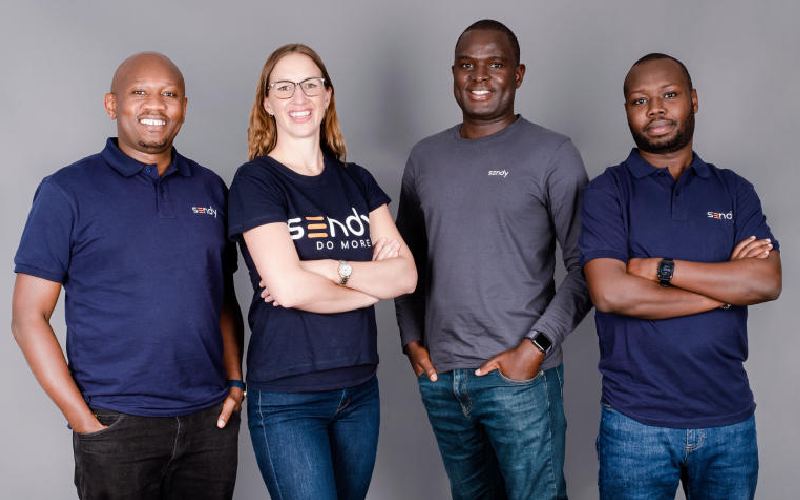
Sendy looked like it might become one of Kenya’s great startup success stories.
Founded in 2015 by Mesh Alloys, Evanson Biwott, Don Okoth, and Malaika Judd, the company began by connecting businesses needing deliveries with motorcycle riders and drivers. It later grew into a much bigger logistics operation, expanding beyond Kenya and moving into fulfillment and e-commerce.
Investors bought into the ambition. Sendy raised at least $26.5 million in disclosed investor funding, including from Toyota Tsusho, Atlantica Ventures, Enza Capital, and Sunu Capital. At one point, it was valued at more than $80 million.
By 2023, things had become desperate. Sendy tried raising money at a lower valuation, but a key investor pulled out. In August that year, it announced it was shutting down and seeking buyers for its assets.
So, what happened to the four people who started it?
Mesh Alloys
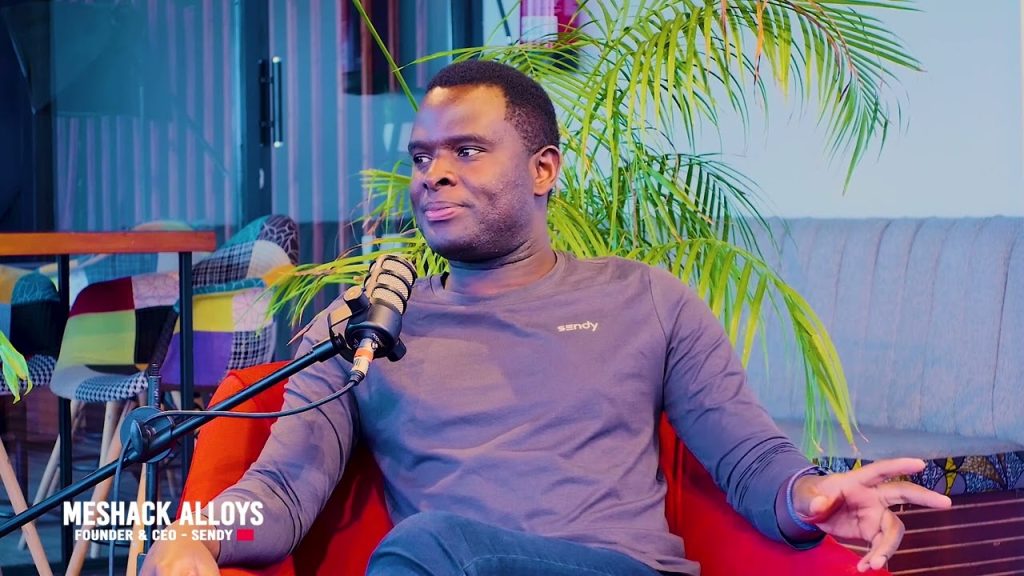
Alloys was Sendy’s most visible founder and its CEO through its rise and eventual collapse.
After Sendy, Alloys became involved with Boya—the Kenyan expense-management startup he founded in 2021 while still at Sendy—as the chairman. He also works at Enza Capital, a venture capital firm, as an entrepreneur-in-residence.
In December 2024, he founded tabb, a startup that allows banks to give businesses revolving credit lines that can be used instantly across a network of suppliers. The startup does not lend the money itself. It connects banks, suppliers, and businesses, allowing suppliers to be paid immediately while buyers get longer to settle their purchases.
Evanson Biwott

Biwott was Sendy’s technical brain, serving as co-founder and chief technology officer. He has largely remained a builder since Sendy. In 2024, he co-founded AfroQuality, a retail and distribution platform focused on helping African brands.
His co-founder, Saint Doe-Tamakloe, announced in a post in November 2025 that the platform is present in Kenya, Rwanda, and Ghana, coming just one month after it launched a store in Nairobi.
Don Okoth

Okoth, who led parts of Sendy’s operations and freight business, has become a serial founder.
In November 2023, only months after Sendy shut down, Okoth founded RTM Africa, a tech-enabled logistics and courier business.
By July 2024, he was trying something different. Okoth co-founded Wavu, an aquaculture startup based in Kisumu that works with fish farmers through cage and pond farming, aggregation and improved access to feed. The startup has since participated in programmes run by E4Impact, Village Capital and Hatch Blue.
A month later, Okoth joined Antler as an entrepreneur-in-residence. That stint produced his next company, Revazi, an Antler-backed circular fashion startup he founded in 2025.
There has also been a reunion with his former co-founder at Sendy. In January 2026, Okoth joined Mesh Alloys’ tabb as a director, advising its mobility business on infrastructure, suppliers and expansion in East Africa.
Malaika Judd

Judd took a different route. The entrepreneur, who joined Alloys, Biwott and Okoth as Sendy’s fourth co-founder, eventually moved to Ireland. She is now managing director of the National Development and Research Centre (NDRC), Ireland’s national startup accelerator.
She first joined NDRC in February 2024 as an entrepreneur-in-residence. Judd also serves on the board of Africa Originals, a Kenyan alcoholic beverage maker.
iProcure
Founded in 2013 by Stefano Carcoforo, Nicole Galletta, Patrick Wanjohi and Bernard Maingi, iProcure built a supply-chain platform that helped agro-dealers source products such as fertiliser and seeds from manufacturers while digitising their inventory and distribution. The model attracted investors including Novastar Ventures, British International Investment and Safaricom’s Spark Fund.
Over ten funding rounds, iProcure raised $17.2 million. Its biggest raise came in 2022, when it secured $10.2 million in Series B equity and debt to fund expansion across East Africa.
On April 26, 2024, iProcure entered administration, with KPMG taking control of its business and assets. Carcoforo told a Nairobi court that the company could no longer pay its debts as they fell due.
More than two years later, the company remains under administration—but its founders have moved on.
Stefano Carcoforo
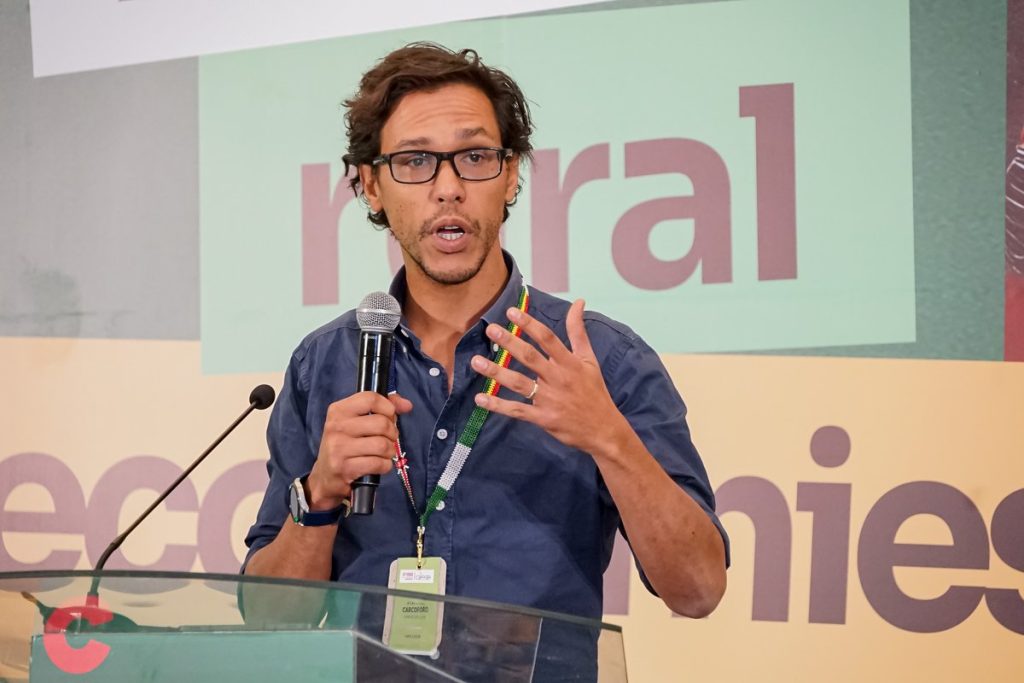
Carcoforo did not take long to start again. In May 2024, around the same time iProcure entered administration, he co-founded OnSpace Technologies, an enterprise software startup with John Paul Mwirigi.
Since May 2024, he has also served as a board member, investor and consultant at CultivaPro, a Kenyan agritech using drones and AI to help commercial growers monitor crops, meet export and traceability requirements, and apply farm inputs precisely.
Patrick Wanjohi

Wanjohi, who spent a decade as iProcure’s chief technology officer, is now CTO of iPOS, a new company built around the point-of-sale technology originally developed by iProcure. The company’s administrators acquired the technology in November 2024 and relaunched it under a new company run by Mahia-John Mahiaini.
iPOS has since expanded into inventory ordering, financing, and other tools for agricultural retailers across Kenya, Uganda, and Tanzania.
Nicole Galletta

Nicole Galletta is the co-founder of Nairobi Jiu-Jitsu Academy, a martial arts school in Muthaiga. She spent over a decade at iProcure, where she was responsible for innovation, operations, and bringing retailers and distributors onto the platform.
In November 2024, Galletta co-founded iPOS, where her co-founder, Wanjohi, works as CTO. She remained in the role until April 2025, according to her LinkedIn profile. The six-month stint is notable because iProcure had previously denied that its founders were involved in the new company.
Bernard Maingi

Bernard Maingi’s departure was not straightforward.
Maingi, iProcure’s former chief commercial officer, sued the company in March 2024, alleging unfair termination and breach of contract. The lawsuit came just weeks before iProcure entered administration. In January 2025, he sought the court’s permission to continue the case because insolvency law restricted proceedings against a company under administration. The application was ultimately withdrawn in March 2025.
There is little reliable public information that Maingi has joined or founded another startup since leaving iProcure.
Lipa Later
Lipa Later was once one of East Africa’s most promising buy-now-pay-later startups.
Founded in 2018 by Eric Muli and Michael Maina, it offered consumers a way to purchase products such as smartphones, electronics, and furniture, spreading the cost over several months. The business expanded beyond Kenya into Uganda and Rwanda and, in 2023, acquired the e-commerce startup Sky.Garden.
Lipa Later raised about $16.6 million in equity and debt, including a $12 million round in 2022, as it pursued plans to expand across Africa. At its peak, Muli has said, the company was valued at nearly $100 million.
But the company struggled to raise fresh capital in 2024, leaving it unable to meet payroll and mounting supplier debts. By March 2025, it had run out of options and entered administration, handing control of its assets and operations to a court-appointed administrator.
Muli and Maina have since taken very different paths.
Eric Muli

Eric Muli has moved from startup founder to real estate and possibly politics. According to his Instagram and LinkedIn posts, he is currently a managing partner at MRE Real Estate Limited, a Nairobi property company. Muli has also retained his interests in Alpha Force Security, a business he founded before Lipa Later.
More recently, Muli has been vocal about politics and governance, particularly in Kangundo, a constituency 70 km east of Nairobi. Muli may be harbouring political ambitions, although he has yet to publicly declare which seat he intends to contest.
Michael Maina

Michael Maina has kept a much lower profile. Maina was Lipa Later’s co-founder and chief operating officer.
While Muli became the public face of the startup, Maina concentrated on operations. Unlike Muli, there is little reliable public information about his next move following Lipa Later’s troubles.
Copia
Copia spent over a decade trying to bring e-commerce to rural customers whom other online retailers struggled to reach.
Founded in 2013 by Tracey Turner and Jonathan Lewis, the company built a network of local agents through which rural and peri-urban households could order everyday goods, like cooking oil, and have them delivered nearby. At its peak, the company had 1,800 employees and more than 50,000 agents across Kenya, and even expanded into Uganda.
Copia raised $123 million across eight funding rounds, including a $50 million Series C in 2022, from investors including Goodwell Investments, Lightrock, and the US International Development Finance Corporation.
But the expensive distribution network never became profitable. Copia exited Uganda in 2023 and, despite raising another $20 million that year, struggled to secure the additional capital it needed. In May 2024, it entered administration.
Tracey Turner

Barely a month after Copia entered administration, Turner and two of its former top executives—CEO Tim Steel and CTO Michael King—registered Stahili, another e-commerce company targeting Kenyan consumers. Turner serves as chair, while Steel and King are CEO and CTO. Stahili offers products, along with cashback, discounts, and mobile data rewards for customers who participate in surveys and provide feedback to brands.
The connections to Copia go beyond the people involved. Corporate filings show Stahili is wholly owned by Copia Holding Company, the US-registered entity previously associated with Copia Global.
In July 2026, she also joined the board of Fair Trade USA, a non-profit that sets standards, certifies, and labels products that promote sustainable livelihoods for farmers and workers.
Jonathan Lewis

Jonathan Lewis has taken a quiet path. His work remains centred on social entrepreneurship, impact investing, writing, and teaching—areas he was involved in long before Copia.
Lewis previously founded MCE Social Capital and the Opportunity Collaboration, an annual gathering of leaders working on poverty and social impact. He has also taught social entrepreneurship at institutions including UC Berkeley and New York University and worked as an impact investor.
Kune
Frenchman Robin Reecht founded the food-tech startup in 2020 with a plan to prepare and deliver affordable, ready-to-eat meals to Nairobi’s working and middle classes. The idea drew controversy after Reecht suggested Nairobi lacked affordable, good-quality food—comments that many Kenyans saw as evidence that he did not understand the market he was entering.
Nevertheless, investors were convinced. In June 2021, before its full commercial launch, Kune raised $1 million in pre-seed funding led by Launch Africa Ventures, with backing from Century Oak Capital and Consonance. The money went into a food factory, a delivery network, and a team that eventually grew to about 90 people.
But selling meals for about $3 proved difficult to sustain. By June 2022, Reecht announced that Kune had run out of money and was shutting down.
Robin Reecht

Reecht appears to have remained in Kenya after Kune’s collapse. He moved into property development in Nairobi, where he says he led Les Jardins Nairobi, a project worth more than $2 million to build nine townhouses.
It is not Reecht’s first venture in property. Before moving to Kenya and starting Kune, he founded Hanoia, a co-living business in Hanoi, Vietnam, that developed eight properties.
KOKO Networks
KOKO Networks tried to replace charcoal with cleaner cooking fuel in Kenyan homes.
Founded in 2013 by Greg Murray, the company sold bioethanol through a network of 3,000 fuel dispensers and eventually served about 1.3 million households. Along the way, KOKO raised more than $100 million from investors, including Microsoft’s Climate Innovation Fund and Mirova.
But its business model relied on carbon-credit revenues to subsidise fuel and stoves. When the Kenyan government declined to authorise KOKO to sell its credits internationally, a crucial source of income disappeared.
In January 2026, KOKO abruptly shut down, laid off more than 700 employees, and entered administration. Its administrators are now looking for buyers for its technology, manufacturing platform, and other assets.
So, what happened to Murray?
Greg Murray

Greg Murray is still dealing with KOKO’s final chapter. In August, the company advertised its technology platform and factory for sale. He has also returned his attention to the venture-building business that preceded KOKO.
Since 2007, Murray has been co-founder and managing partner of CleanStar Ventures, a venture development and investment holding company that builds and backs businesses in emerging markets, including KOKO and NDZiLO in Mozambique.
Gro Intelligence
Gro Intelligence was supposed to show that a globally important technology company could be built out of Africa.
Founded in 2012 by Ethiopian-born former commodities trader Sara Menker, the Nairobi and New York-based startup used artificial intelligence and vast datasets to help companies and governments understand agriculture, food security, and climate risks. Its clients included Unilever, and in 2021, TIME named it among the world’s 100 most influential companies.
Investors poured in more than $117 million, including an $85 million Series B backed by Intel Capital and Africa Internet Ventures. By 2022, Gro was valued at about $850 million.
But Gro struggled to turn its technology into consistent revenues. By early 2024, it was missing payroll and pension payments, and its board replaced Menker as CEO. The company cut 60% of its workforce and raised about $10 million in emergency funding, but attempts to secure more capital failed.
In May 2024, Gro shut down.
Sara Menker
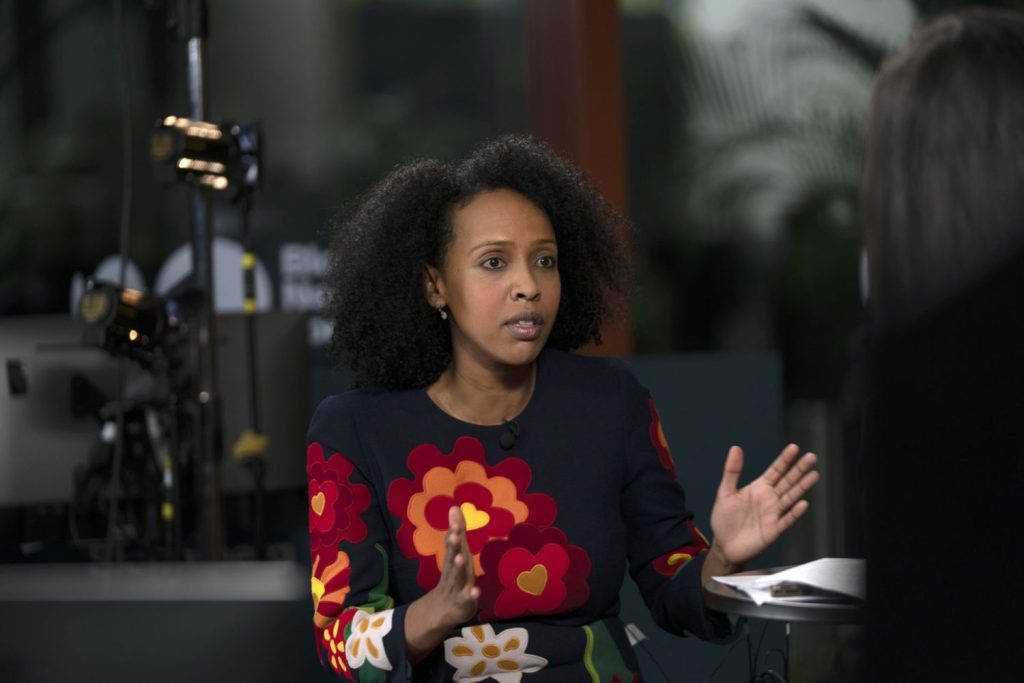
Menker has largely disappeared from the spotlight since Gro Intelligence shut down. It is noticeable that a founder who was once a regular presence at global forums, appeared before the UN Security Council, and was named to TIME’s list of the world’s 100 most influential people in 2021.
Her last LinkedIn post was in August 2024.
MarketForce
MarketForce worked to digitise Africa’s informal and neighbourhood shops.
Founded in 2018 by Tesh Mbaabu and Mesongo Sibuti, the startup began with sales automation software before launching RejaReja, a marketplace that allowed small retailers to order stock from manufacturers and distributors and access financing.
It raised $42.5 million, including a $40 million Series A in 2022 that valued MarketForce at more than $100 million. The company expanded across Kenya, Nigeria, Uganda, Rwanda, and Tanzania.
But distributing everyday consumer goods was expensive, and margins were thin. An investor also reneged on a funding commitment, forcing MarketForce to retreat from several countries and cut jobs. By April 2024, the founders concluded that RejaReja could no longer be sustained and shut it down.
Tesh Mbaabu
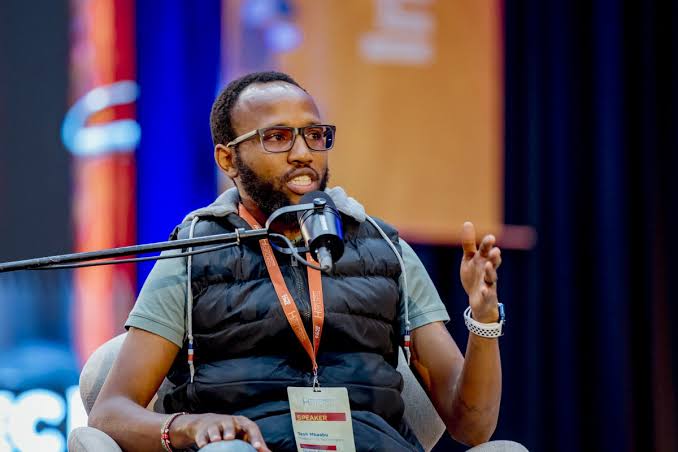
Tesh Mbaabu has already moved through two startups since MarketForce.
As RejaReja wound down, Mbaabu and Mesongo Sibuti turned their attention to Chpter, a conversational commerce startup they had launched in 2022. Chpter used AI to help businesses sell and manage customers through platforms such as WhatsApp and Instagram.
In 2025, Mbaabu left Chpter and reunited with Sibuti for another bet: Cloud9, a fintech targeting younger African consumers. The platform combines payments, savings, multi-currency accounts and cards, with credit and investment products planned. It launched its app in Kenya in December 2025.
In August 2026, Cloud9 acquired Chpter, bringing Mbaabu’s previous startup into his newest one to build commerce tools for business customers.
Mesongo Sibuti

Mesongo Sibuti has stayed alongside Tesh Mbaabu through his journey.
Bonto
Bonto’s life as a licenced Kenyan fintech lasted just eight months.
Founded in 2022 by Frenchman Yoann Copreaux, the Nairobi-based startup offered foreign exchange and cross-border money transfers. After a lengthy regulatory process, it secured a money remittance provider licence from the Central Bank of Kenya in early 2025.
But getting the licence did not make the business work. Foreign-exchange margins were shrinking, remittance fees were approaching zero, and compliance costs kept rising. Copreaux concluded that Bonto would need an unrealistic level of scale to break even.
Bonto stopped processing transactions on August 15, 2025, and surrendered its licence. The CBK formally revoked it the following month.
Yoann Copreaux

Copreaux has gone back to the business he was running before Bonto.
He remains founder and CEO of Jenga, a Nairobi-based technology company he started in 2018. Jenga builds software for companies and connects businesses with African technology talent, with engineers working across areas including cloud infrastructure, data and artificial intelligence.
Bonto, in fact, was partly an offshoot of that experience. Copreaux had encountered difficulties moving money across borders while running Jenga and saw an opportunity to build a better foreign-exchange and payments product.
Mobius Motors
Mobius cars were difficult to mistake for anything else on a Kenyan road. Boxy, stripped back and built for rough terrain, it was supposed to prove that a car designed and assembled in Kenya could compete with the second-hand imports that dominate the country’s roads.
Joel Jackson, a British computer engineer, started Mobius Motors in 2011. Over the next 13 years, the company raised about $56 million and went from producing deliberately basic vehicles without luxuries such as air conditioning to the more polished Mobius III SUV.
However, making cars proved brutally expensive. Sales never reached the scale needed to sustain local production, debts mounted, and attempts to find fresh capital failed. In August 2024, shareholders voted to liquidate the company.
The end never quite came. Dubai-based Silver Box stepped in, bought Mobius, and kept the brand alive, with plans to resume vehicle assembly.
Joel Jackson

Joel Jackson had already stepped away from the driver’s seat at Mobius long before the company nearly collapsed.
In March 2024, Jackson founded Pinnacle, a London-based AI startup that describes itself as a brain-performance coach. The app uses smartphone sensors, computer vision, and language models to measure signals such as heart rate variability and emotional state, then provides personalised coaching aimed at improving focus, energy, and resilience.
Notify Logistics
Notify Logistics bet that thousands of small Kenyan businesses wanted a physical shop, just not the rent that came with one.
Waweru Nderitu and his wife, Hellen Nderitu, founded the startup in 2018 around a “rent-a-shelf” model. Notify took up large retail spaces and rented individual shelves to online sellers and other small businesses, providing shop attendants and handling sales and deliveries. By 2021, it said it had supported more than 10,000 businesses and had outlets in Nairobi, Mombasa, Nakuru, and Eldoret.
That year, Notify raised KES 45 million ($347,651) in seed funding and set its sights on supporting 20,000 traders. But the model that saved its customers from expensive rent left Notify with hefty rental bills of its own. By August 2022, it had shut down.
Waweru Nderitu and Hellen Nderitu

Waweru and Hellen Nderitu have disappeared from Kenya’s startup scene since Notify closed. At least publicly, the Nderitus appear to have stepped away from the ecosystem that made them prominent.
It is a markedly different second act from many founders on this list.
True scale demands moving beyond surface-level integrations to robust execution. We’ve filtered the noise out of Moonshot 2026, optimising the conference strictly for high-calibre connections between startup founders, global financial operators, enterprise leaders and individuals rewiring Africa’s technical frameworks. Get 20% off Early Bird tickets for a limited time.