


The Nigerian Official Selection Committee (NOSC) has chosen Damilola Orimogunje’s Dear Ajayi as Nigeria’s official submission for the Best International Feature Film category at the 99th Academy Awards.
The committee announced the decision after reviewing films submitted during its month-long call for entries, which ran from 1 to 31 August.
Its selection places Dear Ajayi in contention for consideration by the Academy of Motion Picture Arts and Sciences ahead of the 99th Oscars, scheduled for 14 March 2027 in Los Angeles.
The selection does not, however, constitute an Oscar nomination. The Academy will assess the film’s eligibility alongside submissions from other countries before voting determines the 15-film shortlist and, subsequently, the five nominees.
NOSC Chairperson Stephanie Linus congratulated the filmmakers and expressed the committee’s support as the production entered the next stage.
“We look forward to presenting the film for the Academy’s consideration and wish the team every success in the next stage of the process,” she said.

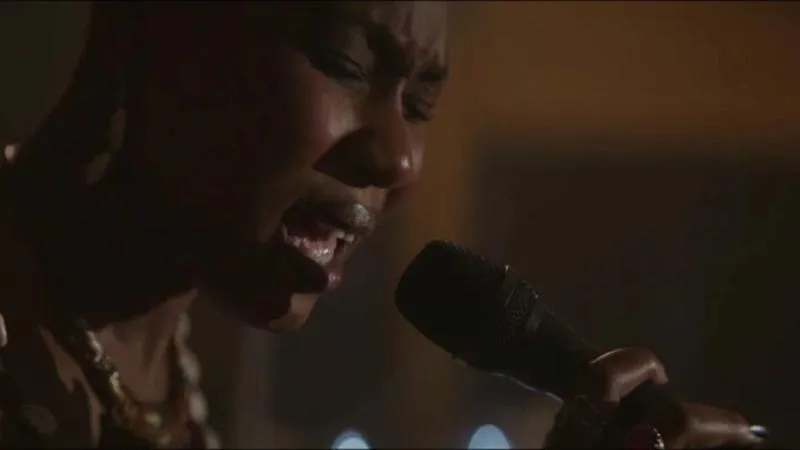 Nigeria returns to Oscars race
The selection marks Nigeria’s return to the Oscars process after the country failed to submit a film for the 98th Academy Awards.
In 2025, the NOSC review committee said none of the entries it considered demonstrated the required level of “creative and technical intentionality.”
The committee subsequently opened submissions for the 99th Academy Awards on 1 August, giving Nigerian filmmakers, producers, and rights holders until 31 August to enter eligible productions through its portal.
NOSC is recognised by the Academy as the body responsible for choosing Nigeria’s official entry in the International Feature Film category. The committee has overseen the country’s participation in the category since 2019.
Each year, a country or region can submit only one film through its Academy-approved selection committee. (thenosc.org)
Dear Ajayi
Written and directed by Mr Orimogunje, Dear Ajayi is a Nigeria-Germany co-production set in southwestern Nigeria in the 1990s.
The family drama follows Ade and Titi Ajayi, two estranged sisters forced to live together and care for their paralysed mother.
Ade, a devout Christian and the family’s breadwinner, struggles to understand Titi, an aspiring singer whose independent spirit challenges the expectations placed on her.
Their reunion brings old resentments to the surface, compelling both women to confront the grief, family history and conflicting ambitions that drove them apart.
The film combines Yoruba, English, and Igbo dialogue and explores family responsibility, faith, ambition, sacrifice, forgiveness, and reconciliation.
Its cast includes Bimbo Akintola as Ade, Tosin Adeyemi as Titi, and Lanre Hassan as their mother. William Benson, Antar Laniyan, Uzoamaka Power, Michelle Dede, and Chioma “Chigul” Omeruah also feature in the production.
The film featured in the competition section of the 2026 Giornate degli Autori, an independent programme held alongside the Venice International Film Festival. It is also scheduled to screen at Film Africa in London on 30 October.
Eligibility requirements
Under the Academy’s rules, an international feature must run for more than 40 minutes, be produced outside the United States and contain more than 50 per cent non-English dialogue.
Nigerian Pidgin English qualifies as a non-English language under the rules.
Entries must also carry accurate, legible English subtitles and complete a commercial cinema run of at least seven consecutive days at one venue before being released on television, streaming services, or the internet.
A prior television, online or streaming release can make a film ineligible under the theatrical-release pathway.
New festival pathway
For the 99th Academy Awards, the Academy introduced an additional qualification route for international feature films.
Under the new rule, a film not submitted through its country’s selection committee or that does not meet the normal theatrical-release requirement may still qualify independently by winning a designated award at an approved international film festival.
The qualifying festivals include Berlin, Cannes, Venice, Sundance, Toronto and Busan.
Nigeria’s Oscar history
Nigeria has not received a nomination in the Best International Feature Film category.
Its first entry, Genevieve Nnaji’s Lionheart, was disqualified from the 2020 Oscars because the Academy determined that most of its dialogue was in English.
Desmond Ovbiagele’s The Milkmaid was accepted as Nigeria’s entry for the 93rd Academy Awards but did not progress to the 15-film shortlist. Mai Mataiba also lost out in the 2025 Oscar race.
Discover more from Premium Times Nigeria
Subscribe to get the latest posts sent to your email.
