


More Information
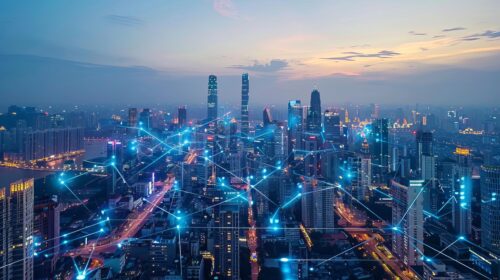
Smart city deployments have historically relied on cameras, sensors, and dashboards that capture data without delivering timely insight. Edge AI changes this by letting inference happen close to where data is generated. This supports faster decisions, stronger data sovereignty, and lower operating costs than cloud-only designs. This guide traces the progression from automation and perception to prediction, agentic coordination, and physical AI, where urban systems continuously perceive conditions, reason about them, and act within a tiered edge architecture spanning far-edge sensors, regional infrastructure, and the cloud. It also outlines the durability, security, and interoperability requirements that production-grade edge hardware and software must meet to support public safety, mobility, and infrastructure use cases at city scale.
