

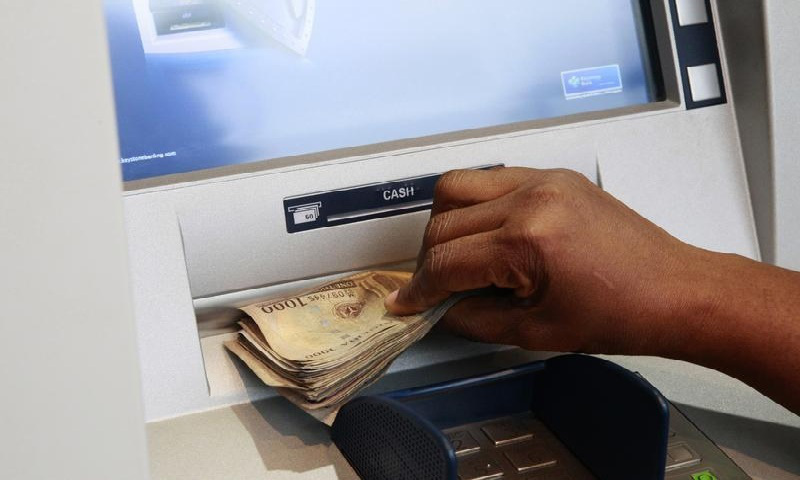
The Dollar to Naira exchange rate in Nigeria’s black market stood at approximately N1,380 for buying and N1,390 for selling on Monday, November 9, 2026, as the naira opened the new trading week amid mixed quotations across the parallel foreign exchange market.
The latest rates published by NairaToday and Talentbase indicate that Bureau De Change (BDC) operators are buying the United States dollar at N1,380 and selling at N1,390.
However, other currency trackers reported significantly higher rates over the weekend, suggesting that actual transaction prices may differ considerably across dealers and locations.
The variation comes after the naira recorded a marginal depreciation in the official Nigerian Foreign Exchange Market (NFEM) during the first week of November.
How Much Is Dollar to Naira Today in the Black Market?
The indicative black market exchange rates for Monday, November 9, 2026, are:
| Currency | Buying Rate | Selling Rate |
|---|---|---|
| US Dollar (USD) | N1,380 | N1,390 |
Based on these quotations, the following conversions apply:
- $100: N138,000 when selling and N139,000 when buying.
- $200: N276,000 when selling and N278,000 when buying.
- $500: N690,000 when selling and N695,000 when buying.
- $1,000: N1,380,000 when selling and N1,390,000 when buying.
The difference between the buying and selling rates stands at N10 per dollar.
These rates are indicative and may vary depending on transaction size, dealer and location.
Naira Opens New Week Amid Mixed Market Signals
The naira entered Monday’s trading session with conflicting indications from parallel-market trackers.
While NairaToday and Talentbase reported a selling rate of N1,390, other market sources recorded higher dollar quotations during the weekend.
One tracker placed the dollar’s selling rate above N1,430 on Sunday, indicating that some segments of the market were experiencing greater pressure than suggested by the lower quotations.
This difference matters for businesses and individuals because the cost of obtaining foreign currency depends on the actual rate offered by the dealer handling the transaction.
For example, purchasing $10,000 at N1,390 requires N13.9 million, compared with N14.3 million at N1,430.
The N400,000 difference illustrates how variations in exchange rates can affect import costs, international payments and business profitability.
For manufacturers importing machinery and raw materials, higher dollar prices can increase production expenses and create additional pressure on selling prices.
Official Dollar to Naira Exchange Rate
At the official Nigerian Foreign Exchange Market, the naira closed at approximately N1,349 per US dollar on Friday, November 6, 2026.
The closing rate represented a depreciation of approximately 0.22% from N1,346.01 recorded on Monday, November 2.
The movement occurred as reported foreign exchange turnover declined during the first trading week of November.
According to market data reported by Nairametrics, total NFEM turnover stood at approximately $1.45 billion during the week, reflecting relatively subdued trading activity.
Using Friday’s official closing rate of N1,349 and Monday’s indicative parallel-market selling rate of N1,390, the difference between the two markets stands at N41 per dollar, equivalent to approximately 3.04% of the official rate.
However, at a parallel-market selling rate of N1,430, the difference would increase to N81 per dollar, or approximately 6%.
The comparison uses Friday’s official closing rate because Monday’s final trading figures were not available at the time of reporting.
The Central Bank of Nigeria (CBN) publishes official foreign exchange information used by banks, investors and businesses.
What Is Driving the Dollar to Naira Exchange Rate?
The naira’s performance remains closely linked to foreign exchange supply, import demand and capital flows.
Nigeria relies on foreign currency receipts from crude oil exports, foreign investments and diaspora remittances to support dollar liquidity.
At the same time, importers, manufacturers and individuals making overseas payments continue to generate demand for foreign exchange.
When dollar demand exceeds the amount readily available through authorised channels, some transactions may shift towards alternative markets where prices can be higher.
The recent decline in official-market turnover also deserves attention. Lower trading volumes do not automatically indicate a shortage of dollars, but they can make the market more sensitive to changes in demand and supply.
For investors, the more important question is whether Nigeria can maintain sufficient foreign currency inflows to support exchange rate stability without creating additional pressure on reserves.
Dollar to Naira Outlook
The naira’s direction this week will depend on foreign exchange liquidity, import-related demand and developments in the official market.
Improved dollar supply and stronger capital inflows could help stabilise the currency and narrow differences between official and parallel-market quotations.
However, increased demand for international payments and year-end imports could place renewed pressure on the naira if foreign currency availability weakens.
Market participants will closely monitor the CBN’s exchange rate publications, foreign exchange turnover and Nigeria’s external reserves for indications of the currency’s near-term direction.
For daily Dollar to Naira exchange rate updates, Nigerian business news and financial market analysis, visit Investors King.
