

On the contrary though, I posit that debt can build generations. In fact debt has built generations. All the countries that matter borrowed by leveraging their cash flows to get where they are. My earlier argument in the article stands. The Western world has only played with peanuts in Africa and we are not monkeys. One could argue that the recent engagements with China have been more promising and beneficial to Africa, and Nigeria in particular because we see the tangibles – roads, rail lines, airports etc.
The tragedy of our times is that there is so much ignorance in the age of information; so much illiteracy in a time when people are educated. The challenge for all is to speak up and keep repeating facts in the hope that somehow facts begin to sink in where they now seem bereft. The times present new challenges. Economies are not what they used to be. And we cannot solve the problems of today by using the same thinking that created them. These are my initial thoughts as I attempt a necessary riposte to the vehement political statements of former President Obasanjo. I call it political even though it is meant to be an economic subject – Nigeria’s debt. But the reasoning and delivery are so well-timed to do damage that the field of economics has to reject what was stated as fact and dump them in the trashcan of chicanery.
First, it is apposite to look at today’s national economies. There is a race for development and no nation wants to be left behind; not even North Korea, perhaps the most isolated country on earth. Every government is working to improve the lives of their people, build infrastructure, or at least create a legacy. In this development superhighway, nobody is slowing down for anyone. What is even more likely to happen is for those who can, to slow down those who are not wary of geopolitics. I wrote an article some months back where I charged that indeed the world has underinvested in Africa and that Africa (especially Nigeria) is certainly not over-borrowed. That conviction still stands.
In today’s world, we cannot run an economy without proper treasury management – which means leveraging our resources and cash flows for the future in order to grow bigger, provide better for our people and obtain the assets we need today for a greater future, such as tangible infrastructure. I wagered in my article that the smart nations of the world – most of them western – have ensured that they collected real leverage and have become where we all troop to for everything under the sun – education, health, tourism, technology, knowledge, information, skills and everything in between. I urged African nations to wake up!
It’s therefore a wonder why Obasanjo will make such a statement. I can only put this down to his political support for Peter Obi (who he probably hopes to use like dough in his hands), and age-long opposition to President Bola Tinubu who has naturally proved to be a tough cookie for anyone to gobble up and who certainly possesses a strong mind of his own.
History of National Debts

This is a fine opportunity to trace the history of national debts. Why do countries borrow? Do countries have to borrow? What happens if they do, or if they don’t? When we are stumped for answers it is always inevitable to look back to determine how we got to where we are. Making statements in reaction to immediate events is a mindset we should leave for the unwise. I was recently addressing a gathering where secondary school students were and I realised that we are raising them to be angry because almost all of them are not rooted in Nigerianism.

The only way our children can be invested in Nigeria is if they understand the history of Nigeria. Who founded Nigeria. What is colonialism and slavery? Why were the northern and southern territories merged? Who got us our independence? What caused political breakdown during the parliamentary government? What caused the first coup? Who died? And the second coup? And subsequent ones? Who were/are the key players of Nigeria’s First, Second, Third and Fourth Republics? What were their legacies? How have we managed our diversity so far? These questions and the answers to them are what will enable us to build our nation. We shouldn’t shy away from them.
And on the matter of debt, we need history too. Below is what I found in a simple Internet search:
- Ancient and Medieval Eras: Rulers in ancient Mesopotamia and the Roman world borrowed money for wars and public works, occasionally enacting “debt jubilees” or forgiveness decrees when obligations became unsustainable. In medieval Europe, tally sticks (notched wooden pieces split between the crown and creditor) tracked royal debts.
- The 17th-Century Shift: The Dutch Republic revolutionised state borrowing by issuing long-term public bonds to citizens to fund its war of independence.
- The history of the British national debt can be traced back to the reign of William III (a Dutchman, otherwise called William of Orange, who became King of England, Scotland and Ireland from 1689 to 1702), who engaged a syndicate of City traders and merchants to offer for an issue of government debt, which evolved into the Bank of England.
- The Bank of England (1694): Britain adopted and formalised this framework with the establishment of the Bank of England, turning national debt into a permanent, tradable financial instrument, rather than a sign of royal bankruptcy.
- Wartime Spikes: Throughout the 18th and 19th centuries, major conflicts (such as the Napoleonic Wars and the American Revolutionary War) were the primary drivers of debt. British debt-to-GDP surpassed 200 per cent following the Napoleonic Wars.
- World Wars I and II: Global conflict pushed debt to historic heights. US and British debt-to-GDP ratios peaked around or above 240 per cent–250 per cent by the end of World War II in 1945.
So, from the get go, we can see that nations borrow for projects. And the most important projects in the beginning, as humans gathered and cooperated in large civilisations, were wars. The first national borrowing by rulers were therefore for war – whether it was in Dutchland, England or America. In China, the Emperors viewed borrowing from people to fight wars as beneath their imperial dignity, so they resorted to fines and taxes when such events presented themselves. There is a second critical reason behind national debts and government borrowings, and that is because it secured the commitment and loyalty of the monied class behind their societies or nations.
When you give money to the King for a war, you stay behind that money and ensure your society survives. It could be argued that post-colonial nations like Nigeria never had that organic opportunity to secure the loyalty and commitment of the monied class and their people in this same manner, as we were quickly introduced to borrowing through global structures and foreign banks. But in general, borrowing is essential in today’s economy because national economies must now be managed with the prowess of bank treasurers. And the first principle at that level is never to sit on cash or fail to leverage in order to achieve more – especially as populations explode.
The idea is not to borrow recklessly. But Nigeria’s debt-to-GDP ratio at a mere 35 per cent is one of the lowest in the world today. An astute financier will wonder whether we had no need for money – no infrastructure to build, no population to take care of, no children to send to school, no old people to help with healthcare. Therefore, saying debts are worse than leprosy or that they are bad for a national economy, is a very careless fallacy to utter.
The Andrew Jackson Experience: Paying Down National Debts
And the world has learnt lessons around national debts. In the medieval times referenced above, a king borrows to fight wars, and when he dies, the debts die with him. In time, through the establishment of national banks or central banks, debts to nations were tracked beyond the death of specific monarchs. And some leaders have also tried to pay down debts because they believed that debts were bad.
One of such presidents was US President Andrew Jackson – who hated debts of any kind – and decided to square off and repay the national debt of that country (about $75 million in 1835). Jackson was a Tennessee landowner and land speculator who had lost money and fallen into debt himself before becoming president. He therefore abhorred the idea of borrowing money for anything. But his decision proved the distinction between running a household, company or government, because it resulted in a disaster for the US economy. When he paid down the debts by selling of federal lands, this is what happened:
- Distribution of the Surplus: With the debt eliminated and money still flowing in from federal land sales and tariffs, the government accumulated a large cash surplus. Congress passed the Deposit Act of 1836, which distributed these surplus federal funds to the states.
- Wildcat Banking and Speculation: Jackson had dismantled the Second Bank of the United States, removing central banking controls. The surplus funds sent to state banks (“pet banks”) led to a massive expansion of paper money and uncontrolled lending, fueling a frantic western land-speculation bubble.
- The Specie Circular: To curb land speculation and paper money inflation, Jackson issued the Specie Circular in July 1836, an executive order requiring buyers to pay for federal public lands only in hard currency (gold or silver).
- The Panic of 1837: The sudden demand for hard coin drained banks of their reserves, burst the speculative bubble, and triggered the Panic of 1837. This led to bank failures, widespread unemployment, and a deep depression that lasted nearly seven years.
- Return of the Debt: The debt-free status lasted only about a year; the economic crash dried up government revenues, forcing the US government to resume borrowing.
From the above, the US could only maintain the debt-free status for just one year but suffered a seven-year recession. Historians say that if the US had maintained a debt-free status it would have ended up as a mere agrarian state, because the ability to borrow for ventures has positive effect on creativity and expansion whether for government, businesses or individuals. He equivalent of the meltdown that happened post-1835 in the US economy, today is that if Nigeria wakes up and fully repays its loans, then we can only grow our economy in tandem with what the government is able to raise as taxes, duties, rates and fines. This means the government will put the people under immense pressure. The economy will shrink into a recession, meaning poverty rates, crime, and unemployment will spike.
The idea is not to borrow recklessly. But Nigeria’s debt-to-GDP ratio at a mere 35 per cent is one of the lowest in the world today. An astute financier will wonder whether we had no need for money – no infrastructure to build, no population to take care of, no children to send to school, no old people to help with healthcare. Therefore, saying debts are worse than leprosy or that they are bad for a national economy, is a very careless fallacy to utter.
With infrastructure buildup at the level of Dwight Eisenhower’s National System of Interstate and Defense Highways, an addition of $10 billion to total debt stock should certainly not attract statements from President Obasanjo to the effect that ‘debt is worse than leprosy’. One can only put such statement down to politics; President Obasanjo is rooting for Peter Obi, a man he believes he can control, and a man who has not put down any progressive initiative for Nigeria apart from rabble rousing.
The Obasanjo Debt Repayment
We learnt about the Debt Trap in every Economics class pre-2006. It was the story of how Africa, Asian and some South American mismanaged debt, or were sometimes coaxed or arm-twisted by much smarter lenders categorised into the London and Paris Club. Precisely, affected countries were categorised into Heavily Indebted Poor Countries (HIPCs) and those that were deemed rather capable of paying at least some of their debts. Nigeria fell into the latter group and was made to pay the sum of $12 billion in exchange for the write-off of $18 billion. Some prominent Nigerians, notable ex-Governor Tunde Fashola, expressed their opinion that Nigeria oughtn’t have reached such an expensive deal. Of course, 33 African countries, benefitted from the 2006 arrangement named the G8’s Multilateral Debt Relief Initiative (MDRI), which cancelled 100 per cent of eligible multilateral debts for many of the world’s poorest nations.
Following the 1970s oil shocks and collapsing commodity prices in the 1980s, 39 to 42 low-income countries became trapped in unpayable external debt owed primarily to Western governments, the IMF, and the World Bank. To qualify for the World Bank’s HIPC Initiative, these nations had to prove their debt burdens were unsustainable even after traditional debt-relief mechanisms. In Sub-Saharan Africa these countries include: Benin, Burkina Faso, Burundi, Cameroon, Central African Republic, Chad, Comoros, Côte d’Ivoire, Democratic Republic of the Congo, Eritrea, Ethiopia, The Gambia, Ghana, Guinea, Guinea-Bissau, Liberia, Madagascar, Malawi, Mali, Mauritania, Mozambique, Niger, Republic of the Congo, Rwanda, São Tomé and Príncipe, Senegal, Sierra Leone, Somalia, Sudan, Tanzania, Togo, Uganda, and Zambia. In Latin America, and the Caribbeans, Bolivia, Guyana, Haiti, Honduras, and Nicaragua. While in Asia, Afghanistan benefited from 100 per cent write-off from IMF, World Bank and others. (Laos, Myanmar, and Vietnam had appeared on early pre-2006 HIPC assessments but were dropped, like Nigeria and Kenya).
It is however noteworthy that by the end of President Obasanjo’s government, Nigeria was back in debt. Domestic debt stood at ₦2.05 trillion, while Foreign Debts stayed at $3.35 billion. The naira converted at ₦124 to $1, taking Nigeria’s total national debt to $19.8 billion at the time that President Yar’Adua took over. Nigeria’s debt rose to $45 billion as at 29 May, 2011 and $63.8 billion as at 29 May 2015 when President Buhari took over. The Tinubu administration inherited $113.42 billion in total debt (including the CBN Ways and Means figure). Today, the number stands at $123 billion. This rundown is important to debunk the false claim and false alarm going round that President Tinubu has been overborrowing. He has only been responsible, borrowing only when absolutely necessary. But as an ambitious government, the total turnaround that Mr President has embarked upon certainly requires funding.
With infrastructure buildup at the level of Dwight Eisenhower’s National System of Interstate and Defense Highways, an addition of $10 billion to total debt stock should certainly not attract statements from President Obasanjo to the effect that ‘debt is worse than leprosy’. One can only put such statement down to politics; President Obasanjo is rooting for Peter Obi, a man he believes he can control, and a man who has not put down any progressive initiative for Nigeria apart from rabble rousing. The statement also reeks of hypocrisy, given that Obasanjo struck what some call a terrible deal with the World Bank – with the whooping $12 billion repayment plus commissions everywhere.
Indeed one should add that Obasanjo contradicted himself. He was chums with the Bretton Woods Institutions in his time. But now he disparages them, when he spoke about mere bachelors and spinsters coming here to dictate policy to African countries; policies that, he said, lead to our ruination. He said “These brilliant boys will package everything very well academically. They tell us, and we take it, lock, stock, and barrel, and we use it. For a country of 250 million people, it is boys and girls who are not even married, let alone manage a home, who will tell us what we will do to manage our people, our country, and we swallow it, and we destroy ourselves… World Bank and IMF were not designed for us. They were not built by us. They were built before we became independent, and that’s the people who will determine what we do… (British Prime Minister James Callaghan received four euros per year for every sheep on his farm while the World Bank and IMF barred African nations from subsidising their own farmers).., debt is worse than leprosy because leprosy destroys only one person. Debt destroys generations.”
On the contrary though, I posit that debt can build generations. In fact debt has built generations. All the countries that matter borrowed by leveraging their cash flows to get where they are. My earlier argument in the article stands. The Western world has only played with peanuts in Africa and we are not monkeys. One could argue that the recent engagements with China have been more promising and beneficial to Africa, and Nigeria in particular because we see the tangibles – roads, rail lines, airports etc. For more than three decades most African countries have not seen finances for tangibles but only for soft matters such as gender violence, job acceleration, business-enabling reforms, etc.
To cap it, there is a video circulating online where President Obasanjo spoke about a certain Mrs Kruger, a World Bank/IMF executive who demanded a presidential welcome during his presidency. He spoke about how he sent her report to his then Economic Adviser, Professor Soludo (who always rejected ALL their recommendations), and Mrs Okonjo-Iweala (who always supported ALL their recommendations, given that she made a career in those institutions). He said he would then blend both positions and strike a midpoint, and that he warned Soludo to never show that he was against those institutions else ‘they will rub his nose in the dirt’ (his exact words).
So, President Obasanjo is very aware of what is going on and he knows that we are much smarter today. He is only playing politics… and that is unfortunate given where this country is today. I would have thought he should put his age-long political differences aside and support progress for Nigeria – on the back of reforms that no president was able to pull through. Why is he trying to pull back the hand of the clock for Nigeria by trying to smuggle a puppet in by means fair or foul?
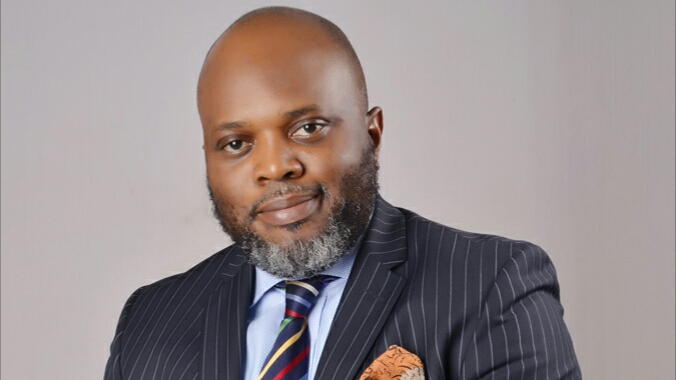
‘Tope Fasua is the special adviser to the President on Economic Matters.
Discover more from Premium Times Nigeria
Subscribe to get the latest posts sent to your email.
