

If you’ve ever had a brain scan, the strange noises of the machine might be the first thing to scare you. Staying still while it makes its clanging noises is another challenge, but what really gets you is the anxiety of waiting for a radiologist to interpret the images and tell you what is happening inside your head. In Nigeria, where radiologists are in short supply, getting that report can be another hurdle.
During her five years as an advanced nurse practitioner in the United States, Kafilat Shobajo had encountered several cases where radiology reports missed fractures or other abnormalities she could identify from examining patients and reviewing their X-rays. In the two years before speaking to TechCabal in November, she said she had caught at least five errors that could have changed a patient’s diagnosis or treatment. The experiences made her question how much room there was for such oversights in a healthcare system that struggles with a shortage of specialists.
A 2025 study published in BMC Medical Education estimated that Nigeria had fewer than 700 radiologists, or roughly one for every 660,000 people. Shobajo’s own assessment of the facilities she spoke with revealed that some radiologists were working across at least three hospitals.
However, the shortage of specialists was only part of the problem. Before building a product, Shobajo mentioned that her team conducted a three-month pilot to understand the needs of diagnostic centres and clinics. They found that many facilities were not properly storing the medical images they produced.
“During our pilot, the majority of the facilities had their images stored on WhatsApp or Telegram,” Shobajo said.
She told TechCabal that her first instinct had been to build an artificial intelligence tool that could help radiologists and frontline clinicians interpret medical images. However, medical AI models are only as useful as the data they learn from, and Shobajo was concerned that models trained on images from other populations might not produce accurate results for African patients.
“Our tumours are larger, so chances are if they bring that model here, it’s not going to be accurate,” she said. “What DycoVue does is we build the infrastructure for clinics in digital imaging. So before you can start saying you’re going to use AI to help interpret your medical images, hospitals need to store their data first.”
This led her to build DycoVue, a healthtech startup developing software that helps healthcare facilities manage their medical imaging records, including storing, organising, retrieving and sharing the images with the healthcare professionals involved in a patient’s care, in 2025.
How DycoSuite works
The company’s main product is DycoSuite, an imaging management system built around a technology known as a Picture Archiving and Communication System (PACS). PACS systems allow healthcare facilities to store, retrieve and share medical images digitally. DycoSuite is designed to replace the scattered films, CDs and images shared across messaging apps with a central system where a patient’s imaging records can be stored and retrieved when needed.
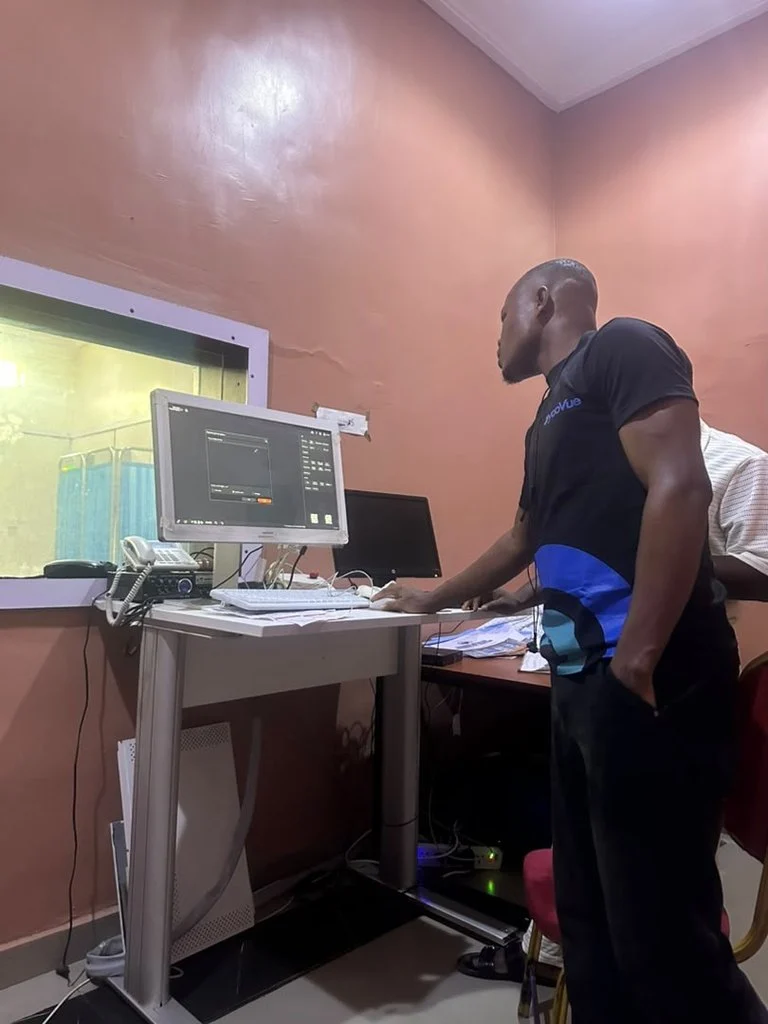
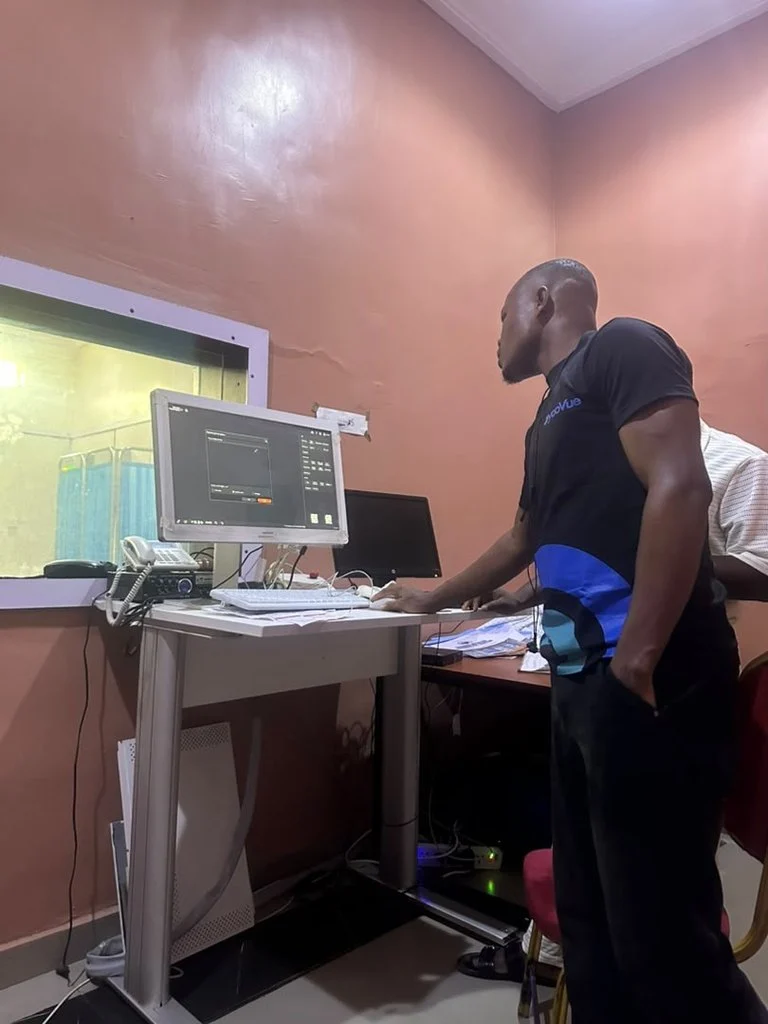
Shobajo says the system is designed to fit into a clinic’s existing imaging workflow, rather than requiring staff to manually upload every scan. When a diagnostic centre signs up, DycoVue’s engineers visit the facility to connect its imaging equipment to the platform. Once the connection is set up, images are transferred to the system as they are produced.
“It automatically goes to the cloud. We have engineers that can come and ensure that. If clinics are interested in using DycoVue, we would come to their clinic, do a demo for them to see the product, our engineers will make the connection, and that’s it,” Shobajo said.
The company also said it provides ongoing technical support after installation. Shobajo says this is important because deploying software is only useful if clinics can rely on it when they need it. Patients are shared a link that contains the images from the scan.
Once images are stored centrally, clinicians can retrieve earlier scans and compare them with newer ones. A patient who returns with the same complaint would not have to rely on a physical film or remember which facility holds an earlier image, as the doctor would be able to access the previous scan from the cloud. Shobajo said the platform also allows radiologists to review images remotely instead of being physically present at the diagnostic centre. Shobajo says DycoVue wants to reduce the time patients spend waiting for their results, with a target of delivering them within 15 minutes.
DycoSuite is also intended to bring imaging and laboratory information together under a patient’s record. Shobajo argues that diagnosing and monitoring a condition can involve several tests, and the results should be accessible together rather than scattered across different systems.
“Whatever they’re doing, whether it’s images or labs related to the same issue, the same patient information should be under one bucket,” she said.
DycoAtlas, the company’s second product, is a needs-assessment and mapping tool intended to help governments, healthcare planners and philanthropies understand where diagnostic facilities and equipment are located, what services they offer and what prevents them from operating effectively. So far, the team has surveyed 240 facilities across four states, according to Shobajo. The team also records facility coordinates because it found that some diagnostic centres it visited were not listed on Google Maps.
Building the infrastructure for AI-assisted imaging
DycoVue has been operating since 2025 and has so far funded its operations without external investment, according to Shobajo. The company currently has five team members, split between Nigeria and the United States. Shobajo said the startup recently signed its first paying user, a private diagnostic centre in Nigeria, where the team is deploying the product. She did not disclose how the company charges facilities.
According to the company, its pilot helped two facilities digitise more than 100,000 medical images covering about 600 patients, with records dating from 2023 to 2026.
Shobajo explained that DycoVue’s priority is to get the product into more facilities and demonstrate that clinics can use it to manage their imaging records. Shobajo says the company is considering raising capital in 2027 to improve its existing products and expand its reach. The company wants to connect DycoSuite to electronic medical record (EMR) systems already used by healthcare providers, creating a more connected record of patients’ diagnostic history.
That groundwork is also central to the company’s plans for AI-assisted medical imaging. Shobajo says DycoVue hopes to begin developing this capability in 2027. She argues that storing images over time is important for tracking how a patient’s condition changes and for building datasets that can support AI models.
