

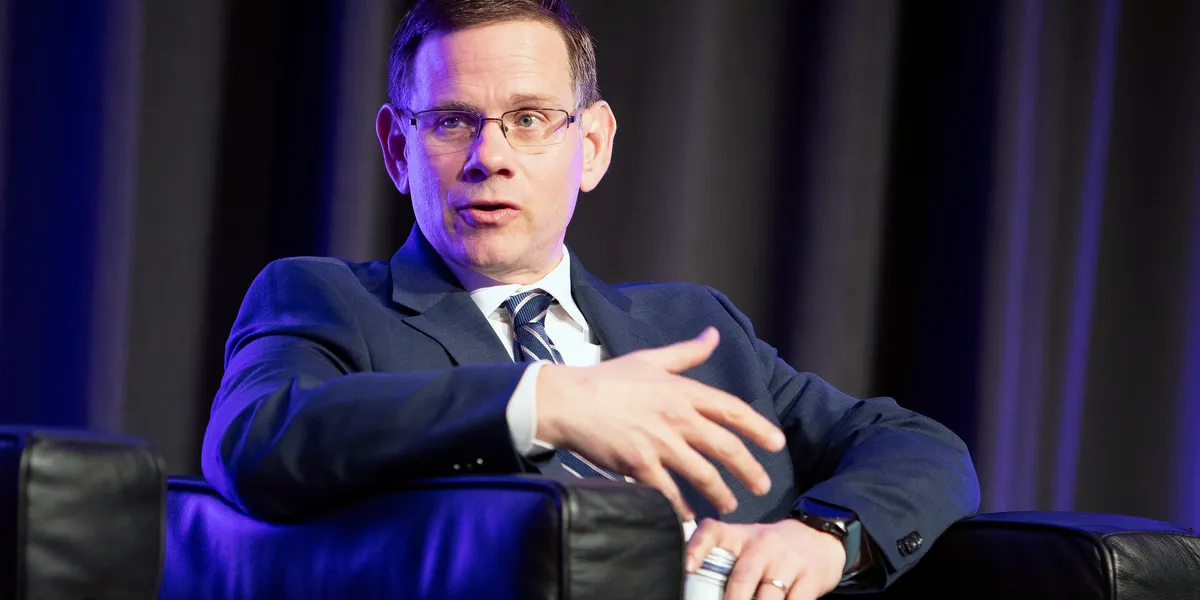
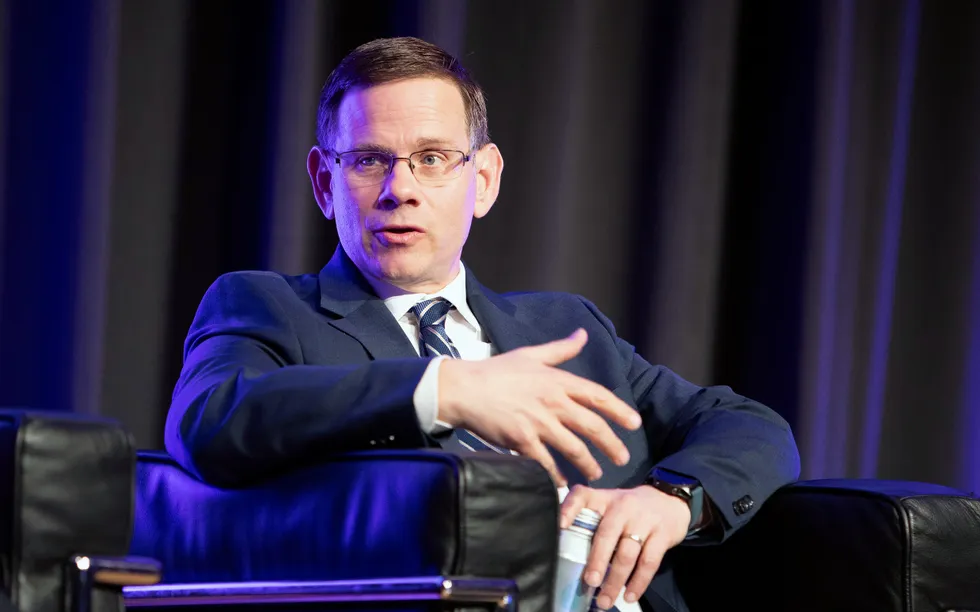
The trajectory from researcher to top executive at a leading R&D organization doesn’t happen overnight. It took Anthony Vetro nearly 30 years to climb the corporate ladder at Mitsubishi Electric Research Laboratories, in Cambridge, Mass. He joined MERL in 1996, right out of college, and he has worked there ever since.
Vetro probably is best known for his research in multimedia signal processing, focusing on video compression.
Anthony Vetro
Employer
Mitsubishi Electric Research Laboratories, in Cambridge, Mass.
Title
President and CEO
Member grade
Fellow
Alma mater
Polytechnic Institute of Brooklyn (now New York University’s Tandon engineering school)
He became an IEEE Fellow in 2011 for his contributions to video coding, three-dimensional television, and multimedia adaptation.
Mitsubishi Electric has moved away from making televisions. It now focuses on developing systems including ones used for defense, electronics, the energy industry, and space exploration.
His ascension up the executive ranks began in 2018, when he was named a vice president and director of MERL. In 2023 he was appointed its president and CEO.
He also works closely with the company’s new U.S.-based innovation facility in Cambridge. And he recently took on a dual role as deputy head of Mitsubishi Electric’s global R&D activities, including in Asia and Europe.
Vetro credits IEEE with helping him develop his management skills after he served in several IEEE Signal Processing Society leadership positions. He also learned from his key roles in establishing international standards for digital image formats and video compression, he says.
“Between my IEEE activities, standards work, and some of the business shifts in Mitsubishi Electric, I eventually graduated to more management leadership roles,” he says.
A multimedia pioneer
Vetro is the son of immigrants. His father came to the United States from Italy and his mother from Sweden when they were both in their early 20s. They settled in New York City, on Staten Island.
Although neither parent went to college, his father stressed the importance of education to his son at an early age.
“My father started in the mailroom and worked his way up to eventually managing communication accounts and infrastructure for large financial companies,” he says. “My mother worked in banks, first as a teller and later doing bank reconciliation after pursuing some professional certifications.
“Through their jobs, they saw people with college degrees getting better positions and promotions, so education was something really ingrained in me.”
Vetro says he developed a passion for mathematics and engineering in middle school. He was accepted into the Staten Island Technical High School, a specialized pre-engineering institution. There he solidified his interest in pursuing a career in the field.
“A lot of students didn’t know what they wanted to major in at college, but I knew fairly early,” he says.
He was accepted into the accelerated bachelor’s and master’s engineering degree programs at the Polytechnic Institute of Brooklyn (now New York University’s Tandon engineering school). He began his bachelor’s degree program in 1992 and the master’s program in 1994.
“As part of the master’s degree program, I needed to do a thesis,” he says. “I wasn’t sure exactly what it would be on. Soon after taking my first course on image processing, I was certain that was an area I wanted to work in.”
It was an interesting time, he says, because broadcast television was going through a major transformation, shifting from analog to digital during the early 1990s. It was long before streaming services, he notes.
“I feel that industry-level engagement in IEEE is very vital to the organization in maintaining high relevance in the community and fulfilling its mission of fostering technological innovation and excellence for the benefit of humanity.”
“The idea of being able to come up with compact ways to represent this very rich information was really appealing to me,” he says. “I’m also a visual learner. I liked seeing images, and there was some nice math behind them, too.”
After he earned both degrees in 1996, Mitsubishi Electric hired him for its technical staff. He conducted research on multimedia signal processing, focusing on video compression.
“The opportunity to work on projects around digital TV broadcasting and image processing attracted me,” he says.
He conducted research in video conferencing, Internet and mobile streaming, and video coding technology, widely used for broadcasting, DVDs, and Blu-ray discs. He developed several technologies including digital TV receivers and displays, surveillance and camera-monitoring systems, automotive equipment, and satellite imaging systems.
Another advantage of joining the company, he says, was that it allowed him to pursue a doctorate in electrical engineering, also from Polytechnic, while working.
“That really sealed the deal,” he says. He received the degree in 2001.
The road to management
After six years as a technical staff member, he was promoted in 2007 to manage the group working on digital video coding, processing, and streaming. Seven years later, Vetro became its deputy director, a top-level management position that he held until 2018.
“After working for about 10 years exclusively on video compression processing technology, there were some shifts in our company’s business. Its overall strategy began to change,” he says, “so I became interested in broadening my experience beyond video.”
He was asked to lead the lab’s speech and audio team. It was more development-oriented, he says, and focused on vehicle infotainment and speech interfaces before Alexa and Siri existed. He pivoted the team’s focus more toward research and established strategic paths tailored to emerging opportunities within the organization. Recognizing emerging trends in sensing and information security, he formed groups that worked on them.
Mitsubishi Electric’s first U.S. innovation hub
To help spur innovation between Mitsubishi Electric and its U.S. customers, the company in June opened Serendie Street Boston, its first digital transformation hub in the United States. It’s colocated with MERL.
The new office is modeled after the first Serendie Street collaboration space, which Mitsubishi Electric launched in 2024 in Yokohama, Japan.
The word serendie is a combination of serendipity and digital engineering, according to the company’s website. Serendie is the digital platform designed to foster collaborations between data, people, and technology, it says. The space where people interact to extract ideas from the data is called “the street.”
The platform brings together researchers, startups, customers, and partners to identify new products, test them, run pilot programs, and scale them up.
Vetro says he’s excited about the endeavor.
“Serendie Street [Boston] aims to strengthen the bridge between our global R&D efforts and real-world industry challenges. The hub is intended to bring our partners and customers together to engage in more cocreation activities, where we listen to their problems and work together to solve them,” he says. “I think the company has come to recognize that we can’t just do it all internally by ourselves.”
The technologies being worked on include robotics, energy solutions such as integrating renewable energy into the grid, and more energy-efficient data center systems.
The decision to colocate the hub with MERL offices was deliberate, Vetro says.
“The area has a very rich ecosystem,” he says. “We have Harvard, MIT, and many other universities a stone’s throw away.”
Strengthening IEEE’s involvement with industry
Vetro joined IEEE in 1992 as a student member during an event the Polytechnic’s student branch was holding. He enjoyed reading the IEEE Potentials student member publication and other periodicals, he says.
“In the earliest stages of my career, IEEE was a place where I could attend conferences, read journals, and stay on top of the latest research and trends,” he says. “Over the years, I was able to build a professional network, which has been helpful. That facilitated a lot of research collaboration with university professors attending the conferences.
“In more recent years, IEEE has provided a great platform for industry to exhibit thought leadership and discuss real-world problems we’re facing. I think these discussions may have even set some research directions among the academic community.”
Vetro is an active volunteer for the IEEE Signal Processing Society. He has chaired several of its technical committees and conferences, and he served as an associate editor for some of its journals.
He says he’s most proud of establishing the society’s industry board and serving as its inaugural chair. The board formed a corporate engagement program, launched the Industry Signals newsletter, developed short courses tailored to industry, and holds career fairs at the society’s flagship conferences.
Vetro also had a hand in MERL sponsoring two IEEE technical field awards: the Flanagan Speech and Audio Processing Award and the Fourier Award for Signal Processing.
“Industry-level engagement in IEEE is really very vital to the organization in maintaining its relevance to the community and fulfilling its mission of fostering technological innovation and excellence for the benefit of humanity,” he says.
From Your Site Articles
Related Articles Around the Web
