

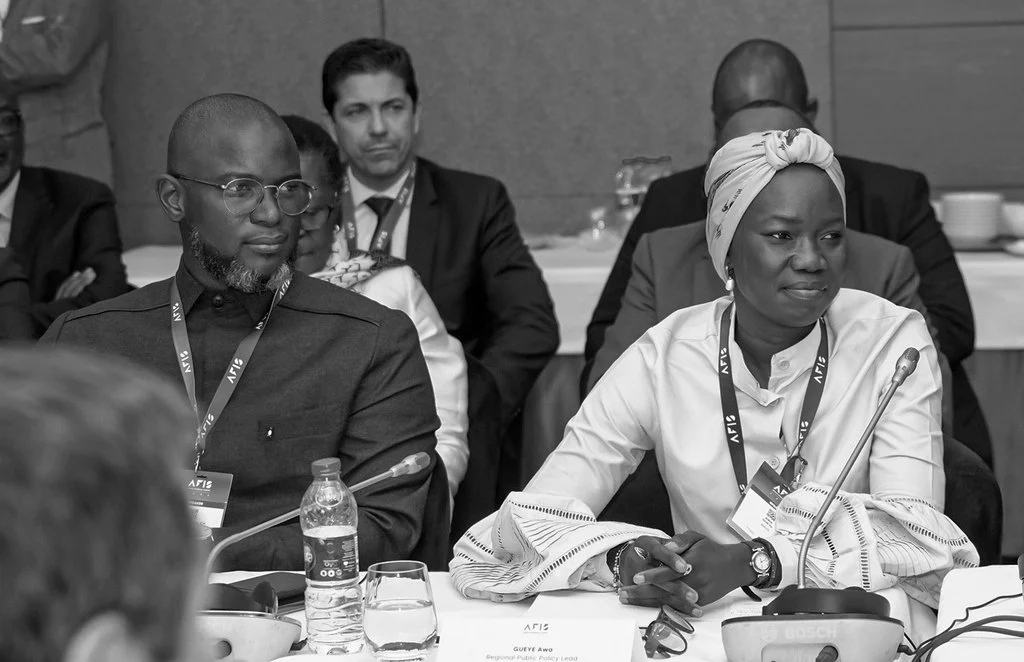
As mobile money platform Wave crosses the 25 million active account mark, its Public Policy Lead, Awa Gueye, tells GODFREY GEORGE how the company forced down prices across the WAEMU region—and details the structural and regulatory hurdles that still prevent millions of informal businesses and women from participating fully in the digital economy.
A decade ago, digital payments in Francophone West Africa were still at an early stage, with adoption and the services available gradually expanding. Wave Mobile Money accelerated this development when it launched in the region by introducing a radically lower, flat-fee pricing structure.
The resulting price war forced established telecom-backed operators to slash their own commissions, fundamentally altering the digital payments landscape across the West African Economic and Monetary Union (WAEMU). MTN MoMo eliminated withdrawal fees in Côte d’Ivoire in 2025, and Orange cut transfer fees to zero ahead of Wave’s launch in Cameroon.
For Awa Gueye, Wave’s Public Policy Lead, the true disruption is not merely in the pricing, but in the shift in consumer psychology.
“The biggest change is in what people expect,” Gueye says. “When someone sends small amounts several times a week, fees decide whether digital payments are part of daily life or reserved for emergencies. Once customers experience a low-cost, simple and reliable service, they expect that standard everywhere.”
That shift in expectation is borne out by the numbers. Wave now boasts 25 million active accounts, a figure Gueye uses to illustrate how rapidly unbanked populations will adopt digital financial services when the friction of cost and complexity is removed. This consumer demand has compelled the broader WAEMU market to pivot toward lower prices and improved product offerings.
For policymakers, however, the challenge is ensuring this new, competitive equilibrium is maintained. According to Gueye, regulatory frameworks must proactively protect the conditions that enabled this disruption, fostering a market where “providers compete on the value they deliver, and where the customer is the one who benefits.”
The Illusion of account ownership
While rising mobile money registration figures are frequently celebrated by governments and development agencies, Gueye cautions that mere account ownership is a flawed metric for evaluating financial inclusion.
“Opening an account is only the first step,” Gueye notes. “Inclusion is real when someone can use that account to receive income, pay a supplier, save a little, or deal with an unexpected expense, and when they trust it enough to do so every week.”
Genuine inclusion requires digital wallets to serve as gateways to savings, credit, and insurance—the financial instruments necessary for households and small enterprises to plan for the future and absorb economic shocks. However, several structural barriers continue to block this transition from basic access to active usage.
Cost remains a primary deterrent; for users making frequent, low-value transactions, even modest percentage-based fees rapidly erode capital, driving them back to the informal cash economy. Furthermore, stringent Know-Your-Customer (KYC) requirements disproportionately exclude rural populations and women, who frequently lack formal identification documents.
To overcome these hurdles, Gueye advocates for a shift in how regulators measure success, urging them to track user activity and economic outcomes rather than raw account numbers.
She also calls for the widespread adoption of tiered, risk-based KYC protocols that allow low-value accounts to be opened with simplified documentation. Governments, she suggests, could accelerate adoption by digitising the payment of civil service salaries, social welfare transfers, and supplier invoices.
Crucially, Gueye points to the potential of leveraging digital transaction histories to build alternative credit profiles, allowing individuals and small businesses without formal financial records to finally access responsible credit and insurance products.
Navigating the WAEMU regulatory labyrinth
Operating across multiple jurisdictions in Francophone West Africa presents a complex regulatory puzzle. While the WAEMU region benefits from a shared central bank (the BCEAO) and a unified framework for electronic money, friction arises when national regulations intersect with this regional base.
Rules governing taxation, telecommunications, data protection, and consumer rights often diverge from one country to the next. For a pan-African provider like Wave, a single product can be subjected to disparate compliance requirements across different borders, slowing the rollout of beneficial services.
Despite these bottlenecks, Gueye believes a balance between rapid innovation, consumer protection, and systemic stability is achievable, provided regulators engage in early, structured dialogue with industry players. She points to the BCEAO’s financial inclusion lab as a successful model, allowing regulators and providers to collaboratively test new concepts under controlled supervision.
Gueye argues that regulations should remain technology-neutral and risk-based, with clear implementation timelines and extensive industry consultation. “Regional coordination should keep a service built for one market usable in the next,” she says. “For any innovation, the same questions apply: who is accountable, how are customers protected, and what happens when something goes wrong?”
A cautious case for stablecoins
At recent industry gatherings, such as the Africa Financial Industry Summit (AFIS) and Moonshot by TechCabal, stablecoins have dominated discussions, particularly regarding their potential to streamline cross-border payments. While mobile money has successfully digitised domestic transfers, moving capital across African borders—especially between different currency zones—remains slow, expensive, and reliant on cumbersome correspondent banking networks.
Gueye acknowledges that stablecoins warrant serious attention, identifying cross-border settlement as their most credible use case.
“That gap is where stablecoins could help, for example in supporting SMEs to pay for their suppliers across borders or in faster settlement between regulated institutions to ensure business continuity for the end user,” she explains.
However, Wave’s approach remains pragmatic and compliance-driven. Gueye stresses that any integration of stablecoins would strictly require a clear regulatory framework and the explicit approval of relevant authorities in each operating market.
Designing for women’s economic agency
Perhaps the most persistent failure of Africa’s digital financial revolution is the continued marginalisation of women, both as consumers and as industry leaders.
For a digital financial product to truly serve a woman, Gueye argues, several prerequisites must be met: she must possess her own mobile device, hold her own identification, and retain sole control over her account. Beyond affordability, female users require stringent privacy protections, physical safety, and customer support accessible in their preferred language.
To close the gender gap, Gueye proposes targeted policy interventions. Chief among them is the implementation of simpler, tiered KYC requirements to address the identification deficit that disproportionately affects women.
She also urges regulators and providers to disaggregate their data by gender, providing a clearer picture of actual usage patterns rather than aggregate account ownership.
The digitisation of wages, social transfers, and market fees would also ensure capital is deposited directly into accounts controlled by women. Furthermore, the industry must design products tailored to the realities of female-led enterprises, offering affordable merchant payment solutions, savings tools, and digital transaction records capable of unlocking credit access. Increasing the number of female agents and frontline staff, who often establish trust more effectively with female customers, is also crucial.
Within the industry itself, female representation remains a priority for Wave, where women comprise 51% of the workforce.
“We believe diverse teams build better products for a wider range of customers,” Gueye says. “Women should help design products and shape the rules that govern them, as regulators, policy leads, engineers and founders. That means mentoring and sponsorship, transparent promotion paths, and making sure women have a seat at the table in consultations and industry forums.”
Ultimately, Gueye concludes, the success of these platforms should be judged by a single metric: economic agency—the tangible ability of users to receive income, make autonomous financial decisions, and grow their businesses.
