

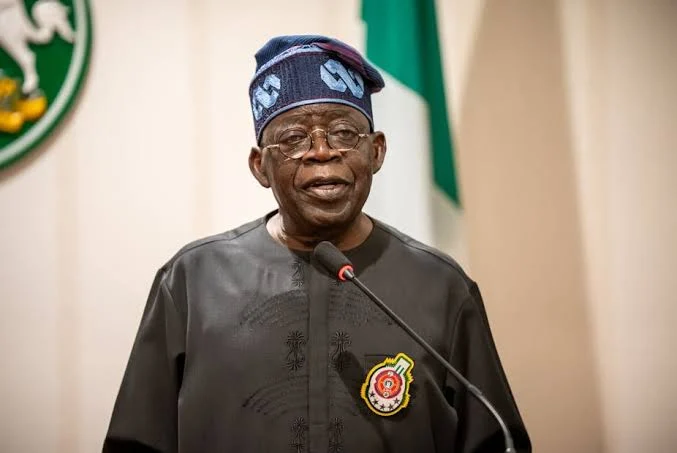

The time is ticking fast. Months are fast narrowing to weeks. It is 10 months to the 2027 general election. Yet, an eerie silence pervades the entire Lagos political landscape. President Bola Tinubu, whose imprimatur will decide many political fates, is battling a different kind of headache far from his re-election challenge. He is at that cliffhanging juncture that Yorubas proverbially refer to as ‘orita meta to n damu onile, to n damu alejo’ (the three-way crossroads or T-junction that confuses both the landlord and the guest).
Those who understand the Yoruba language in-depth know that this is not just about a physical road intersection; it means that for President Tinubu, the decision of who to support to succeed Governor Babajide Sanwo-Olu is a tough one that must be made dispassionately but carefully.
Lagos is not short of eminently qualified governorship materials. As a matter of fact, there is a long list of presumptive candidates across the three senatorial zones. But none of the serious contenders has dared to declare their intention for very obvious reasons.
However, whether President Tinubu wants to admit it or not, zeroing in on any candidate for the coveted Lagos governorship seat is the singular most important decision he will make as he nears the twilight of his political life. It is a decision that will either erode his political legacy or entrench and immortalise it. Thus, the President is literally walking on eggshells regarding the matter.
Those close to Mr President have reportedly warned him not to repeat the mistake of insisting on typically piggybacking a ‘technocrat’ for the governorship seat, a decision they reminded him almost cost him the presidential election in 2023 when he lost his Lagos base to the Labour Party candidate. Back in 2023, candidate Tinubu suffered his first-ever electoral loss in Lagos, his dear Lagos, because his governor did not have the political weight to deliver victory for him.
Now, where does President Tinubu go from here? Some of the names that keep coming up in political conversations and permutations are Obafemi Hamzat, incumbent deputy governor; Hakeem Muri Okunola, Principal Private Secretary to the President; Femi Gbajabiamila, Chief of Staff to the President; Dr Tunji Alausa, the Minister of Education; Senator Tokunbo Abiru, and Mudashiru Obasa, Speaker of the Lagos State House of Assembly. Alas, while not disputing their bona fides, some of the above names will not win a councillorship election.
Hamzat has never pretended to be a grassroots politician. He was chaperoned into public office by his late father, Oba Mufutau Hamzat, a Lagos West Senatorial District leader. Since his father went on to become a king in Ogun State before dying in 2019, Hamzat has struggled to be accepted by the political class, who still see him as an outsider. Besides, having served as commissioner twice and now as a deputy governor in his second term, there are insinuations that he should give others a chance to contribute to Lagos’ development.
Similarly, Gbajabiamila, a former Speaker of the House of Representatives, is perceived more as an Abuja politician than a Lagos person. He had been in the Lower Chamber since 2003 before becoming Speaker in 2019 and now the President’s Chief of Staff. So, his acceptance rating is abysmally low among the core political establishment in Lagos. Gbajabiamila also does not have a broad-based relationship with the rank and file in Lagos politics. Conversely, he is from Lagos Central, which produced former Governor Babatunde Raji Fashola and Sanwo-Olu, a major factor that disqualifies him outright.
On his part, Alausa is a complete newbie in Lagos politics. Though a successful medical practitioner, Alausa was an unknown name until he was appointed a minister in 2023. Throwing such a personality forward as a gubernatorial candidate at this 11th hour will not only be a hard sell, but it will amount to political hara-kiri for the President. Interestingly, when rumours swirled recently that he would be resigning soon to contest for the governorship seat, Alausa posted on X (formerly known as Twitter), “We’re still hard at work here at the FME (Federal Ministry of Education), don’t believe the rumours.”
There is a concerted clamour for the Lagos East Senatorial District to produce the next governor to complete the traditional two-term, considering that former Governor Akinwunmi Ambode did not return for a second term. While Ambode is still relatively popular among Lagosians, he is a pariah among Lagos politicians who see him as too vindictive and petty for a leader. It is widely reckoned that giving him another shot at the seat would see him return with a lot of vengeance against those who denied him a second term. More so, he is a Christian like the outgoing Sanwo-Olu. So, he is effectively not in contention.
Senator Tokunbo Abiru would have been a perfect alternative from the district, but like Alausa and Gbajabiamila, he also lacks the broad appeal or popularity to swing the votes. An Abiru candidature would mean that President Tinubu will be fighting two major political battles at the same time: his re-election and then getting his preferred candidate elected. The President cannot afford this.
Another name being bandied around is that of Hakeem Muri-Okunola. Though a thorough ‘Lagos boy’ who only recently moved to Abuja with the President, he has not shown any interest in the seat and does not appear to possess the fortitude for such an enormous task. Also, he is from Lagos Central, which has ruled Lagos for 16 years by the time Sanwo-Olu completes his tenure.
The last time Lagos West produced a governor was Tinubu (1999 – 2007).
Since then, the zone has been angling for the seat. The most formidable politician from the zone is Obasa, the longest-serving speaker in the history of Lagos. Aside from President Tinubu, no singular Lagos politician commands Obasa’s popularity and political bravura. A devout Muslim and experienced legislator, Obasa is the kind of candidate that will be put forward, and the president can go to sleep with two eyes closed.
Being elected six times into the House of Assembly is no mean feat; neither is serving as speaker for three consecutive terms. It underscores unambiguously that Obasa is a battle-tested political general.
Does the President need to be reminded that his largest number of votes in Lagos in 2023 came from Lagos West, and this was due to Obasa’s influence? Obasa understands the intimate nuances of Lagos’s local politics, and he embodies the state’s spirit of resilience and invincibility.
As speaker of Nigeria’s most important state legislature, Obasa has been at the forefront of initiatives and policies to foster the socio-economic prosperity and progress of the state. He has also played a significant role in positioning Lagos as a key player in Nigeria’s economic renaissance. Under him, the law that governs public procurement – Public Procurement Law (2021), which regulates how the state procures goods and services and promotes transparency and accountability in government spending, was made.
There is also the Appropriation Law for resource allocation for various development projects and initiatives, and the Public-Private Partnership Law that facilitates collaboration between the public and private sectors to deliver projects like roads, power plants, and other essential infrastructure.
To ensure the safety and security of Nigerians and foreigners alike, and boost the confidence of expatriates in coming to live and invest in Lagos, Obasa initiated the Lagos State Neighbourhood Safety Corps to assist and complement the police by providing valuable intelligence for crime prevention and facilitating the arrest of perpetrators of criminal activities in the state.
Also, to address the unemployment ravaging Lagos youths, Obasa fast-tracked the bill to establish the Lagos State Employment Trust Fund, whose objectives include facilitating employment opportunities and entrepreneurial development for Lagos residents, particularly focusing on providing access to affordable financing for small businesses, leading to job and wealth creation in the state.
When the coronavirus pandemic broke out in 2020, Obasa initiated the Emergency Coronavirus Pandemic Bill 2020, which was promptly passed into law to counteract and combat the spread of the virus in the state and allow Governor Sanwo-Olu the legislative concurrence to expend money required to effectively contain the virus and enforce compliance by Lagosians. His achievements as speaker are indeed legion.
While he has not openly declared an interest in the governorship seat, there is no gainsaying that Obasa holds the ace as to who can easily win the governorship contest and hit the ground running. It is only hoped that in supporting any candidate, President Tinubu would not allow himself to be swayed by primordial sentiments that will not augur well for his political legacy.
Williams, a public affairs analyst, writes from Lagos
