

Tinubu should not treat this as a one-off outburst of frustration. He should institutionalise it. He should do more in town halls with language a trader in Bodija and Agege market can understand. It should not be limited to an election period. Transparency offered once, in a moment of pique, is theatre. Transparency offered as policy is accountability.

It is, on its face, a complaint about concrete and cost overruns. It is, underneath, an invitation to interrogate power. When a sitting president stands in front of traditional rulers, men whose authority predates the republic itself, and essentially says watch your governors, ask them where the money went, he is doing something Nigerian democracy is starved of: inviting scrutiny downward, past the federal capital, into the state houses where financial strengthening of the governors’ grip on the states require citizens audits, thereby placing citizens above politics.
In Abuja on Thursday, while receiving traditional rulers from Oyo state led by Oba Rashidi Ladoja, the Olubadan of Ibadanland, President Bola Tinubu switched into his pro-democracy activist mode. He asked citizens across the country to evaluate their governors’ performance. He hinted at which states were effectively utilising the federal funds allocated to them versus which states were bottlenecking it. He asked the governors to “stop building flyovers where there is no numeric traffic.”
His point was unmistakable. States today receive significantly higher federal allocations than they did when both he and Ladoja served as governors over two decades ago. According to the President, many states now receive four to five times what they once did. So, the fiscal excuse of the governors for low performance is no longer there. In simple statement, there should be no more those ridiculous and senseless signboards of “bear with us, this road belongs to the federal government” that once appeared on Lagos roads during the old regime.
Yet, for millions of Nigerians, daily life remains stubbornly difficult.
Roads that connect farms to markets remain impassable. Primary healthcare centres struggle with basic equipment and personnel. Public schools continue to deteriorate. Rural communities remain vulnerable to insecurity, because access roads are poor and security agencies cannot respond quickly enough. When someone has seizure, there’s no emergency relief. The ambulances are not readily available at the community level. Water systems fail. Drainage collapses after modest rainfall. Youth unemployment remains painfully high.

The most successful governments do not build monuments to themselves. They build systems that make everyday life easier for ordinary people. A road that enables farmers to move produce efficiently may generate greater economic value than a billion-naira interchange erected where traffic hardly exists. A functional primary health centre may save more lives than another ceremonial commissioning. Investments in rural roads, water supply, drainage, schools and public safety often produce broader economic returns than projects designed primarily for political visibility.
That is the standard by which governors should now be evaluated.
Every major project announced by a state government should prompt simple but important questions. Was this the community’s greatest need? What measurable economic benefit will it produce? How many jobs will it create? Will it reduce travel time, improve productivity, strengthen security or expand access to healthcare and education? Could the same resources have delivered greater public value elsewhere?
For too long, accountability has flowed almost exclusively in one direction — towards Abuja. Every economic hardship, every inflationary spike, and every governance failure eventually finds its way to the doorsteps of the Federal Government. Meanwhile, many state governments escape rigorous public scrutiny, despite controlling increasingly substantial financial resources.
That imbalance weakens our democracy.
Nigeria operates a federal system. The quality of governance experienced by most citizens is determined not only by decisions taken in Abuja but also by those made in state capitals. Governors oversee enormous budgets. They determine infrastructure priorities. They influence healthcare delivery, education, agriculture, urban planning, environmental management and local economic development. They shape whether businesses flourish or struggle. Their decisions affect whether communities become more secure or more vulnerable.
Citizens therefore owe themselves a new civic responsibility.
Every major project announced by a state government should prompt simple but important questions. Was this the community’s greatest need? What measurable economic benefit will it produce? How many jobs will it create? Will it reduce travel time, improve productivity, strengthen security or expand access to healthcare and education? Could the same resources have delivered greater public value elsewhere?
These are not opposition questions. They are democratic questions. Accountability is not hostility. It is citizenship.
Tinubu should not treat this as a one-off outburst of frustration. He should institutionalise it. He should do more in town halls with language a trader in Bodija and Agege market can understand. It should not be limited to an election period. Transparency offered once, in a moment of pique, is theatre. Transparency offered as policy is accountability.
…here is the assignment for every Nigerian watching a flyover rise over an empty road in their state: ask who authorised it, what it cost, and what did not get built because of it. Ask your governor to publish where the FAAC allocations went, month by month. Ask whether the choices made in your state capital are protecting your family or merely decorating a skyline for the next campaign poster. This is not cynicism. It is the ordinary duty of care a citizen owes to their future.
There is precedent for this kind of presidential intervention, forcing citizens to confront their state leadership, and it is worth sitting with, because history rarely repeats, but it does rhyme with uncomfortable precision.
On 7 May, 1933, in his second fireside chat, America’s President Franklin D Roosevelt sat before a radio and, in plain, unhurried English, explained to ordinary Americans how the Federal Emergency Relief Administration would actually work. He spoke about how the money would move, what the states were expected to do with it, and why the programme existed at all. It was a masterclass in demystifying government. And it was, whether Roosevelt said so explicitly or not, an act that armed citizens to ask their governors and mayors an uncomfortable question: ‘If Washington sent the relief, why isn’t it reaching me?’
Here is the rub. Nigerians should recognise it: when the centre makes the mechanics of governance visible, Nigerians should follow the naira, the mandate and the arithmetic of allocation. It becomes far harder for the governors to hide behind vagueness. That is the gift buried inside Thursday’s remarks. Use it.
So here is the assignment for every Nigerian watching a flyover rise over an empty road in their state: ask who authorised it, what it cost, and what did not get built because of it. Ask your governor to publish where the FAAC allocations went, month by month. Ask whether the choices made in your state capital are protecting your family or merely decorating a skyline for the next campaign poster. This is not cynicism. It is the ordinary duty of care a citizen owes to their future.
Now, Tinubu’s remarks shouldn’t become a license for partisan attacks on governors. The President’s observation should instead encourage evidence-based public engagement.
The President, too, has a responsibility arising from his remarks. He should keep talking and explaining. In the end, regular public conversations from the president that distinguish federal responsibilities from those of the states would deepen democratic literacy and strengthen public oversight. Nigerians are ready to ask the question. They are simply waiting for the allocation receipts.
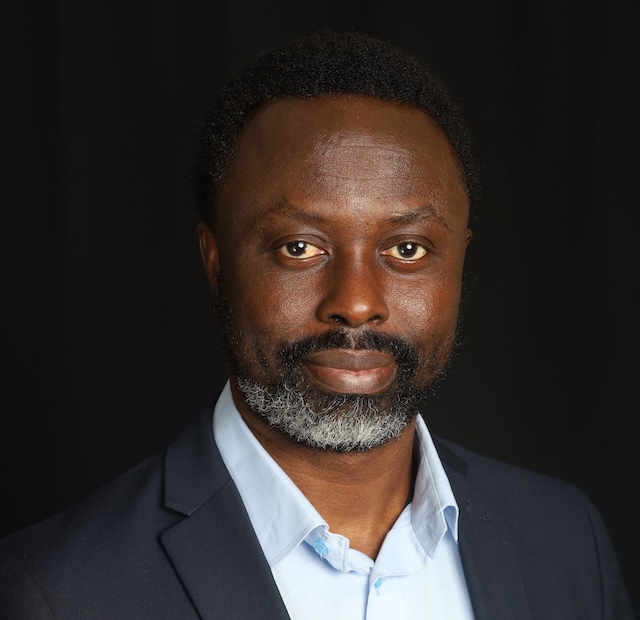
Adeola Akinremi is a public policy advisor, strategic communications expert, and the founder and CEO of Hintells, an AI-powered intelligence platform serving businesses and African diplomatic missions in Washington, DC. He has extensive multilateral experience advising on governance, economic and policy reforms across global markets and can be reached at: [email protected]
Discover more from Premium Times Nigeria
Subscribe to get the latest posts sent to your email.
