

Nigeria’s fiscal and foreign exchange reforms that improved external reserves, increased FX liquidity, and strengthened confidence in the economy have prompted an upgrade of the country’s sovereign credit rating, among other economic gains, ARINZE NWAFOR writes
Nigeria’s ongoing economic and financial sector reforms have received renewed international recognition following the recent decision by S&P Global Ratings to upgrade the country’s long-term foreign and local currency sovereign credit ratings from ‘B-’ to ‘B’, while maintaining a stable outlook.
On Saturday, PUNCH Online reported that S&P Global Ratings upgraded Nigeria’s long-term foreign and local currency sovereign credit ratings to “B” from “B-”, citing improvements in the country’s macroeconomic profile, external position, and ongoing economic reforms.
The report stated that the US-based global ratings agency announced the upgrade on Friday while affirming Nigeria’s short-term ratings at “B” with a stable outlook.
According to S&P, higher oil production and prices, increased domestic refining capacity, and the liberalisation of the foreign exchange market in 2023 have strengthened Nigeria’s economic growth and balance of payments position.
The global ratings agency attributed the upgrade to improving foreign exchange liquidity, stronger fiscal revenues, rising external reserves, and sustained structural reforms implemented over the past three years. S&P also affirmed Nigeria’s short-term sovereign ratings at ‘B’ and upgraded the country’s national scale ratings to ‘ngA+/ngA-1’ from ‘ngBBB+/ngA-2’.
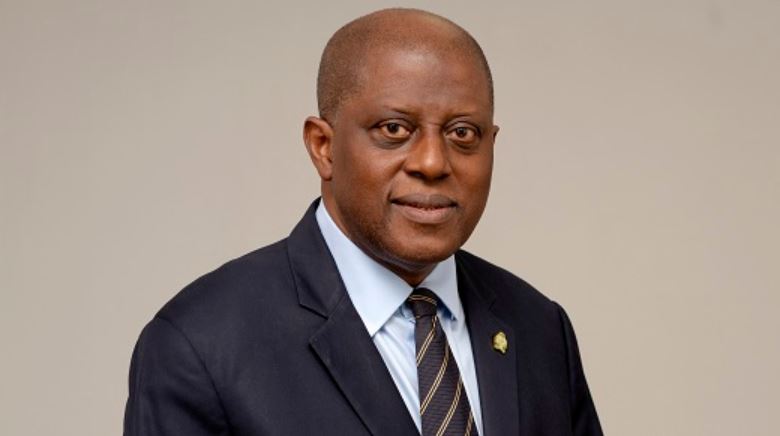
According to the agency, reforms introduced under the leadership of the Governor of the Central Bank of Nigeria, Olayemi Cardoso, particularly in the foreign exchange market, have significantly strengthened investor confidence and improved macroeconomic stability.
The ratings agency stated, “Following three years of sustained structural reforms, Nigeria’s creditworthiness has improved.” S&P noted that the liberalisation of the foreign exchange market had improved access to foreign currency and supported the transition to a market-driven exchange rate system. According to the agency, this has contributed positively to investor and consumer confidence while supporting growth in the non-oil sector of the economy.
A major highlight of the report was the significant improvement in liquidity within the foreign exchange market. S&P disclosed that average monthly FX turnover increased to $8.6bn in 2025, while April 2026 alone recorded nearly $10bn in market supply.
The agency further stated that Nigeria’s external reserves rose to $50bn as of March 2026, compared to approximately $33bn in 2023. It attributed the improvement to stronger current account balances, reduced import demand, the removal of fuel subsidies, and increased domestic refining capacity.
S&P also acknowledged recent fiscal reforms introduced by the Federal Government, particularly Executive Order 9 signed in February 2026, which mandates the Nigerian National Petroleum Company Limited to remit a larger share of petroleum revenues directly into the Federation Account.
According to the agency, government revenue is projected to rise to 12.4 per cent of GDP in 2026 from 7.3 per cent in 2023, while debt servicing pressures are expected to ease gradually over the medium term.
The agency projected that oil production would average 1.66 million barrels per day in 2026. It also forecast that Nigeria’s current account surplus would improve to 5.8 per cent of GDP, inflation would decline from 23 per cent in 2025 to 17.7 per cent in 2026, and real GDP growth would settle at 3.7 per cent in 2026 after recording four per cent growth in 2025.
The latest upgrade comes amid broader economic reforms aimed at stabilising the economy after years of exchange rate distortions, persistent fiscal deficits, and acute foreign exchange shortages.
Policies deployed
Since assuming office in October 2023, Cardoso has overseen a series of reforms targeted at rebuilding confidence in the financial system, strengthening economic resilience, and restoring stability in the foreign exchange market.
At the time he assumed office, inflation had climbed to 27 per cent, driven partly by rapid money supply growth. Although economic growth had remained weak at an average of 1.8 per cent over the previous eight years, money supply had continued to expand by roughly 13 per cent annually.
The imbalance contributed to worsening inflationary pressures and accelerated depreciation of the naira. Inflation also imposed severe pressure on households and businesses by eroding purchasing power and increasing the cost of living across the country.
To address the challenge, the Monetary Policy Committee of the CBN adopted an aggressive tightening stance, raising the Monetary Policy Rate by 875 basis points to 27.5 per cent in 2024. The move was aimed at curbing inflationary pressures and restoring macroeconomic stability.
Beyond inflation, Nigeria’s foreign exchange market was also burdened by significant distortions, including a backlog of more than $7bn in unmet foreign exchange obligations and the operation of multiple exchange rate windows.
The fragmented FX regime had encouraged arbitrage, discouraged foreign investment, and contributed to pressure on external reserves, which fell to $33.22bn in December 2023.
Analysts also noted that the cost of maintaining the previous FX subsidy framework exceeded that of the fuel subsidy regime. To address the distortions, the apex bank implemented reforms to unify the exchange rate system and improve transparency in the market.
The reforms enabled the CBN to clear outstanding foreign exchange obligations, restoring confidence among businesses, including manufacturers and international airlines.
As part of measures to improve market efficiency, the CBN introduced an Electronic Foreign Exchange Matching System designed to improve price discovery and transparency in the FX market. The system, which is widely used in developed and emerging markets, provides real-time information on exchange rates, trading volumes, and overall market activity.
The EFEMS was introduced to reduce speculative activities, eliminate distortions, and improve transparency in foreign exchange transactions.
Other global ratings
Apart from S&P, Fitch Ratings also acknowledged the impact of Nigeria’s recent economic reforms. Fitch commended the CBN’s commitment to exchange rate unification, the introduction of the electronic FX matching platform, the launch of a new FX code, and tighter monetary policy measures aimed at controlling inflation and stabilising the exchange rate.
The ratings agency also praised the Federal Government’s broader policy reforms initiated since June 2023, including exchange rate liberalisation, monetary tightening, fuel subsidy removal, and efforts to end deficit monetisation.
According to Fitch, “These have improved policy coherence and credibility and reduced economic distortions and near-term risks to macroeconomic stability, enhancing resilience in the context of persistent domestic challenges and heightened external risks.”
As part of its continuing reforms, the CBN recently launched the Nigeria Foreign Exchange Code in Abuja to strengthen transparency, accountability, and confidence within the foreign exchange market.
The FX Code is built on six key principles covering ethics, governance, execution, information sharing, risk management, and compliance, as well as confirmation and settlement processes.
According to the CBN, the principles align with international standards while addressing the peculiar challenges within Nigeria’s foreign exchange market. Cardoso described the FX Code as a major step toward entrenching transparency and accountability in the financial system.
He said, “The FX Code represents a decisive step forward, setting clear and enforceable standards for ethical conduct, transparency, and good governance in our foreign exchange market. The era of opaque practices is over. The FX Code marks a new era of compliance and accountability. Under the CBN Act 2007 and BOFIA Act 2020, violations will be met with penalties and administrative actions.”
Cardoso added that reforms implemented in 2024 had helped move the naira closer to a market-determined exchange rate while reducing volatility caused by long-standing distortions.
According to him, “The year 2024 was marked by structural reforms that sought to return the naira to a freely determined market price and ease volatility as several distortions were removed from the market.”
The FX Code forms part of the CBN’s broader efforts to strengthen compliance and governance standards across the financial sector. In addition to its six guiding principles, the framework contains 52 sub-principles intended to serve as benchmarks for conduct among participating institutions.
The framework is backed by the provisions of the CBN Act 2007 and the Banks and Other Financial Institutions Act 2020, which empower the apex bank to establish and enforce standards governing foreign exchange business in Nigeria.
Under the framework, all participants in the FX market are expected to comply fully with the stipulated guidelines.
Stakeholders react
Stakeholders within government and the financial sector have welcomed the recent sovereign rating upgrade, describing it as evidence that Nigeria’s economic reforms are gradually restoring international confidence.
Minister of Finance and Coordinating Minister of the Economy, Taiwo Oyedele, said the Federal Government welcomed S&P’s decision to upgrade Nigeria’s sovereign rating from “B-” to “B” with a stable outlook.
According to him, the latest ratings actions by S&P, Fitch, and Moody’s reflect increasing confidence among global investors and international financial institutions in Nigeria’s economic reform agenda and medium-term outlook.
“These independent assessments collectively affirm that the difficult but necessary reforms undertaken under the leadership of President Bola Ahmed Tinubu are yielding measurable results and laying the foundation for a more stable, transparent, and resilient economy,” Oyedele stated.
He noted that S&P highlighted improvements in Nigeria’s external financial position, stronger balance of payments performance, rising crude oil production, and expanding domestic refining capacity.
The minister added that the agency also acknowledged reforms in the foreign exchange market and fiscal policies aimed at improving revenue generation, debt sustainability, and transparency in public finance management.
Oyedele further stated that Nigeria’s debt-to-revenue ratio had improved considerably since 2023 and was expected to decline further as reforms continued to gain traction.
According to him, the positive assessments from major ratings agencies send a strong signal that Nigeria is gradually rebuilding macroeconomic credibility.
“The government remains firmly committed to prudent fiscal management, macroeconomic stability, and structural reforms that promote inclusive and sustainable growth,” he noted.
He also reiterated the Federal Government’s opposition to the return of fuel subsidies, arguing that the previous subsidy regime created severe fiscal distortions, encouraged smuggling, and weakened foreign exchange liquidity.
According to Oyedele, the administration remains committed to a market-driven economy founded on transparency, competition, and effective regulation. He stated that the government would continue implementing policies aimed at encouraging private sector investment and improving the business environment.
“We are focused on addressing inflationary pressures, improving food security, expanding decent job opportunities, and ensuring that economic growth translates into meaningful and inclusive prosperity for all Nigerians,” he said.
He added that reforms would continue to be implemented by federal, state, and local governments “with discipline, pragmatism and compassion” alongside continuous engagement with citizens and stakeholders.
The impact of the reforms has also attracted recognition beyond the ratings agencies. Cardoso was recently named African Central Bank Governor of the Year by the African Banker Awards Committee, an honour that many industry stakeholders linked to the sweeping reforms introduced under his leadership at the CBN.
According to the organisers, the award recognised Cardoso’s “bold and strategic” leadership in implementing monetary and regulatory reforms that have restored confidence and stability in Nigeria’s financial system.
The committee commended the apex bank for introducing policies aimed at stabilising the naira while improving efficiency and transparency in the foreign exchange market.
It noted that the reforms had laid the foundation for stronger macroeconomic resilience and renewed investor confidence. Now in its 19th year, the African Banker Awards is organised annually by African Banker magazine with the African Development Bank Group serving as the official patron.
The event attracts top government officials, banking executives, and development finance institutions from across Africa to recognise achievements within the continent’s financial services sector.
Since his appointment in 2023, Cardoso has continued to implement reforms designed to stabilise the foreign exchange market, strengthen policy credibility, and attract foreign investment into the Nigerian economy.
Since its establishment in 2007, the African Banker Awards has focused on recognising individuals and institutions contributing to the transformation of Africa’s financial services industry.
