

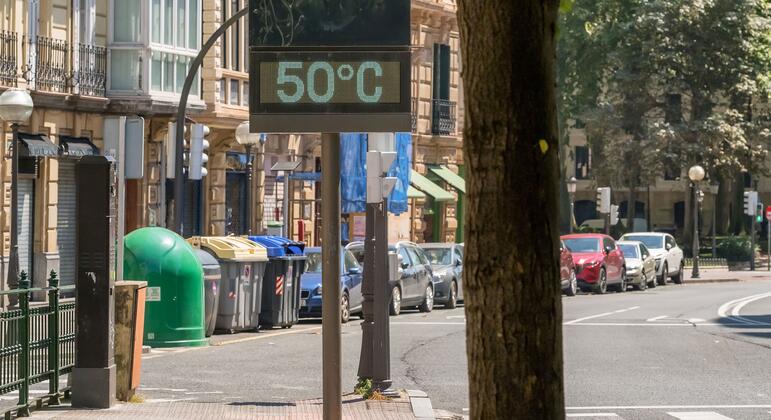
Europe is the fastest-warming continent on the planet, with temperatures rising at approximately twice the global average, which is placing growing pressure on health systems, social care services and communities already facing more frequent and intense heatwaves.
Data from five countries already shows nearly 10,000 excess deaths linked to the extreme heat this summer.
The heat is on
WHO described extreme heat as an urgent and growing public health threat that is expected to hit harder each year. It is driven by climate change and worsened by urbanization and population ageing, rapidly increasing illness and deaths.
“Our region is the fastest-warming region globally. In the past four years alone, heat has claimed more than 200,000 lives, while heat-related mortality has risen by 30 per cent over the past 20 years,” said Dr Hans Kluge, WHO Regional Director for Europe.
He stressed that “heat deaths are not inevitable” because “we know how to protect people: warn communities early, make cities cooler, ensure access to water and shade, check on those most at risk and prepare health systems before temperatures peak.”
An oncologist consults with a cancer patient at a hospital in Lyon, France. (file)
Hospitals feel the heat
The new guidance will help countries to strengthen Heat–Health Action Plans (HHAPs), which connect weather alerts to public health measures such as outreach to people most at risk, cooling spaces, surge planning in hospitals and clear advice for the public.
WHO underscored the need to build resilient health facilities. Heatwaves can overwhelm hospitals that may not be designed to cope with higher temperatures, especially as admissions rise.
This is particularly the case in cities, where built-up areas trap heat and remain warmer than surrounding rural or suburban areas.
Hospital buildings can overheat, causing power supplies, cooling systems as well as computers and tech services to fail. Moreover, staff as well as patients can become stressed and burned out due to the heat.
Romania’s ‘cool’ hospital
In Romania, Buhuși Hospital is adapting to meet the challenge.
The facility has established a designated cool space for people suffering from heatstroke, providing cool water and medical staff trained to spot the early signs of heat exhaustion. Authorities have also applied for funding to install a high-efficiency cooling system throughout the entire building.
Assessment, investment and readiness
WHO is supporting such efforts across Europe through its Hospital Safety Initiative which uses the Hospital Safety Index to assess whether health facilities are likely to remain operational during emergencies.
The index was traditionally used for hazards such as earthquakes and floods but is increasingly helping countries to identify climate and weather risks, including extreme temperatures.
Armenia, Georgia, Kazakhstan, Poland and Ukraine have conducted assessments and training with WHO support in recent years, helping authorities prioritise investments and improve readiness.
UK takes action
The United Kingdom provides another example of how Heat–Health Action Plans can guide response.
The UK’s Adverse Weather and Health Plan uses a colour-coded alert system, developed with the national Met Office, that links each alert level to practical actions for health services, local authorities, community groups and the public.
In May, officials issued amber alerts in anticipation of record-breaking temperatures of 35.1 degrees Celsius. Red alerts were issued the following month, when parts of the country reached unprecedented temperatures of up to 37.7°C.
New guidance
WHO first published comprehensive guidance on HHAPs in 2008.
The new guidance sets out eight core elements for countries and local authorities, namely governance, heat warning systems, protection for populations at increased risk, communication, health system resilience, reducing heat exposure, surveillance, and monitoring, evaluation and learning.
It also contains five user action briefs for key sectors and a public health message bank with practical steps people can take to protect themselves and others.
