

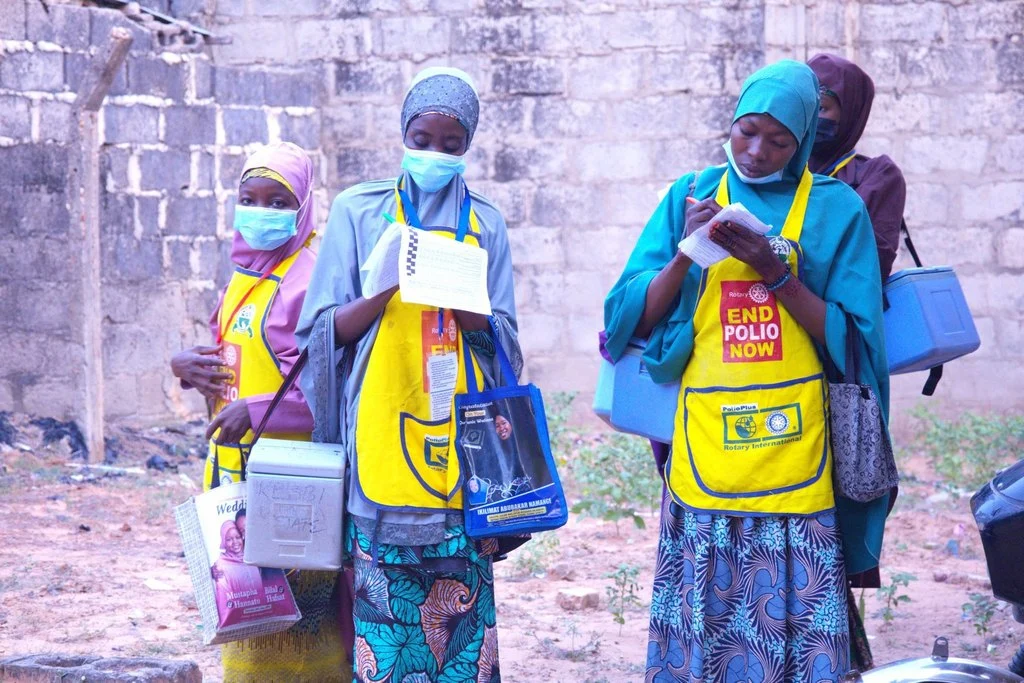
Getting a vaccine to a child starts long before anyone loads a cold box. It starts with knowing the child’s community exists.
About 2.1 million Nigerian children, representing 24% of the country’s estimated 8.7 million under-one population, had not received a single routine vaccine dose, according to the United Nations Children’s Fund (UNICEF). The 2023 estimate made Nigeria the country with the highest number of zero-dose children globally.
Some live in remote settlements cut off from health facilities by difficult terrain and long distances. Others live in conflict-affected communities or settlements missing from the maps and population estimates used to plan campaigns. Without reliable information about where people live and how to reach them, health authorities risk excluding them from vaccination campaigns.
For more than a decade, eHealth Africa, a non-profit developing data-driven solutions for health systems, has supported Nigeria’s immunisation programmes through geospatial settlement mapping, digital campaign planning with PlanFeld and vaccine delivery tracking. In the first half of 2026 alone, vaccination campaigns supported by the organisation reached more than 23 million children across over 205,000 settlements in Nigeria, according to its 2026 Mid-Year Report. But these tools will only endure if Nigerian institutions can fund, operate and maintain them.
Finding communities the health system cannot see
Before digital tools became part of immunisation planning, programmes relied on traditional leadership structures to identify and reach communities. Abubakar Shehu, who leads eHealth Africa’s Disease Prevention and Monitoring interventions, says networks linked paramount rulers to smaller communities through subordinate leaders, extending to individual settlements.
“No matter how small a community is in northern Nigeria, they have a leader, and that leader is as important to us as somebody within the traditional system,” Shehu says.
In a 2021 publication, UNICEF said Nigeria’s immunisation programme relied on multiple paper-based registries to record maternal and child health information. Delays in getting those records to decision-makers, alongside manual data collection and analysis, contributed to children missing campaigns, particularly in hard-to-reach, conflict-affected and urban-poor communities.
For eHealth Africa, one response was to improve settlement mapping. “We’ve gone from hand-drawn maps to GIS maps. So it has helped us to be able to correctly identify the settlements and the missed communities in the field,” Nnenna Ohaeri, project manager at eHealth Africa who was involved in developing its digital microplanning programme, said.
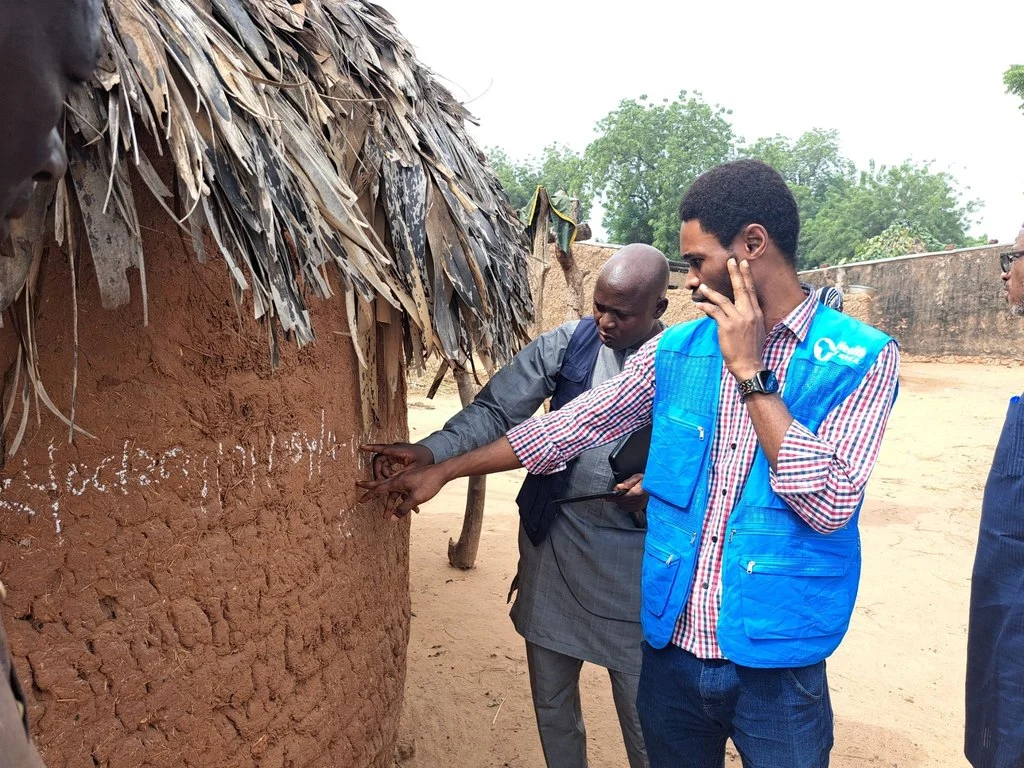
The organisation’s geospatial work collects information about settlements, including their locations, habitation status, accessibility, community leadership and public amenities such as schools, markets, churches and mosques.
But knowing where a settlement is does not always mean the local government responsible for it can reach it easily. Shehu describes communities that fall within one local government area but are more accessible from another because a river separates them from the first. In such cases, vaccination teams from the neighbouring local government can reach the settlement, while the relevant records are transferred to the local government responsible for it.
“Having the technological details of the locations where the people are residing is different, and also accessing the community is different,” Shehu said.
Geospatial tracking also helps eHealth Africa identify settlements vaccination teams have missed. Shehu said the organisation began using the technology to track vaccination teams after administrative reports showed 100% coverage even as outbreaks continued.
“When we started using it in Nigeria, we discovered that the actual geographical coverage is far lower than what has been reported by the administrative data,” he said.
Knowing where communities are and how to reach them is only the first step. Health authorities must also translate that information into vaccination plans, schedules and team assignments.
Turning settlement data into vaccination plans
To address planning challenges, eHealth Africa developed PlanFeld, a digital tool that generates microplans and daily implementation plans for vaccination teams.
Conventional microplanning could take four to five days per local government area, sometimes stretching to 10. It also required money for refreshments and hired personnel, Shehu said. With a limited health workforce, he argued, taking health workers away from their duties for days to plan campaigns was inefficient.
“We were able to reduce the turnaround time of the microplanning from maybe five days in some instances, even up to 10 days, to between five and 10 minutes,” Shehu said.
PlanFeld generates daily implementation plans alongside the broader microplan, removing the need for health workers to return to ward level to prepare assignments. It stores settlement information in one repository and allocates workloads to teams, helping prevent omissions of sub-settlements under manual planning, Shehu said.
Ohaeri said PlanFeld had also reduced the funds allocated to microplanning, creating savings for government. “We have reduced the number of funds that are usually allocated for that process. So we have been able to have some cost savings for the government,” she said.
The plans depend on reliable data. Shehu said eHealth Africa and other polio eradication partners validate settlement information every two months with community leaders, local government officials and programme partners. This is especially important in northern Nigeria, where insecurity can change whether settlements are inhabited between campaigns. The updated information feeds into PlanFeld.
eHealth Africa tested the tool’s team-allocation approach in Kebbi State, which had repeatedly complained that it lacked enough teams to immunise the number of children it needed to. After observing three campaign rounds, the organisation introduced the digital microplan in the fourth.
The exercise found Kebbi needed only seven additional teams, less than 5% of its existing total. The bigger problem was the uneven distribution of teams across local governments.
“There are some local governments that have several teams that are beyond what they needed, and there are some that have fewer than they needed,” Shehu explained. “We were able to do rationalisation within the state, and that significantly reduced the number of settlements that were being missed during the implementation.”
Shehu said the proportion of settlements planned for vaccination but missed during implementation fell from more than 20% in an observed campaign to around 6% in a subsequent round using the digital microplan.
Once vaccination teams have their assignments, the next challenge is getting vaccines to the facilities they serve.
Getting vaccines to the last mile
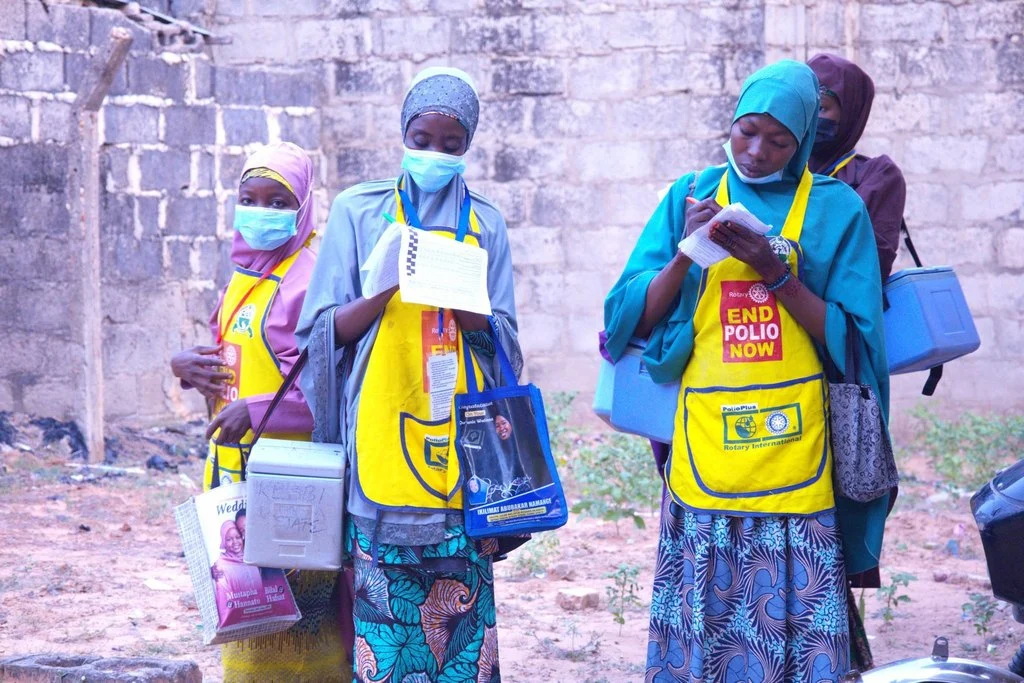
eHealth Africa said it supports a push model of vaccine delivery, collecting vaccine commodities from state central medical stores and transporting them to health facilities. The organisation uses geospatial technology to plan delivery routes, helping officers reach facilities while managing time and logistics costs.
“Logistics is always difficult to handle, but if you have a system in place to support the delivery model that you are using, it tends to make it easier,” Shehu said.
eHealth Africa’s Logistics Management Information System (LoMIS) supports deliveries by giving health authorities visibility into vaccine movements and facility stock levels. State and local government immunisation officers can track vaccines in transit, identify facilities needing replenishment and redistribute excess stock to facilities facing shortages.
“From the comfort of the office of the state control officer, you’ll have visibility in terms of the location of every vaccine,” Shehu said.
Delays in receiving facility-level data can slow state decisions about where vaccines are needed.
“If your data is coming to the state level late, it will delay decision-making. And when you delay decision-making, the program tends to suffer,” Shehu said.
Vaccine shortages can also undermine demand. Shehu said caregivers turned away because a facility has run out of stock often do not return.
“Despite all the effort being put into the demand side, if vaccines are not available at the facility, caregivers who bring their children for immunisation may be asked to return another day. In most cases, they will not come back,” Shehu said.
The programme also handles reverse logistics: eHealth Africa collects vaccine waste from health facilities and transports it to a central point for incineration, Shehu said.
When vehicles cannot reach a facility, a representative may meet a delivery officer at an accessible central location to collect vaccines, Shehu said.
In Sokoto State, eHealth Africa’s 2026 mid-year report said the number of health facilities served through its Vaccine Direct Delivery intervention increased from 351 to 407. The programme also delivered approximately 3.41 million vaccine antigens in the state during the first half of 2026 to support immunisation services in underserved communities.
In Borno State, eHealth Africa said it uses Indigo Vaccine Carriers to support immunisation in communities affected by insecurity. The carriers maintain vaccines at +2°C to +8°C for up to five days without ice or electricity. Since 2021, the organisation says Indigo systems have immunised more than 496,000 children.
“Facilities using Indigo have cut transport costs by 50%, moved from two sessions a week to daily services, and are reaching almost twice as many children compared to ice-pack carriers,” Tahir Buhari, senior research manager at eHealth Africa, said.
Keeping vaccines potent at health facilities
Getting vaccines to health centres is only part of the challenge; keeping them potent is another, particularly with Nigeria’s unreliable electricity supply.
“If you expose some of the vaccines and they freeze, they are damaged. If you expose them to temperatures above eight degrees Celsius, they are damaged. So what that means is you have to have a constant way of powering your refrigerators to keep your vaccines potent,” Shehu said.
With support from UNICEF, eHealth Africa said it has installed solar power systems at primary healthcare centres through its Renewable Energy for Primary Healthcare (RE4PHC) programme. Shehu said the intervention improved service delivery at solarised facilities, particularly in maternal and newborn healthcare, with an increase in the number of deliveries conducted at some primary healthcare centres.
The organisation also remotely monitors the systems to detect faults and send technicians to affected facilities. “So it’s a smart system that is beyond just providing electricity,” Shehu said.
According to eHealth Africa’s 2026 mid-year report, the organisation had solarised 238 primary healthcare centres across 12 states. In the first half of 2026, 226 remotely monitored facilities generated 277,800 kWh of electricity, avoiding an estimated ₦166 million in fuel costs.
Building systems that can outlast projects
Immunisation systems depend not only on technology but also on people to operate them, resources to maintain them and funding to keep them running. Shehu identified limited technical capacity, high upfront costs and donor dependence as major sustainability challenges.
“There are some systems that work in advanced countries, but if you bring them into the Nigerian context or an African context, we don’t have the capacity to manage them at the initial stage,” he said.
He said sustainability must be considered before deployment, with government and intended users involved from the design stage, particularly given the cost of introducing technologies and maintaining them after donor funding ends.
“If you want sustainability in all your interventions, the first thing you need to do is consider human-centred design, designing with the government as well as the beneficiaries,” he said.
Technology partners must also consider what governments would spend to develop, deploy and operate systems after external support ends, Shehu said.
“Why most of the technology innovations are failing is because we focus more on designing and implementing them, but we don’t take into consideration how much it will cost for the government to continue running that intervention after our exit,” he said.
Ohaeri stressed the need for domestic funding to sustain these programmes. Under the 2001 Abuja Declaration, African governments committed to allocating at least 15% of their annual budgets to healthcare, but Nigeria has yet to meet that target, she said.
“With the Abuja Declaration of 2001, we agreed on a 15% investment, but I don’t think that Nigeria has ever gone beyond 5%,” she said.
She added that governments must also build the capacity of local health workers to continue using these tools and improving healthcare delivery without relying on donor or international partner support.
This infrastructure could also support maternal, newborn and child health, disease surveillance, emergency preparedness, and sexual and reproductive health services, Shehu said.
Governments would need to coordinate digital health investments, establish common data standards and make platforms interoperable to avoid disconnected systems, he said.
“Ultimately, Africa does not simply need more digital health platforms. We need connected, sustainable and people-centred systems that translate reliable data into better decisions, stronger service delivery and equitable access to healthcare,” he said.
