

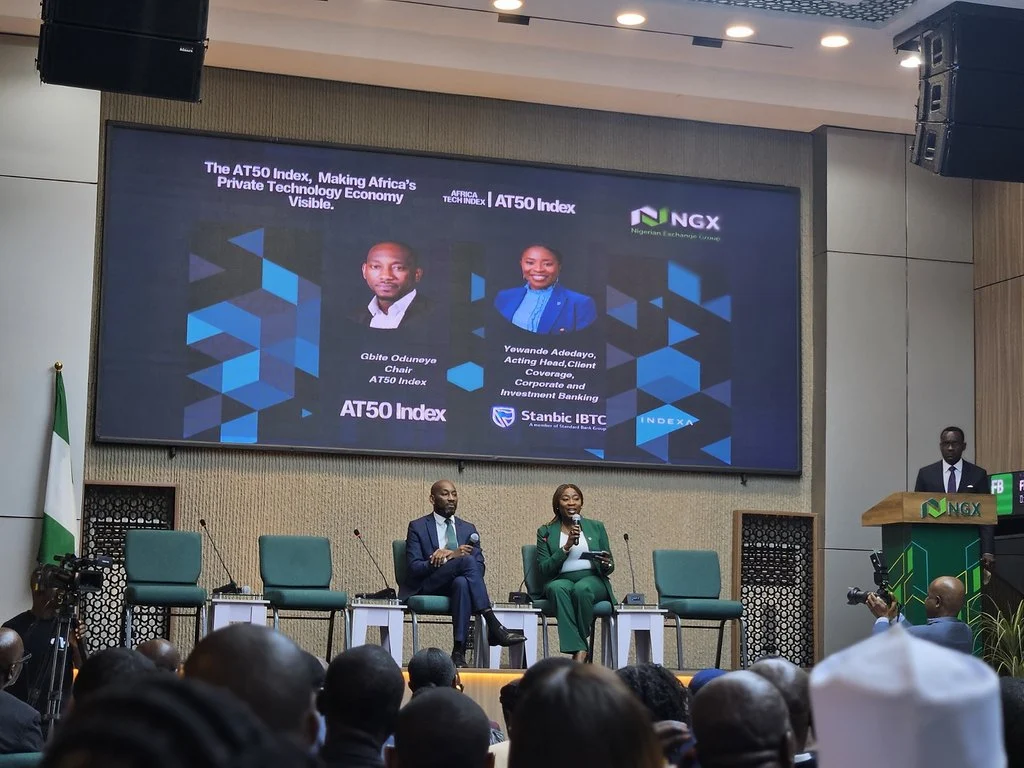
There are 146 companies listed on the Nigerian Exchange (NGX), a number the bourse wants to double as it works towards a $1 trillion market capitalisation over the next decade.
“We are looking forward to all the founders here to take advantage of our platform to also increase that number,” Jude Chiemeka, chief executive officer of the NGX, said at the Lagos launch of the AT50 Index on Wednesday. “We do have a very strong ambition to double that number in the near term. The Securities and Exchange Commission (SEC) capital market plan aims to raise the equity capital market to $1 trillion in the next 10 years.”
Nigeria’s equity market closed at $117.11 billion on Thursday, a fraction of the Johannesburg Stock Exchange’s (JSE) approximately $1.35 trillion market capitalisation. South Africa’s exchange represents the scale Nigeria hopes to achieve.
Nigeria’s stock market has jumped 61.31% since January 2, when it had a market capitalisation of $72.6 billion. That means its value has almost doubled in roughly 11 months, reflecting a strong rally in Nigerian equities. If the market sustains annual growth of 30%, it could cross the $1 trillion mark in roughly nine years, reaching approximately $1.24 trillion by November 2035.
But sustaining this pace will require more companies entering the market, more capital being raised, and a broader pool of investors willing to finance businesses listed on the exchange.
This is where technology companies become important to the NGX’s ambition.
Over the past decade, venture capital has helped build a generation of African technology businesses operating across payments, financial services, logistics, and other sectors. Since 2016, approximately $22 billion has flowed into African startups.
Some of these businesses have grown into companies valued at hundreds of millions of dollars, with a handful reaching billion-dollar valuations. Yet many remain privately held, relying largely on venture capital and private equity to finance their expansion.
For the NGX, bringing these businesses into the public market would expand its pool of listed companies while giving technology founders access to another source of financing.
/* Mobile-First Responsive Styles */
.tc-terminal-container * { box-sizing: border-box; }
.tc-header { padding: 32px 32px 24px; border-bottom: 1px solid #232323; background: #0a0a0a; }
.tc-body { padding: 32px; }
.tc-title { margin: 0 0 8px; font-size: 1.75rem; font-weight: 700; color: #FFFFFF; letter-spacing: -0.5px; line-height: 1.2; }
.tc-desc { margin: 0; font-size: 1rem; color: #A0A0A0; line-height: 1.5; }
.tc-section { margin-bottom: 48px; }
.tc-section-title { margin: 0 0 16px; font-size: 0.875rem; text-transform: uppercase; letter-spacing: 1px; color: #EA2D2E; font-weight: 700; }
.tc-grid { display: grid; gap: 24px; margin-bottom: 24px; }
.tc-grid-2 { grid-template-columns: repeat(auto-fit, minmax(220px, 1fr)); }
.tc-card { background: #232323; padding: 24px; border-radius: 8px; }
.tc-stat-card { background: #232323; padding: 20px; border-radius: 8px; }
.tc-stat-label { font-size: 0.75rem; color: #A0A0A0; text-transform: uppercase; margin-bottom: 4px; font-weight: 600; }
.tc-stat-val { font-size: 2rem; font-weight: 700; color: #FFFFFF; line-height: 1.2; }
.tc-stat-val.highlight { color: #EA2D2E; }
.tc-range { width: 100%; accent-color: #EA2D2E; margin-bottom: 16px; height: 6px; border-radius: 4px; outline: none; }
.tc-preset-group { display: flex; gap: 8px; flex-wrap: wrap; margin-bottom: 24px; }
.tc-btn-preset { flex: 1 1 auto; background: transparent; border: 1px solid #555; color: #D0D0D0; padding: 10px 14px; border-radius: 4px; cursor: pointer; font-size: 0.875rem; font-weight: 600; transition: all 0.2s ease; text-align: center; }
.tc-btn-preset:hover { border-color: #EA2D2E; color: #FFFFFF; }
.tc-btn-preset.active { background: #EA2D2E; color: #FFFFFF; border-color: #EA2D2E; }
.tc-input { width: 100%; padding: 12px; background: #0a0a0a; border: 1px solid #444; color: #FFFFFF; border-radius: 4px; font-family: inherit; font-size: 1rem; }
.tc-divider { border: none; border-top: 1px solid #333; margin: 0 0 40px 0; }
.tc-chart-container { background: #0a0a0a; border: 1px solid #333; border-radius: 8px; padding: 16px; height: 220px; position: relative; }
.tc-summary-box { background: #232323; border-left: 4px solid #EA2D2E; padding: 24px; border-radius: 4px; }
/* Mobile Adjustments */
@media (max-width: 640px) {
.tc-terminal-container { margin: 16px 0; border-radius: 0; border-left: none; border-right: none; }
.tc-header { padding: 24px 16px 16px; }
.tc-body { padding: 20px 16px; }
.tc-title { font-size: 1.5rem; }
.tc-desc { font-size: 0.95rem; }
.tc-grid { gap: 16px; }
.tc-stat-card { padding: 16px; }
.tc-card { padding: 16px; }
.tc-stat-val { font-size: 1.75rem; }
.tc-preset-group { flex-direction: column; gap: 12px; }
.tc-btn-preset { width: 100%; padding: 12px; }
.tc-summary-box { padding: 16px; }
.tc-chart-container { height: 180px; }
}
The $1 Trillion Ambition
Explore what it will mathematically take for the Nigerian Exchange (NGX) to reach a $1 trillion market capitalisation, and the role tech unicorns could play.
1. The Current Reality
Gap: $882.89B
Note: The NGX aims to double its 146 listed companies to 292. However, doubling the company count does not automatically double the market capitalisation.
2. The Compound Growth Timeline
Assuming no new listings, how long would it take for organic compound growth to carry the NGX to $1 trillion?
3. What if NGX adds 146 companies?
The exchange wants to double its listings. What average market cap must these new companies command to make a dent?
4. The Tech IPO Reality Check
If Africa’s unicorns list on the NGX, how much real capital is raised? Note: A $1B valuation does not mean $1B flows into the exchange. Funds raised depend on the equity floated.
Small ($100M)
Mid-sized ($250M)
Large ($500M)
Unicorn ($1B)
Large Unicorn ($2B)
OPay Scale ($4B)
5. The Regional Benchmark
To understand the $1T goal, look at South Africa’s Johannesburg Stock Exchange (JSE), the scale Nigeria hopes to achieve.
$117.11B
$1,350B ($1.35T)
The JSE is currently 11.5x larger than the NGX in market capitalisation.
The Final Reckoning
Under your scenario, relying purely on a 15% organic growth rate, Nigeria’s stock market could reach $1 trillion in 2042. Even if 146 new mid-sized companies and 5 tech unicorns listed today, they would only contribute $78B in immediate market capitalisation.
TECHCABAL
document.addEventListener(“DOMContentLoaded”, () => {
// Constants
const CURRENT_CAP = 117.11;
const TARGET_CAP = 1000;
const CURRENT_YEAR = 2026;
const NEW_LISTING_TARGET = 146;
// DOM Elements
const growthSlider = document.getElementById(“tc-growth-slider”);
const growthVal = document.getElementById(“tc-growth-val”);
const yearsOutput = document.getElementById(“tc-years-output”);
const yearOutput = document.getElementById(“tc-year-output”);
const chartPath = document.getElementById(“tc-chart-path”);
const presetGrowths = document.querySelectorAll(“.tc-preset-growth”);
const listSlider = document.getElementById(“tc-list-slider”);
const listVal = document.getElementById(“tc-list-val”);
const listAdded = document.getElementById(“tc-list-added”);
const listDent = document.getElementById(“tc-list-dent”);
const presetLists = document.querySelectorAll(“.tc-preset-list”);
const techSize = document.getElementById(“tc-tech-size”);
const techCount = document.getElementById(“tc-tech-count”);
const floatSlider = document.getElementById(“tc-float-slider”);
const floatVal = document.getElementById(“tc-float-val”);
const techCap = document.getElementById(“tc-tech-cap”);
const techProceeds = document.getElementById(“tc-tech-proceeds”);
const summaryText = document.getElementById(“tc-summary-text”);
const resetBtn = document.getElementById(“tc-reset-btn”);
// Formatters
const formatB = (val) => val >= 1000 ? “$” + (val/1000).toFixed(2) + “T” : “$” + val.toFixed(1) + “B”;
const formatM = (val) => val >= 1000 ? “$” + (val/1000).toFixed(2) + “B” : “$” + Math.round(val) + “M”;
// SVG Chart Drawer
const drawChart = (rate, years) => {
if (years > 100) years = 100;
let d = “”;
for(let i = 0; i TARGET_CAP) val = TARGET_CAP;
let x = (i / years) * 100;
let y = 100 – ((val / TARGET_CAP) * 100);
d += (i === 0 ? “M ” : “L “) + `${x} ${y} `;
}
chartPath.setAttribute(“d”, d);
};
// Updaters
const updateGrowth = (val) => {
growthVal.textContent = val + “%”;
growthSlider.value = val;
let years = Math.ceil(Math.log(TARGET_CAP / CURRENT_CAP) / Math.log(1 + val/100));
if (!isFinite(years) || years > 500) {
yearsOutput.textContent = “Never”;
yearOutput.textContent = “N/A”;
drawChart(0, 1);
} else {
yearsOutput.textContent = years + (years === 1 ? ” Year” : ” Years”);
yearOutput.textContent = CURRENT_YEAR + years;
drawChart(val, years);
}
updateSummary();
};
const updateListings = (val) => {
listVal.textContent = formatM(val);
listSlider.value = val;
let addedInB = (NEW_LISTING_TARGET * val) / 1000;
listAdded.textContent = formatB(addedInB);
let gapRemaining = TARGET_CAP – CURRENT_CAP;
let dentPct = (addedInB / gapRemaining) * 100;
listDent.textContent = dentPct.toFixed(1) + “%”;
updateSummary();
};
const updateTech = () => {
let size = parseFloat(techSize.value);
let count = parseInt(techCount.value) || 0;
let floated = parseFloat(floatSlider.value);
floatVal.textContent = floated + “%”;
let totalValuation = size * count;
let capAddedB = totalValuation / 1000;
let proceedsM = totalValuation * (floated / 100);
techCap.textContent = formatB(capAddedB);
techProceeds.textContent = formatM(proceedsM);
updateSummary();
};
const updateSummary = () => {
let rate = parseFloat(growthSlider.value);
let years = Math.ceil(Math.log(TARGET_CAP / CURRENT_CAP) / Math.log(1 + rate/100));
let targetYear = CURRENT_YEAR + years;
let listAddedB = (NEW_LISTING_TARGET * parseFloat(listSlider.value)) / 1000;
let techAddedB = (parseFloat(techSize.value) * (parseInt(techCount.value)||0)) / 1000;
let totalInstantB = listAddedB + techAddedB;
summaryText.innerHTML = `Under your scenario, relying purely on a ${rate}% organic growth rate, Nigeria’s stock market could reach $1 trillion in ${targetYear}. Even if 146 new average companies and ${parseInt(techCount.value)||0} tech businesses listed today, they would only contribute $${totalInstantB.toFixed(1)}B in immediate market capitalisation.`;
};
// Event Listeners
const handlePresetClick = (buttons, val, updater) => {
buttons.forEach(b => b.classList.remove(“active”));
const targetBtn = Array.from(buttons).find(b => parseFloat(b.dataset.val) === val);
if(targetBtn) targetBtn.classList.add(“active”);
updater(val);
};
growthSlider.addEventListener(“input”, (e) => handlePresetClick(presetGrowths, parseFloat(e.target.value), updateGrowth));
presetGrowths.forEach(btn => btn.addEventListener(“click”, (e) => handlePresetClick(presetGrowths, parseFloat(e.target.dataset.val), updateGrowth)));
listSlider.addEventListener(“input”, (e) => handlePresetClick(presetLists, parseFloat(e.target.value), updateListings));
presetLists.forEach(btn => btn.addEventListener(“click”, (e) => handlePresetClick(presetLists, parseFloat(e.target.dataset.val), updateListings)));
techSize.addEventListener(“change”, updateTech);
techCount.addEventListener(“input”, updateTech);
floatSlider.addEventListener(“input”, updateTech);
resetBtn.addEventListener(“click”, () => {
techSize.value = “1000”;
techCount.value = “5”;
floatSlider.value = “15”;
handlePresetClick(presetGrowths, 15, updateGrowth);
handlePresetClick(presetLists, 500, updateListings);
updateTech();
});
// Init
updateGrowth(15);
updateListings(500);
updateTech();
});
Tech listing ambitions
The companies the NGX hopes to attract are not necessarily early-stage startups looking for their next funding round. They are businesses that have spent years raising venture capital, built sizeable operations across multiple markets, and are approaching a stage where public-market capital could support their next phase of growth.
The NGX currently trades far below $100 million daily, a level that keeps it within frontier-market territory. It wants to cross that threshold as it works toward emerging-market status. Trading activity is largely concentrated in financial services, telecommunications, and industrial goods.
Many of the technology companies the exchange is courting are fintechs. Their business models are relatively familiar to the market, which may make them easier to assess than companies in less established technology sectors.
But getting these companies won’t be automatic, as many of them have built funding models around international venture capital and private equity investors. Some have also found ways to remain private for longer, using successive funding rounds and private transactions to finance their expansion.
For these companies, listing locally means taking on a different set of obligations, including regular financial disclosures, independent governance, and scrutiny from public investors. More importantly, they must be convinced that the NGX can offer the valuation and liquidity they expect from a public listing.
This is one of the problems the Africa Tech Index, AT50, hopes to address. The index, a new benchmark designed to make Africa’s largest private technology companies more visible to institutional investors before they pursue listings or other liquidity events, was launched at the London Stock Exchange in January.
Developed by Indexa Exchange Group, it benchmarks Africa’s largest private technology companies. The index is intended to help institutional investors, exchanges, and advisers compare fast-growing businesses as they mature towards listings, acquisitions, and other liquidity events.
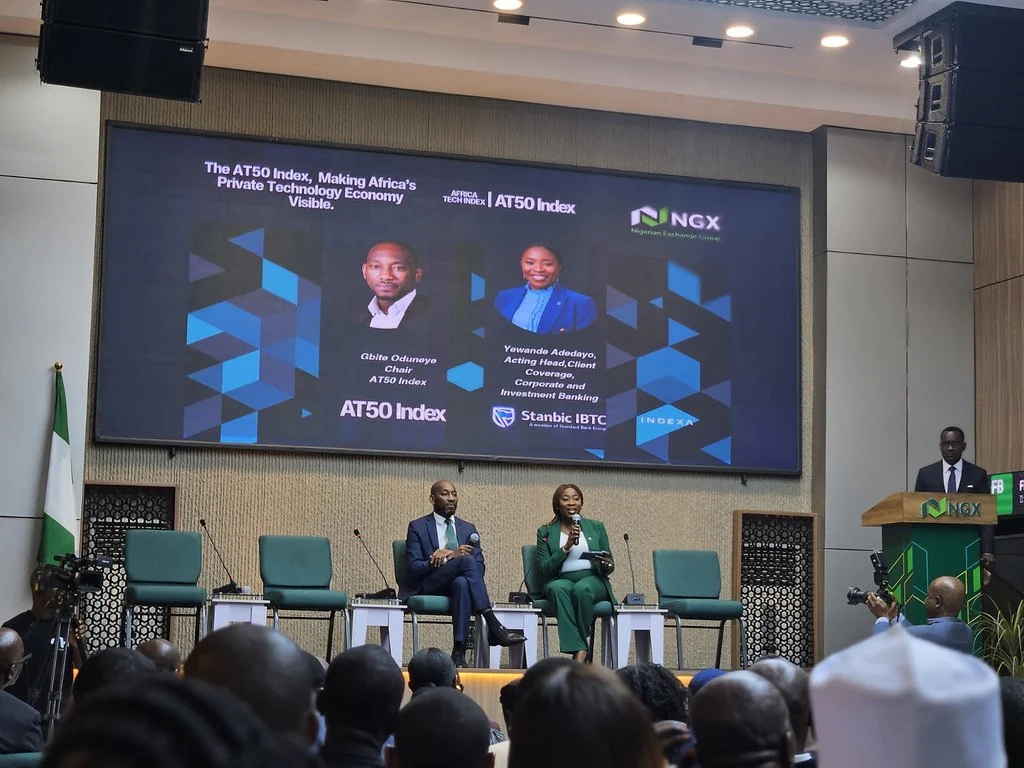
It tracks companies using information on valuation, revenue, expansion, and corporate governance. Its requirements include a minimum valuation of $100 million, an independent board, and independent auditors.
Sixteen of the 50 companies on the index are Nigerian. While the index does not guarantee that these businesses will eventually list, it offers a glimpse of the potential pipeline available to the NGX.
If just three of them—Moniepoint, OPay, and Flutterwave—eventually list on the exchange, they could collectively add approximately $5 billion in cautious market capitalisation.
Moniepoint became a unicorn in 2024. OPay recently reached a $4 billion valuation in a withdrawn IPO, while Flutterwave was valued at more than $3 billion following its latest funding round.
But whether these companies can command comparable valuations on the NGX remains an important question. The valuation question is central to why technology companies may struggle to move from private funding to public markets.
Many have raised venture capital at valuations built around expectations of future growth. Public-market investors, however, are less interested in the promise alone. They want to know whether a company’s revenue, cash flows, and growth prospects justify the price being asked.
Venture capital tends to focus on how large an opportunity could become, while private equity is more concerned with pricing and protecting its capital. Public-market investors also want room for upside, which can make negotiations difficult when a company arrives with high valuation expectations.
“With venture capital in general, you are saying everything works; how big is this opportunity?” Danladi Verheijen, managing partner and chief executive officer at Verod, a growth private equity firm, said during one of Wednesday’s panels.
“Private equity is thinking, if things don’t work, all right, make sure I don’t lose my money. Those are two completely different ways of looking at the world. It therefore means that with private equity, we are typically a bit more cautious, or a lot more cautious, about what we are doing.”
A 2025 report from venture law practice TLP Advisory found that Nigerian public-market investors tend to rely on measures such as price-to-earnings ratios and dividend yields, which may not adequately capture the value of high-growth technology companies. Its calculations suggested that a private technology company valued at $100 million could potentially be worth only $60 million on the NGX.
If TLP’s calculations hold, these fintechs may have to accept a valuation discount of about 40% to list locally. That could be difficult for founders and early investors who have spent years building businesses and raising capital at higher valuations. For early investors, a lower listing valuation could also complicate their exit plans.
Value Wiped Out (40%)
To list on the local exchange, existing investors might have to accept a $40M wipeout in perceived valuation.
TECHCABAL
document.addEventListener(“DOMContentLoaded”, () => {
const slider = document.getElementById(“valuation-slider-v2”);
const valDisplay = document.getElementById(“val-display-v2”);
const barRetained = document.getElementById(“bar-retained”);
const barLost = document.getElementById(“bar-lost”);
const insightText = document.getElementById(“insight-text-v2”);
const presetBtns = document.querySelectorAll(“.tc-preset-btn”);
const formatCurrency = (value) => {
if (value >= 1000) {
let billions = value / 1000;
return “$” + (Number.isInteger(billions) ? billions : billions.toFixed(2)) + “B”;
}
return “$” + value + “M”;
};
const updateCalculator = (privateVal) => {
const ngxVal = privateVal * 0.6;
const loss = privateVal – ngxVal;
valDisplay.textContent = formatCurrency(privateVal);
barRetained.textContent = formatCurrency(ngxVal);
barLost.textContent = “-” + formatCurrency(loss);
slider.value = privateVal;
slider.setAttribute(‘aria-valuenow’, privateVal);
insightText.innerHTML = `To list on the local exchange, existing investors might have to accept a ${formatCurrency(loss)} wipeout in perceived valuation.`;
};
// Slider Event
slider.addEventListener(“input”, (e) => {
updateCalculator(parseInt(e.target.value, 10));
});
// Preset Buttons Event
presetBtns.forEach(btn => {
btn.addEventListener(“click”, (e) => {
const val = parseInt(e.target.getAttribute(“data-val”), 10);
updateCalculator(val);
// Button active state visual feedback
presetBtns.forEach(b => {
b.style.background = “#F6F6F6”;
b.style.borderColor = “#E2E8F0”;
b.style.color = “#4A5568”;
});
e.target.style.background = “#24292F”;
e.target.style.borderColor = “#24292F”;
e.target.style.color = “#FFFFFF”;
});
});
});
One possible solution is to list investment funds or portfolios of companies instead of taking individual startups public. A diversified portfolio could give public-market investors exposure to several technology businesses while spreading the risk of investing in a single company. It could also make an unfamiliar asset class easier for local investors to understand.
“I find that oftentimes the conversation is about taking individual companies public, and my view is, you know, hearing where the market is and what that pipeline looks like, I think it makes sense to start with the funds,” Iyin Aboyeji, general partner and co-founder of Future Africa, an early-stage venture capital firm, said.
No venture capital firm is currently part of the AT50. Aboyeji’s proposal points to a bigger task for the NGX than simply convincing founders to list. The exchange needs to help build the financial products, investor base, and market infrastructure that make investing in technology companies commercially attractive.
Otherwise, it risks becoming a secondary listing destination for technology companies that will seek high valuations in international markets. OPay, for instance, had planned to pursue a secondary listing on the NGX following its proposed New York listing.
The unproven board
The NGX already has a structure designed to attract technology companies. In December 2022, the Securities and Exchange Commission approved the exchange’s Technology Board, which was created to give technology companies a dedicated route to raise capital from the public market.
It has two segments: start-up tech, for early-stage technology businesses, and big tech, for more established companies.
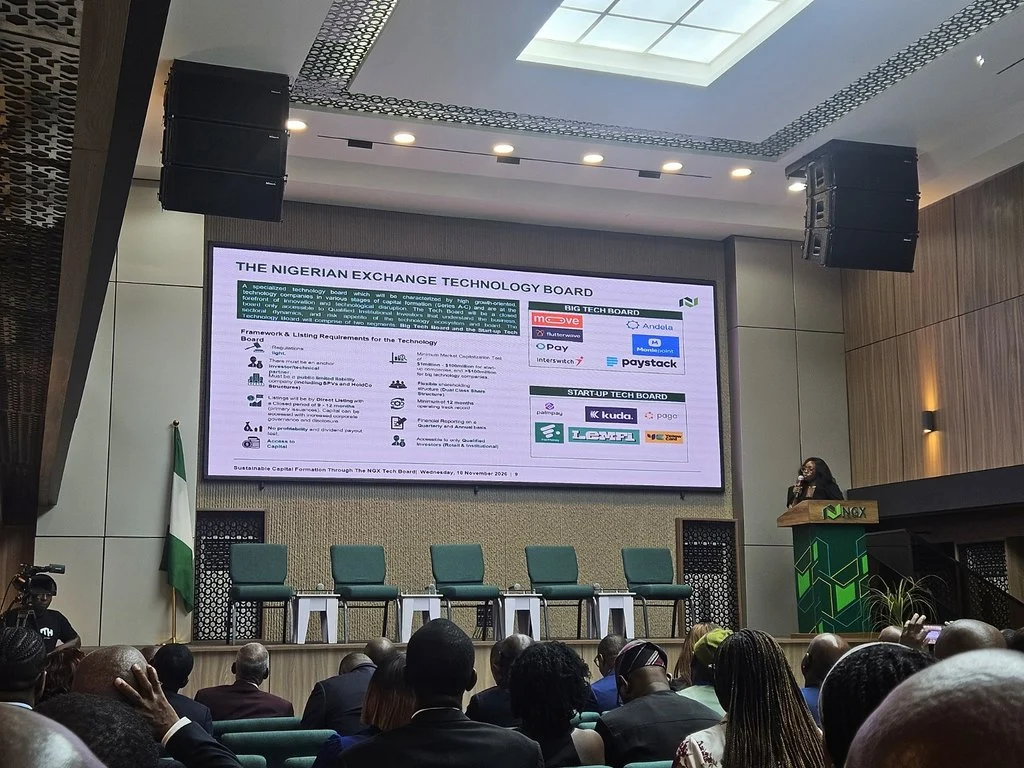
The board has relatively flexible listing requirements, with minimum capitalisation requirements of $1 million to $100 million for startup technology companies and more than $100 million for big technology companies. It also allows these businesses to bypass the NGX’s profitability and dividend payout requirements, although they must have at least a 12-month operating track record.
Yet the board has not produced any listings since its approval. TLP’s 2025 report found that 53% of founders who had not considered an NGX listing simply did not understand how local listings worked or why they should pursue them.
“We are going to build a model where we are going to have a number of these fantastic innovators listing on our local markets,” Gbite Oduneye, chair of the AT50 Index, said. “Then we are going to have to do something that we have not done before, and that is what brings us to an index. An index is more than visibility. It is more than a static list. We want to put capital market infrastructure, like the investment banking companies, the smartest minds in the world, to understand these companies in detail.”
There are reasons for optimism about the Nigerian market. Nigeria was the world’s best-performing stock market in July, with a 67% return in dollar terms, narrowly ahead of South Korea. It is also the second-best-performing stock market in Africa by local-currency returns, behind Zimbabwe.
The NGX has shown in the last two years that it can support significant capital-raising exercises. In March, Nigerian banks completed their largest recapitalisation exercise, raising ₦4.65 trillion ($3.49 billion) over 24 months, including $2.54 billion from local investors.
Dangote Refinery’s $1.6 billion initial public offering also attracted approximately three times its targeted orders. When the company lists, it is expected to add roughly $60 billion to the NGX’s market capitalisation.
These developments suggest that the Nigerian market can mobilise substantial capital when the right investment opportunities emerge. But raising money for established banks and a major industrial company is different from convincing investors to buy into technology businesses whose valuations depend heavily on future growth.
For the NGX, the challenge is to demonstrate that it can offer technology companies competitive valuations, sufficient liquidity, and access to investors who understand their business models.
The AT50 Index is a step towards building that bridge. But visibility alone will not convince Africa’s unicorns to list locally. The exchange must make the economics of listing attractive enough for founders and existing investors to choose it over international markets.
“I am sure a number of these companies will want to list or raise capital locally if it makes sense. So our job is to make it make sense,” Oduneye said.
