

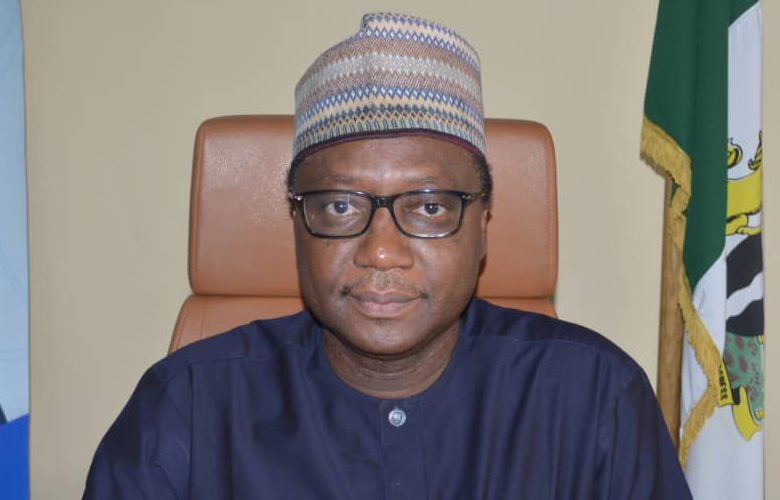
The Revenue Mobilisation Allocation and Fiscal Commission has said the ongoing review of Nigeria’s revenue allocation formula has reached an advanced stage, as it begins a nationwide data verification exercise to update the indices used in sharing revenue across the federation.
The disclosure was contained in a press statement by the Head of Information and Public Relations Unit of the commission, Maryam Yusuf, on Thursday.
Chairman of the commission, Mohammed Shehu, was quoted in the statement as saying, “The Commission is committed to ensuring that Nigeria’s revenue allocation framework reflects the realities on the ground. Accurate data is the backbone of fairness, equity, and national cohesion. This nationwide exercise represents our determination to build a more transparent and responsive revenue distribution system that serves the interests of all Nigerians.”
He noted that the exercise was aimed at reviewing the factors and proxies used in the sharing of revenue among states and local governments, with a view to aligning allocations with current socio-economic conditions.
According to him, credible, verified data remains the foundation of a fair and sustainable revenue allocation system, and the verification process would strengthen fiscal federalism and improve national development planning.
The statement added, “He (Shehu) further disclosed that the current review of the national revenue allocation formula has reached an advanced stage, making the data verification exercise a critical step in safeguarding the integrity and reliability of the indices that will underpin future allocations.”
Shehu also stated that the exercise would have wide implications for fiscal management and balanced regional development, urging state governments, local authorities, traditional institutions, civil society organisations, and community leaders to cooperate fully with the commission’s teams.
The commission explained that the nationwide verification exercise would be carried out across all states and the Federal Capital Territory through a region-by-region rollout, involving the collection, validation, and reconciliation of critical socio-economic and infrastructural data.
It added that the exercise would focus on key indicators such as education and healthcare provision, internally generated revenue capacity, and infrastructure development across states and local government areas.
The commission further stated that stakeholder engagement sessions would be held in each state to promote transparency, build trust, and ensure collaboration among relevant government agencies and local communities.
Shehu said Nigeria’s revenue allocation framework relies on indices including population, landmass, infrastructure, and other socio-economic indicators, stressing that these must be periodically reviewed to reflect changing realities.
“Over time, Nigeria has witnessed significant socio-economic transformations marked by population growth, expansion of infrastructure, urbanisation, and widening development gaps among regions. These evolving realities necessitate the validation of existing datasets to ensure fairness, transparency, and equity in revenue sharing,” he added.
He also noted that the data verification step is critical to protecting the integrity of the indices that will underpin future revenue allocations.
According to him, the commission’s teams would engage extensively with Ministries, Departments and Agencies, as well as local government authorities and community stakeholders nationwide, to ensure that all relevant data accurately reflects present-day conditions.
The commission maintained that the exercise was both a statutory obligation and a strategic initiative designed to strengthen institutional credibility and support evidence-based policymaking.
Earlier in August 2025, PUNCH Online reported that the Revenue Mobilisation Allocation and Fiscal Commission commenced a fresh review of Nigeria’s revenue allocation formula among the federal, state, and local governments, more than three decades after the last adjustment.
At present, revenue distribution stands at 52.6 per cent to the Federal Government, 26.7 per cent to states, and 20.6 per cent to local councils, while one per cent each is reserved for the Federal Capital Territory, ecological fund, natural resources, and stabilisation fund.
About four years ago, the commission presented the report of the review of the vertical revenue allocation formula to former President Muhammadu Buhari.
In the report presented by the former Chairman of the commission, Elias Mbam, in 2022, it was noted that the proposed vertical revenue allocation formula advised 45.17 per cent for the Federal Government, 29.79 per cent for state governments and 21.04 per cent for the local governments.
However, previous attempts by the commission to review and implement a new revenue allocation formula have yet to yield the desired outcome.
