

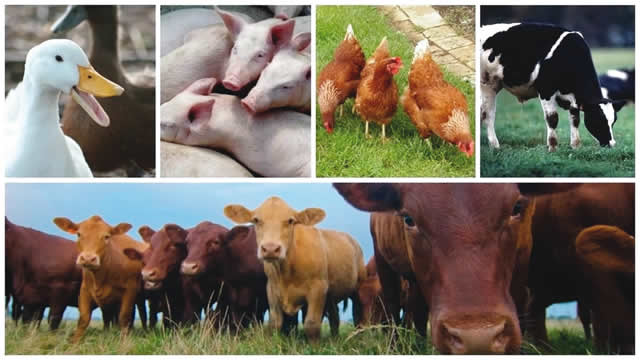
The livestock sector may be on the cusp of transformation as stakeholders rally behind a private sector-led investment drive capable of unlocking up to $3bn in pastoral market opportunities over the next three to five years.
The renewed push comes amid growing consensus among government and industry players on the need for urgent reforms to address longstanding structural bottlenecks that have constrained growth.
The investment drive took centre stage at a three-day high-level forum in Abuja, where producers, processors, financiers, and policymakers convened to negotiate deals, forge supply agreements, and rebuild trust across a fragmented value chain.
The event, organised by the African Union Inter-African Bureau for Animal Resources through its Africa Pastoral Markets Development Platform, is part of a four-year initiative supported by the Gates Foundation to transform pastoral economies into market-driven, inclusive, and resilient systems.
Speaking at the forum, Director, Livestock Extension and Business Development, Federal Ministry of Livestock Development, Shekamang Ayuba, noted that Nigeria holds West Africa’s largest livestock population, with about 54 million cattle and 250 million poultry birds.
The sector, according to him, supports the livelihoods of an estimated 75 million households and contributes roughly five per cent of gross domestic product, valued at about $32bn. Despite this scale, he observed that Nigeria still imports about 60 per cent of its dairy needs, underscoring deep inefficiencies across the value chain.
He explained that the gap between potential and performance is most evident in productivity. “Milk yields from local cattle are less than 10 per cent of global averages, while feed costs account for between 60 and 70 per cent of total production expenses, leaving producers highly vulnerable to price shocks,” Ayuba said.
Ayuba added that the government has begun laying the groundwork for transformation through a mix of policy frameworks and targeted investments. He pointed to the National Livestock Master Plan, developed with support from the Livestock Productivity and Resilience Support Project, the International Livestock Research Institute, and the Gates Foundation, as a comprehensive blueprint addressing systemic constraints from feed supply to animal health and market access.
He further highlighted the National Livestock Growth Acceleration Strategy, which aims to scale the sector into a 74 billion to 90 billion industry by 2035 through partnerships involving state governments, private investors, and international partners under a strengthened federal regulatory framework.
Ayuba noted that the six-year, $500m World Bank-supported L-PRES programme, launched in 2022, is already targeting improved productivity and commercialisation across 20 states, with projected benefits for about 1.43 million people, at least 30 per cent of them women.
“Government alone cannot drive transformation of Nigeria’s livestock sector. The future depends on bold, private sector-led investment across the entire value chain, from feed to processing to market linkages,” he said.
Private Sector Engagement Expert, AU-IBAR, Mohammed Eidie, explained that the Abuja forum was deliberately structured around business-to-business matchmaking, bringing pastoral producers and feedlot operators face-to-face with off-takers and financial institutions to generate concrete, bankable deals.
“We are here to do something different. The APMD Platform exists to ensure that market-driven transformation in pastoralism is not left to chance. What we are facilitating in Abuja is the infrastructure of trust, the handshakes and contracts that make a sector function,” he said.
According to him, the platform is working across three pillars: strengthening private sector participation, improving policy environments, and building robust data systems to support investment decisions, while integrating gender inclusion, youth employment, nutrition, and climate resilience into its design.
“The outcomes we are targeting are specific and measurable, more supply agreements, new financing partnerships, and actionable policy reforms. When this works, it becomes a template that can be replicated across other pastoral economies in Africa,” he added.
The Policy Pillar Lead, APMD, Prof. Ahmed Elbeltagy, said the initiative is positioning Nigeria for stronger economic growth through deeper private sector participation and stronger market linkages.
“The livestock sector holds immense potential and offers significant growth opportunities. Private sector-driven transformation will enhance Nigeria’s competitiveness in regional and international markets while strengthening food security and reducing poverty,” he said.
The Managing Director of ABAT CBD Limited, Raymond Odulate, called for increased support for licensed abattoirs, describing them as the “critical bridge” connecting pastoralists to urban consumers. However, he warned that most facilities are unable to scale due to deep structural constraints.
“Supporting licensed abattoirs is not just about better buildings; it is about creating a safe, traceable and bankable market for thousands of pastoralists. Today, many of these facilities operate far below capacity and cannot attract private investment because the fundamentals are broken,” Odulate said.
He noted that, despite being licensed, abattoirs across the country grapple with unreliable electricity and water supply, forcing operators to depend on costly diesel generators that undermine cold chain systems required for hygienic meat processing. These challenges, he said, significantly raise operating costs and make it difficult to meet export-grade standards.
Odulate also highlighted the growing threat posed by informal and unregulated slaughter slabs, which continue to outcompete licensed facilities by avoiding taxes and health inspections.
“You have a situation where regulated quality is more expensive than unregulated products, and that distorts the entire market. Until this imbalance is addressed, serious investors will remain cautious,” he said.
According to him, access to finance remains another major barrier. He explained that commercial lending rates, often exceeding 25 per cent, are incompatible with the long-term investments required for modern abattoir infrastructure such as automated slaughter lines, cold storage, and waste-to-energy systems. “No serious modernisation can happen under such financing conditions,” he added.
In her remarks, the Operations Manager, SCL Future Food Systems, Mrs Evangeline Yusuf, said the forum is coming at a critical time as the sector seeks reforms aimed at driving incentive-based capital investment through clear operational frameworks.
She emphasised that licensed abattoirs must be transformed into investment-ready hubs to unlock Nigeria’s livestock economy and strengthen pastoral market systems.
