


Nigeria’s health insurance system sits at the intersection of policy promise and everyday frustration. On paper, the framework appears structured, regulated, and steadily expanding toward universal coverage. Yet in practice, many enrollees tell a different story—one marked by unexpected out-of-pocket payments, administrative delays, and confusion over what is actually covered. In this report, DEBORAH MUSA examines the gap between policy and reality in Nigeria’s health insurance system
At first glance, Nigeria’s health insurance landscape appears encouraging. Policies exist, regulatory institutions are active, and millions of citizens are enrolled across various schemes. On paper, the country seems to be making steady progress toward universal health coverage.
Yet beneath this surface optimism lies a persistent and uncomfortable question that continues to echo across households, hospitals, and policy circles: is health insurance in Nigeria truly working, or does it exist more in theory than in practice?
This feature examines the structure, realities, and public perception of health insurance in Nigeria, drawing insights from government institutions, healthcare providers, and—most importantly—the lived experiences of ordinary enrollees.
Promising idea, fragile reality
Nigeria’s National Health Insurance Scheme, now rebranded under the National Health Insurance Authority (NHIA), was founded on a noble idea: universal health coverage. But in practice, critics say noble intentions mean little when implementation falls short.
Some enrollees argue that the system looks like insurance on paper—but functions more like an out-of-pocket payment in reality.
Today, the majority of Nigerians remain uninsured. Even among those enrolled, many still pay at the point of care. Healthcare, for them, remains a personal financial burden rather than a protected right. The result is a system where citizens pay for insurance and still pay for treatment—raising a troubling question: what exactly are Nigerians paying for?
The Federal Ministry of Health and Social Welfare maintains that health insurance in Nigeria is not a failure, but a system in transition.
Speaking through its Assistant Director of Information and Public Relations, Ado Bako, the ministry pointed to the National Health Insurance Authority (NHIA) Act of 2022 as a major milestone. The law made health insurance mandatory and strengthened the regulator’s enforcement powers following the transition from the former National Health Insurance Scheme.
According to the ministry, the long-term goal remains Universal Health Coverage (UHC), where all Nigerians can access quality healthcare without financial hardship.
“Health insurance is not a scam. It is a critical pillar of national development. What Nigerians are experiencing are gaps in implementation, not a failure of the concept,” Bako said.
Reforms underway, coverage still low
At the centre of the system is the NHIA, which acknowledges public scepticism but insists reforms are underway.
Director-General Dr Kelechi Ohiri outlined ongoing interventions, including expansion of coverage through state-supported schemes and the Basic Healthcare Provision Fund (BHCPF), improved payment systems to reduce delays, and stricter monitoring of Health Maintenance Organisations (HMOs).
Despite these efforts, coverage remains low. Fewer than 10 per cent of Nigerians are enrolled in any form of health insurance, most of them in the formal sector. This leaves the vast informal population largely exposed to rising healthcare costs.
“Trust is built over time. We are tightening regulations, sanctioning erring HMOs, and ensuring enrollees receive the services they are entitled to,” Ohiri said.
In the Federal Capital Territory, the Health Services and Environment Secretariat oversees the FCT Health Insurance Scheme (FHIS).
Mandate Secretary, Dr Adedolapo Fasawe, said the scheme has expanded access to healthcare, particularly for vulnerable groups such as pregnant women, children, and the elderly.
She, however, acknowledged persistent challenges, including limited public awareness, referral delays, and disputes between HMOs and healthcare providers.
“We have seen more people seeking care early instead of waiting until conditions worsen. That alone is a major win,” she said.
Hospital realities
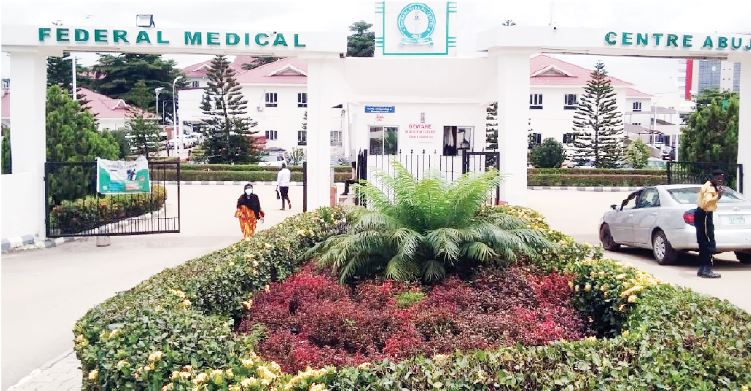
At major public health facilities such as the Federal Medical Centre (FMC), Jabi, and the National Hospital, Abuja, the picture becomes more complex.
Healthcare administrators and clinicians say health insurance has improved patient turnout, especially for routine and preventive care—an indication that the scheme is encouraging early health-seeking behaviour.
However, they also point to persistent systemic bottlenecks. These include delayed reimbursements from HMOs, limited coverage for certain procedures and medications, and gaps between patient expectations and actual insurance coverage.
“At times, we are constrained by what the insurance package allows. Patients often assume everything is covered, but that is not always the case,” said Obadiah Gana, Public Relations Officer at FMC Jabi.
At the National Hospital, Dr Bernard Ikumba added that delayed payments from HMOs place financial strain on healthcare facilities, affecting sustainability and service delivery.
What emerges from Nigeria’s health insurance system is not a simple story of success or failure, but a system caught between ambition and execution.
It is neither a scam nor a fully functioning safety net. It is a structure still struggling to translate policy into protection and enrollment into real financial relief.
Until the gap between coverage on paper and care at the hospital bedside is closed, health insurance in Nigeria will continue to raise one central question in the minds of those it is meant to protect: insured, yet unprotected?
“At times, we are constrained by what the insurance package allows. Patients often assume everything is covered, but that is not always the case,” said Obadiah Gana, Public Relations Officer at FMC Jabi.
At the National Hospital, Abuja, Dr Bernard Ikumba noted that while insured patients benefit from reduced out-of-pocket spending, healthcare facilities often bear financial strain when reimbursements are delayed.
“We are committed to patient care, but sustainability becomes a concern when payments do not come on time,” he said.
Global reality check
Let us step outside Nigeria for a moment.
In the United Kingdom, healthcare is not perfect, but when you walk into a hospital, your first worry is not your wallet.
In Canada, medically necessary services are covered, and patients are not negotiating survival at the billing desk. In Germany, insurance is mandatory, structured, and strictly enforced—you contribute, but you are protected. Even in the United States—often criticised for its costly healthcare system—insurance still offers value: bills are reduced, costs are negotiated, and financial exposure is limited.
Inside Nigerian patients experience
For many Nigerians enrolled in the National Health Insurance Scheme, however, the promise of affordable and accessible healthcare often clashes with harsh realities inside hospital wards.
The experiences of Mrs MaryJane Nwafor and Mrs Chika Emmanuel, two enrollees who sought maternal care at different times, reveal a troubling pattern of alleged extortion, neglect, and systemic inefficiencies that undermine public confidence in the scheme.
Mrs Nwafor’s ordeal began at a federal medical facility where she registered for delivery under NHIS.
Despite fulfilling requirements, including her husband donating blood, she said this did not translate into any relief from the financial burden imposed on her. While in active labour, she was reportedly told that no bed space was available, leaving her unattended for hours despite her worsening condition. Her repeated pleas for help, including requests for referral, were allegedly ignored until her distress escalated and she demanded to be transferred.
When she was eventually referred to Gwagwalada, Mrs Nwafor said the process lacked coordination and compassion. According to her, the receiving hospital was not briefed on her case, nor was there any transfer of payments already made at the initial facility. Still in pain and labour, she was forced to start the process afresh—purchasing delivery materials, paying for services, and even covering the cost of blood she had earlier paid for. She said no refunds were made for previous payments, compounding her physical and emotional distress at a critical moment.
Similarly, Mrs Chika Emmanuel described her experience during childbirth as deeply distressing, marked by what she called relentless extortion and poor service delivery.
According to her, virtually every item and service—from drugs to diagnostic scans—was declared outside NHIS coverage, forcing her family to pay out-of-pocket. She said repeated attempts to question the charges were met with the same response: that NHIS did not cover them. This, she said, left her with mounting bills that eventually exceeded N300,000.
“When I had my son Avoku, the extortion was very high. Honestly, it was a very bad experience for me. I would say NHIS is not existing in that hospital—if it exists anywhere at all. I was horribly extorted,” she said.
She added that during the birth of her second child, the pattern repeated itself, with patients repeatedly told to pay for drugs and services allegedly not covered under NHIS.
“Literally everything, they said NHIS does not cover it. Go and pay for this, go and pay for that. When you push further and say, ‘but this card is from NHIS,’ they will insist you pay. We kept paying until we spent more than N300,000,” she said.
Accountability concerns
Mrs Emmanuel also raised concerns about patient safety and transparency in hospital billing. She recounted receiving multiple blood transfusions under questionable circumstances, which left her feeling critically weak. It was only after a senior doctor intervened, she said, that staff were questioned about the procedure.
She further alleged that payments for blood were made informally to staff through personal accounts, raising transparency concerns. In addition, she cited charges for items such as surgical gowns, utility fees, and delivery kits—costs she believed should have been covered or clearly explained beforehand.
“The thing is, I never knew NHIS covered one bag of blood. They told me the hospital does not give blood—you have to bring a donor. If you don’t have a donor, you pay. Since I didn’t have a donor, I paid N20,000,” she said.
She added that she was later instructed to generate a code for the blood, which further confused her understanding of the billing process.
“I refused to generate any code because I had already paid. That was when I realised something was not right,” she said.
Mrs Emmanuel also described additional charges during admission.
“Surgical gown—N50,000. I have never in my life paid for a surgical gown. Utility bill—N6,000. Delivery bag—over N30,000. So many tests and scans, each time they say NHIS does not cover it. Go and pay N15,000, go and pay N10,000, go and pay N6,000—it was just constant payments,” she said.
The situation escalated when she requested discharge due to rising costs. She was initially presented with what she described as an unexplained discharge bill, despite having already paid for several services. After protesting and threatening to report the matter, she was discharged abruptly without prescriptions. Even then, discrepancies in billing persisted, including charges for items she said she had already paid for.
It was only after involving her Health Maintenance Organisation, which insisted she was not required to make further payments, that she resisted additional charges.
The question then arises: does NHIS actually cover enrollees, or are some hospital staff exploiting gaps in the system by falsely claiming that covered services are excluded?
Together, these accounts paint a troubling picture of gaps between NHIS policy and its implementation in some health facilities.
Beyond the financial strain, both women also described experiences of neglect, confusion, and poor communication at moments when clarity and care were most needed.
For many Nigerians, however, the true measure of the system lies not in policy frameworks or institutional assurances, but in personal experience. Further interviews with enrollees in Abuja reveal a wide spectrum of perspectives, ranging from cautious appreciation to deep frustration.
Mr Adebayo Ogunade, who accesses NHIS services alongside his spouse, described the scheme as helpful but limited. According to him, it provides some level of support for routine and less severe health conditions but falls short when it comes to serious or specialised care.
He pointed to bureaucratic delays as a major concern, particularly the requirement for healthcare providers to obtain approval from Health Maintenance Organisations (HMOs) before administering certain treatments. This process, he said, can be time-consuming and, in emergency situations, potentially dangerous.
“In emergencies, patients are often left on their own because approvals take too long,” he said.
Ogunade also highlighted disparities between public and private healthcare facilities. While private hospitals generally offer faster and more efficient services, they are sometimes reluctant to fully accommodate NHIS patients due to concerns over low reimbursement rates. As a result, patients may still incur significant out-of-pocket expenses even when insured.
His experience reflects broader systemic issues—limited coverage for major illnesses, administrative bottlenecks, inconsistent service delivery, and hidden costs that undermine the value of insurance.
Other enrollees echoed similar sentiments.
Grace Adamu, a civil servant, said the scheme has been beneficial for her family, particularly in covering routine healthcare needs for her children. However, she noted that prescribed medications are not always available under the scheme, forcing patients to make additional payments.
Musa Salma, a private sector employee, described the system as functional but slow.
“It works, but you need patience. Waiting times can be long, and approvals can delay treatment,” he said.
Ngozi Eze, a trader enrolled through a community-based insurance programme, said the scheme helped her during a recent illness but did not eliminate all costs.
“I still had to pay for some tests myself,” she said.
For Ibrahim Taminu, a retiree, the process can be exhausting.
“You go from one desk to another before you finally get attention,” he lamented.
Fatima Bala, a young professional, offered a more balanced perspective.
“I wouldn’t call it a scam. It’s useful, but not perfect. There is still a gap between what is promised and what is actually delivered,” she said.
Beyond these individual experiences, some accounts point to deeper concerns about accountability and service delivery within the system. Reports of unexpected charges, poor communication during referrals, and inconsistent application of NHIS benefits across facilities continue to fuel public scepticism.
In some cases, patients allege being asked to pay for services or items they believed were covered under their insurance plans. Others describe being caught in administrative confusion during referrals, resulting in delays in care and additional financial burden.
While such experiences are not universal, they highlight critical gaps in implementation and oversight that must be addressed if the system is to earn public trust.
Health policy experts note that many of these challenges are not unique to Nigeria. Issues such as coverage limitations, bureaucratic bottlenecks, and funding constraints are common in emerging health insurance systems globally. However, in Nigeria, these challenges are often amplified by weak infrastructure, limited funding, and gaps in regulatory enforcement.
The perception that health insurance in Nigeria is a “scam” is therefore less about deliberate fraud and more about unmet expectations. When individuals contribute to a system but still face significant out-of-pocket expenses or delays in accessing care, confidence in that system naturally erodes.
Addressing this trust deficit will require sustained and coordinated reforms across multiple fronts.
Stakeholders broadly agree on several priority areas.
Expanding coverage to the informal sector is critical, as this group represents the majority of Nigeria’s workforce. Without their inclusion, universal health coverage will remain out of reach.
Strengthening transparency and accountability in the operations of Health Maintenance Organisations is another key priority. Enrollees need clear, accessible information about what their plans cover—and what they do not—to reduce misunderstandings and disputes.
Timely payment of healthcare providers is equally important. Delays in reimbursements strain hospital finances and discourage full participation in the scheme, ultimately affecting service delivery.
There is also a pressing need to deepen public awareness. Many Nigerians still lack a clear understanding of how health insurance works, what benefits they are entitled to, and how to navigate the system.
Finally, technology offers a strong pathway for reform. Digital platforms can streamline enrolment, approvals, claims processing, and data management, reducing delays and improving efficiency across the system.
What emerges from this analysis is a system that is functional but far from optimal. Health insurance in Nigeria is not a scam—but neither is it yet the robust safety net it is intended to be.
