

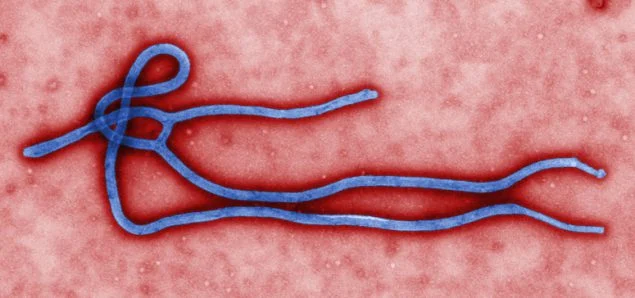
The Pharmaceutical Society of Nigeria has issued fresh public health advisories to pharmacists nationwide following recent Ebola virus outbreaks reported in parts of Central and East Africa.
In the advisory signed on Sunday by the President of the society, Ayuba Tanko, the PSN urged community pharmacies and institutional pharmacy departments to strengthen surveillance and infection prevention measures.
Tanko noted that although the Coordinating Minister of Health and Social Welfare, Prof. Ali Pate, had confirmed that Nigeria had not recorded any Ebola case, pharmacists must remain vigilant because they are often the first point of contact for sick patients.
PUNCH Healthwise earlier reported that the World Health Organisation declared the Ebola outbreak in the DRC and Uganda a Public Health Emergency of International Concern following the spread of a rare strain of the virus with no approved vaccine or specific treatment.
There have been more than 390 suspected cases and at least 100 reported deaths, according to the Africa Centres for Disease Control and Prevention.
So far, there are no confirmed cases of Ebola Virus Disease in Nigeria. The Nigeria Centre for Disease Control and Prevention has assured Nigerians that there is no need to panic.
According to the NCDC, the country has the capacity to combat the disease as it is actively maintaining nationwide surveillance and emergency preparedness measures.
Speaking further, the PSN president stressed the need for pharmacists across the 36 states and the Federal Capital Territory to maintain a high level of suspicion when attending to patients with symptoms associated with Ebola virus disease.
The advisory listed early symptoms to include sudden high fever, severe fatigue, muscle and joint pain, headache, and sore throat, while advanced symptoms could involve vomiting, diarrhoea, skin rashes, kidney or liver impairment, and internal or external bleeding.
“For any patient presenting with sudden fever, always ask about recent international travel history (specifically to East/Central Africa) or contact anyone traveling from those regions within the last 21 days,” the advisory read in part.
The PSN president also directed pharmacies to immediately revive visible hand hygiene stations using soap and running water or alcohol-based sanitisers at all entry points.
He further advised frontline pharmacists and dispensing assistants to use personal protective equipment, including medical masks and disposable gloves, especially when attending to visibly ill patients.
The PSN president added that high-touch surfaces such as dispensing counters, point-of-sale machines, and doors should be disinfected regularly using bleach solutions or alcohol-based wipes.
Tanko also instructed pharmacies to temporarily suspend non-essential invasive point-of-care testing, such as malaria rapid diagnostic tests and random blood glucose checks for patients with unexplained fever.
On self-medication, the PSN president warned pharmacists against indiscriminate dispensing of antimalarial drugs and antibiotics for unresolved fever cases.
“As custodians of medicines, pharmacists must actively discourage the public from self-treating severe symptoms,” he said.
Tanko also urged pharmacists to educate the public against misinformation and unverified remedies linked to Ebola treatment.
“Dispel rumors regarding local herbal cures, excessive saltwater baths, or unverified treatments. Remind the public that early supportive care at a dedicated public health facility drastically improves survival rates,” the advisory added.
The PSN outlined specific steps pharmacists should take if a suspected Ebola case entered their facility, beginning with immediate isolation of the patient from other customers.
He advised pharmacists to avoid direct contact with the patient’s body fluids and to promptly alert health authorities through the NCDC hotline or state epidemiology units.
“Keep the patient isolated and comfortable until the specialized state epidemiologist or emergency response team arrives for safe transport to an isolation center. Do not advise them to use public transportation,” he said.
The PSN president maintained that pharmacists had a critical role to play in preventing any possible outbreak in Nigeria through professionalism, calm response, and adherence to scientific protocols.
“As an indispensable pillar of the healthcare delivery system, our vigilance can prevent an outbreak. Let us lead with professionalism, scientific accuracy, and calm expertise,” Tanko said.
Copyright PUNCH
All rights reserved. This material, and other digital content on this website, may not be reproduced, published, broadcast, rewritten, or redistributed in whole or in part without prior express written permission from PUNCH.
