

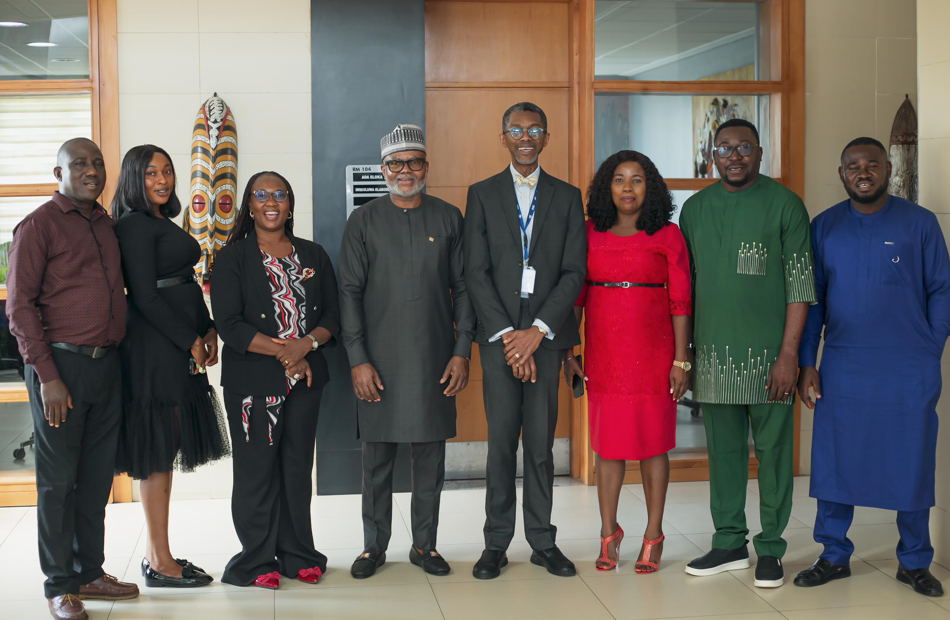
Six journalists from media organisations across Nigeria have begun a six-month fellowship to investigate development interventions, economic opportunities and efforts to address longstanding challenges in the Niger Delta.
The programme, launched on 2 November by the Foundation for Partnership Initiatives in the Niger Delta (PIND) and the School of Media and Communication (SMC), Pan-Atlantic University, is designed to strengthen development journalism and encourage more evidence-based reporting on the oil-rich region.
The initiative comes as development organisations, governments and private-sector actors continue to implement interventions in the Niger Delta, where continuous unemployment, insecurity, environmental degradation and limited economic opportunities have shaped public discourse about the region.
However, PIND said media coverage has often given limited attention to solutions, innovations and measurable development outcomes emerging from communities across the region.
The fellowship, known as the PIND Media Fellows Programme for Narrative Change in the Niger Delta, will combine specialised training, field immersion, access to development evidence and editorial mentorship.
It is expected to equip participating journalists to independently examine interventions in areas including peacebuilding, agriculture, youth employment, renewable energy and economic inclusion.

The programme opened with a five-day residential Impact Journalism Academy at SMC in Lagos, running from 2 to 6 November. The training covers development reporting, solutions journalism, impact storytelling, ethical interviewing, multimedia production and evidence-based reporting.
PIND Executive Director, Sam Daibo, said the initiative was conceived to address the limited attention given to development solutions and progress in the region.
“The Niger Delta’s challenges must be reported honestly, but they should not be its only story. Across the region, communities, businesses and development partners are advancing solutions in peacebuilding, agriculture, youth employment, renewable energy and economic inclusion. This fellowship will help journalists examine those efforts critically, independently and with the depth they deserve,” Mr Daibo said.
He stressed that the programme was not intended to influence editorial decisions or encourage favourable coverage of PIND’s activities.
“Our role is to give journalists greater access to evidence, communities and development practice while respecting their editorial independence. Credible development reporting must remain rigorous, balanced and accountable to the public,” he added.
Ikechukwu Obiaya, dean of SMC, said the partnership would help journalists move beyond reporting activities to examining whether development interventions were delivering tangible results.
“Development journalism requires more than reporting activities. Journalists must be able to interrogate evidence, understand systems, centre community voices and determine whether interventions are producing meaningful change,” he said.
He said the training would combine development journalism skills with practical reporting tools that participants could apply in their newsrooms and field assignments.
PIND’s development interventions
The fellowship draws on PIND’s longstanding development interventions across the Niger Delta, particularly its economic development and peacebuilding programmes.
Established in 2010, the organisation works across the region’s nine states through partnerships with governments, businesses, civil society organisations and communities.
Under its economic development programme, PIND supports agricultural value chains, youth employment, access to finance and renewable energy.
The organisation says its interventions have reached more than 598,000 farmers and microenterprises with improved agricultural practices and market linkages, trained more than 11,000 young people in vocational skills and facilitated access to clean energy for more than 14,000 households and businesses.
Its peacebuilding programme also supports grassroots conflict prevention, community peace structures and initiatives aimed at strengthening collaboration among stakeholders.
An impact evaluation of PIND’s interventions conducted by international consulting firm Dalberg in 2023 found that the organisation’s economic development and peacebuilding activities had facilitated 86,713 jobs and helped mitigate 1,469 conflicts in the Niger Delta. The evaluation examined interventions implemented since 2016.
Some of its recent interventions include partnerships to expand solar mini-grids in underserved communities, support climate-smart agriculture, improve youth employability and strengthen agricultural markets.
In August 2026, PIND, Okomu Oil and ETIN Power commissioned a solar mini-grid in Gbelebu community, while the organisation has also supported solar-powered cold storage facilities to reduce post-harvest losses among farmers in Bayelsa State.
READ ALSO: Group calls for withdrawal of charges against Kaduna journalist
The fellowship will give journalists opportunities to examine such interventions, interact with programme beneficiaries and technical experts, and independently assess their outcomes.
Following the academy, the fellows will undertake field immersion, develop reporting pitches and receive editorial mentorship during the production of their stories.
The six journalists selected for the inaugural cohort are Ekemini Simon of PREMIUM TIMES, Ann Godwin of The Guardian, Isaac Eranga of The Nigerian Observers, Joseph Kunde of TVC News, Kpono-Abasi Jackson of Akwa Ibom Broadcasting Corporation and Jennifer Orugbo of Delta Broadcasting Service.
Beyond the initial six-month programme, PIND and SMC said they intend to establish successive cohorts and build a network of journalists committed to rigorous, balanced and evidence-driven reporting on the Niger Delta.
The initiative marks an attempt to move beyond occasional media engagements towards sustained investment in journalists’ capacity to interrogate development interventions and communicate their actual impact.
Discover more from Premium Times Nigeria
Subscribe to get the latest posts sent to your email.
