

At its deepest level, therefore, “Whose History?” is a question about power. Who has the power to record history? Who has the power to preserve it? Who has the power to classify it? Who has the power to interpret it? Who has the power to teach it? And who has the power to define what the future generations will remember? These are not theoretical queries. They shape how societies perceive themselves and how they envision their future. In other words, the historical archive is also a political site since the ability to control memory can affect one’s identity.
I was impressed by the youth-dominated audience that attended my lecture on archives on 6 October, hosted by the G.A.S. Foundation in Lagos, as part of the MOWAA in Residence fellowship. Space does not allow me to speak elaborately on this public lecture, which attracted significant questions and concerns.
Before engaging with the history in an archive, it is first necessary to come to terms with the history of the archive. In other words, the question is not one of ownership alone. It is, more broadly, a question of power, memory, representation, evidence, silence, and authority. The temptation on approaching an archive looking for Africa’s history is to see the archive as nothing more than a repository of facts. But an archive is never a mere storehouse of facts. An archive is always a construction of history, a choice of what someone has found significant enough to collect, preserve, categorise, and pass on. And it is not an innocent construction.
An archive always reflects its historical context, institutions, technologies, politics, and structures of power. Every piece of documentation has an author, an institution, a purpose, an audience, and an historical context. A colonial report, missionary correspondence, government memo, newspaper, court document, photo, or museum inventory does not provide us with the entire past. It provides us with a representation of the past. For the African scholar, it would be wise to ask not only the question, “What does this document tell us?” but also the questions, “Who is the author, why was the document produced, and what was the structure of power at play here?” This is important because history can never be totally disconnected from the environment that produces it.
This problem is more important when dealing with the colonial archive. Colonial administrations collected immense amounts of data on African societies. Such information included taxation, agricultural practices, education, labour relations, migration patterns, religion, politics, conflicts, movement of population, and resistance. This material cannot be substituted by anything in reconstructing African history. However, it was primarily collected within administrative structures, the primary goal of which was to govern African populations. Africans were often seen in these documents as subjects of classification, measurement, administration, and control, rather than authors of their own history. Words like “native”, “tribe”, “custom”, “chief”, “primitive”, and “civilised” were not neutral terms. They were part of the terminology used by colonial powers to render African societies comprehensible and governable. In this way, colonial sources can tell us a lot about Africa, but also about colonial imagination of Africa.
It is for this reason that the scholarship of African studies, and historians like me, is relevant to anyone interested in the use of African archives. In my previous analysis of the colonial archives of Nigeria, I have made points that we should not approach the colonial archives just as a repository of data but as a product of a certain knowledge and power system. This treatment of the colonial archives in conjunction with other alternative perspectives shows the need to consider the official archives together with other forms of African historical memories such as oral history, indigenous systems of thought, rituals, chronicles, among others. It is not about discarding the colonial archive but considering it within a wider evidentiary world.
This demands, as often pointed out, reading against the grain, which is to do more than grasp the obvious meaning of the document and uncover the voices, experiences, political consciousness, and history hidden behind its language. A colonial official may term a people’s demonstration as a “disturbance.” But then the historian needs to ask himself, disturbance to whom? What caused such disturbance? Is it because of taxation, alienation of land, labour abuse, political marginalisation, religious conversion, or protest against the new administration system? Perhaps the colonial language converted politics into administration. And perhaps the language of the official hides the political consciousness of the people whom he talks about. The archive will reveal much more when its assumptions, contradictions, silence, and omissions are properly considered. At times, what a document fails to say could be just as historically important as what it says.


We must therefore rethink what we mean by an archive. The archive is not simply a room filled with files. A family album can be an archive. A traditional ruler’s palace can contain an archive. A photograph can preserve a history absent from government correspondence. Songs can act as a repository for political memories that span generations. Monuments represent a society’s understanding of its history. Museum objects hold information regarding technology, religion, aesthetics, social organisation, and identity.
This approach to methodology is also directly related to the wider concerns with regard to the sources and methods of African history. Previous works like Sources and Methods in African History: Spoken, Written, Unearthed, edited in collaboration with Christian Jennings, are useful because they combine various types of evidence in the construction of African history. This approach is important in many ways. It cannot be that African history can be constructed on the basis of the documentary record of the colonial administrations alone. Every archive always has its silences. Thus, the issue is not only about what is being stored but who has been silenced as well. Where are the voices of women whose lives were not deemed historically significant? Where are the rural people who could not access the institution of writing? Where are the workers, migrants, artisans, children, minorities, dissidents, religious groups, and common people? What became of the history of people who could not write and whose papers were not seen as valuable enough for storage? The absence of a certain community in an archive does not necessarily mean that the community has not played a historic role. It is possible that the priorities of the institution have led to it.
We must, therefore, resist the perilous inclination to mistake the lack of evidence for evidence of lack. This is where the question of oral history becomes important. African societies have preserved knowledge across generations through oral traditions, genealogies, praise poetry, songs, proverbs, rituals, performances, religious practices, storytelling, and collective memory. The inability to record an event in written form does not mean that the event disappeared from historical consciousness. Orality can preserve dimensions of African experience that official archives never captured. Here, analysis of indigenous knowledge and oral traditions in Nigeria becomes useful.
First, we must focus on the oral traditions as an important source of historical information and indigenous memory, which may be treated as an archive. Consequently, it becomes obvious that African historical studies need to treat the very knowledge systems which were used by African societies to remember and transmit their past. Nevertheless, oral history cannot be idealised. Memories are rather changeable; people often forget, misinterpret, reconstruct, and even transform their memories in accordance with the current needs. Some events become important for families, while other events are neglected. Communities tend to construct competing versions of the same event. Political considerations shape memory, just as institutional considerations shape written documents. The solution here is not to substitute oral tradition for written archives but to put them in dialogue. Contradictions between official documents and oral tradition should not be considered as problems at all. They could turn out to be productive points for historical analysis.
We must therefore rethink what we mean by an archive. The archive is not simply a room filled with files. A family album can be an archive. A traditional ruler’s palace can contain an archive. A photograph can preserve a history absent from government correspondence. Songs can act as a repository for political memories that span generations. Monuments represent a society’s understanding of its history. Museum objects hold information regarding technology, religion, aesthetics, social organisation, and identity. Buildings, fabrics, recordings, movies, maps, court documents, family archives, and even digital materials can turn into historical evidence. The expanded idea of the archive relates directly to questions about the limited ideas about what counts as legitimate knowledge and delves into other types of archives of memory, speech, imagery, pictures, materiality, and native intellectual tradition. It is important to make such an intervention not only because of its political significance but also due to the methodological one. If knowledge takes on many shapes, then the historian needs to develop the capacity to recognise them.
The goal of researching African archives is to give back agency to African history. In other words, Africans were not just the targets of colonialism, governed subjects, and studied people. Africans were thinkers, diplomats, traders, politicians, entrepreneurs, intellectuals, priests, artists, farmers, institutional builders, negotiators, and resistors. Hence, the study of African history is not just about the impact of colonialism on Africa but also about what Africans did in response to colonialism…
The question of archives eventually becomes a question of ownership. Much of the history and culture of Africa exists beyond the continent in European and North American museums, libraries, universities, archives, and private collections. These items from Africa’s past include documentation, manuscripts, photographs, ethnological artefacts, and more that have travelled through a process of colonial extraction and academic collecting. This creates difficult questions. Who owns a document produced during the colonial rule? Who owns an artefact removed from an African community? Who has the right to classify indigenous knowledge? Which group has the authority to categorise indigenous knowledge? Which group has the authority to characterise African cultural materials? Which group has the authority to decide on the return, digitisation, restriction, or exhibition of objects?
Digitisation brings about a further complication into the picture. Digital technology can enable scholars, students, journalists, filmmakers, and communities in Africa to gain access to materials that might not have been previously accessible to them. It can preserve materials that would otherwise fall apart and enable researchers to gain access to materials that might be miles away from them. Digitisation, however, does not necessarily settle the problem of control. Who controls the servers? Who controls the access? Who owns the digital materials? Who creates the metadata? In which language should an African material be described? Does digitisation equal restitution, or will it be just another form of control? Africans, therefore, have to be participants in the process of archiving practices in the future and not merely users of digitised materials.
The historian, therefore, has to be not just a documentarian but an interrogator of documents. Who produced this source? When was it produced? Under what circumstances? For whom? What vocabulary does it employ? What political interests shaped it? What other sources confirm or contradict it? What voices are absent? What does the document reveal unintentionally? What does the document show us accidentally? These sorts of questions make us methodologically humble. We enter the archive prepared not only to confirm something but to complicate our assumptions. Good archival research is not about finding documents that will confirm our thesis. Great archival research allows the evidence to change, improve, and even disprove our thesis.
The goal of researching African archives is to give back agency to African history. In other words, Africans were not just the targets of colonialism, governed subjects, and studied people. Africans were thinkers, diplomats, traders, politicians, entrepreneurs, intellectuals, priests, artists, farmers, institutional builders, negotiators, and resistors. Hence, the study of African history is not just about the impact of colonialism on Africa but also about what Africans did in response to colonialism, about what institutions and ideas existed in Africa before colonialism, and about how they envisioned their futures. In other words, it is for this reason that the archive must not be confined within the walls of public buildings. Historical knowledge must move beyond the university to schools, museums, communities, media; to professionals such as documentary filmmakers and authors; and, most importantly, to the youth. Archival documents can be turned into exhibitions, documentaries, web pages, educational materials, community histories, and dialogues. It is about transforming archival research from a scholarly endeavour to dialogue across time.
At its deepest level, therefore, “Whose History?” is a question about power. Who has the power to record history? Who has the power to preserve it? Who has the power to classify it? Who has the power to interpret it? Who has the power to teach it? And who has the power to define what the future generations will remember? These are not theoretical queries. They shape how societies perceive themselves and how they envision their future. In other words, the historical archive is also a political site since the ability to control memory can affect one’s identity.
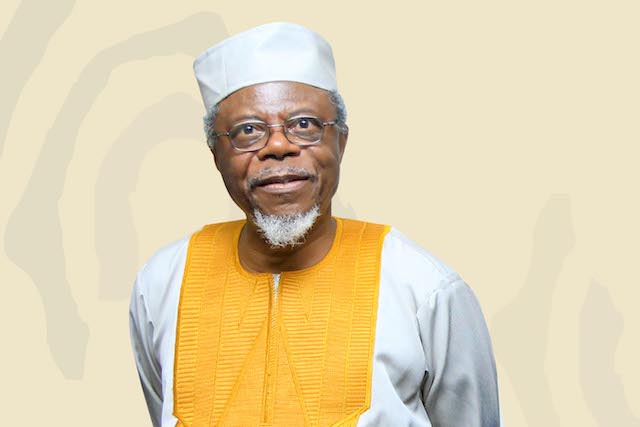
Toyin Falola, a professor of History, University Distinguished Teaching Professor, and Jacob and Frances Sanger Mossiker Chair in the Humanities at The University of Texas at Austin, is the Bobapitan of Ibadanland.
Discover more from Premium Times Nigeria
Subscribe to get the latest posts sent to your email.
