

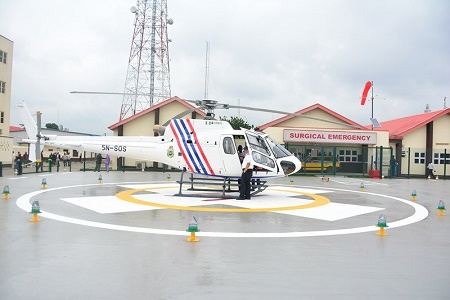

Helidecks are structural platforms on which helicopters land. These are usually on offshore installations and elevated buildings like skyscrapers. There are a couple of safety measures that are part of the helideck, one of them being the tie-down points. These are static fixtures incorporated into the helideck surface to secure an aircraft in place via tie-down straps.
They are often flush with the deck and easily overlooked; these are the primary security against the unpredictable elements of the marine environment. Here are the reasons why helideck tie-down points are critical:
Counteracting possible wind effect: When an aircraft is shut down, high-velocity winds or sudden gusts could create enough force to make the helicopter light on its skids or wheels. Without secure tie-down points, a parked helicopter weighing well over a thousand tons can shift across the deck or, in extreme cases, be flipped over. Tie-down points allow deck crews to secure the aircraft to the structure, effectively making it part of the deck’s own mass.
Managing vessel motion: For Helidecks located on offshore support vessels like DSV and Seismic Survey vessels, the deck is rarely stable.
Vessel motions such as Pitch, roll, and heave can be significant. As the vessel tilts, the gravitational force pulling a helicopter toward the edge of the deck increases. Tie-down points ensure that the aircraft remains centred and stable, regardless of the Sea State.
Safety during maintenance and prolonged parking: When a helicopter remains on a deck overnight or during maintenance, it is at its most vulnerable. While parking brakes are normally engaged, if it fails, this can make the helicopter susceptible to motion. Also, Maintenance crews often need to move around the aircraft or open cowlings that increase the surface area exposed to wind. Secure anchoring points provide the stable environment necessary for engineers to work safely without the risk of the airframe shifting unexpectedly.
Pedestrian and environmental safety concerns: In urban areas, the effect of an aircraft that weighs thousands of tons having an uncommanded motion on a helideck could pose a serious risk to pedestrian safety in the event it falls over.
As many helideck landing sites in developed areas are built on skyscrapers and tall buildings, the hazard raises concerns about the safety of people and property at ground level. The environmental impact of such occurrences can be a nightmare. Hence, should aircraft be left unattended on such helidecks, there should be a rule that requires it to be secured to the helideck.
Regulatory compliance: Recognised International publications such as the UK CAA CAP 437 and others provide certain specifications relating to tie-down points on the helideck. It is also important that national aviation bodies understand its significance. Helideck inspectors who conduct annual inspections should not only audit its inclusion in the helideck but also go a step further in checking if any integrity tests have been conducted on it.
Tie-down points are designed to be recessed to ensure they do not become trip hazards for personnel or snagging hazards for the helicopter’s landing gear. This is very important as the consequences can be severe.
Standardised tie-down points allow for rapid and effective strapping down of the aircraft. Having a well-maintained grid of anchoring points ensures that crews don’t have to hunt for a suitable spot when conditions are deteriorating, allowing them to secure the aircraft in the shortest time possible.
Though often overlooked, tie-down points are one of the safety features embedded in helideck designs and typically part of the structure. They are essentially “helideck anchors” that ensure an offshore mission doesn’t end in a mishap. By adhering to maintenance schedules for these tie-points, ensuring they are free of debris, corrosion and structural fatigue, high standards of offshore safety can be confidently inferred. The role of national civil aviation bodies is very important in ensuring that the integrity of tie-down fixtures and compliance is prioritised.
Okechukwu Onuchukwu, a Helideck/Heliport inspector, writes via [email protected]
