

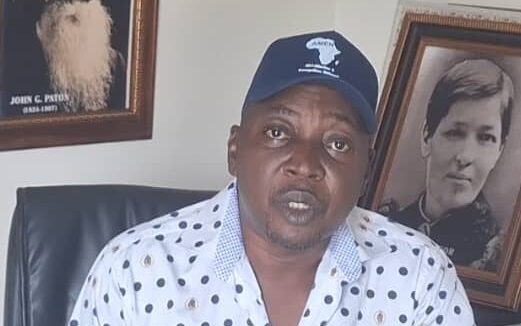
Oscar Amaechina is the president of Afri-mission and Evangelical Network, a missionary group in the north. In this interview, he speaks on the challenges of insecurity in the country and the drivers. He also discusses solutions to stem the tide and what his organisation is doing to contribute to national development.
Excerpts:
PREMIUM TIMES: Afri-Mission and Evangelism Network recently rented apartments for 72 internally displaced families in the FCT and environs. What is the idea behind this initiative?
Oscar: This initiative was born out of an inspiration from the Holy Spirit to go the extra mile in alleviating the challenges faced by displaced families who have lost their homes and livelihoods. The idea came to me when funding was available to implement it. Nevertheless, we chose to faith-forecast, trusting God for provision. Through the generous support of World Outreach Ministry International and Ignited Church, the vision became a reality.
PREMIUM TIMES: How has the ravaging insecurity, particularly in the north, impacted your missionary work in the region?
Oscar: To be candid, it has not been easy working in Northern Nigeria amid the prevailing security challenges. There are areas we can no longer safely access, which has limited some of our outreach efforts. As a result, we are placing greater emphasis on our Diaspora Mission Project as a strategic means of reaching unreached people groups with the Gospel.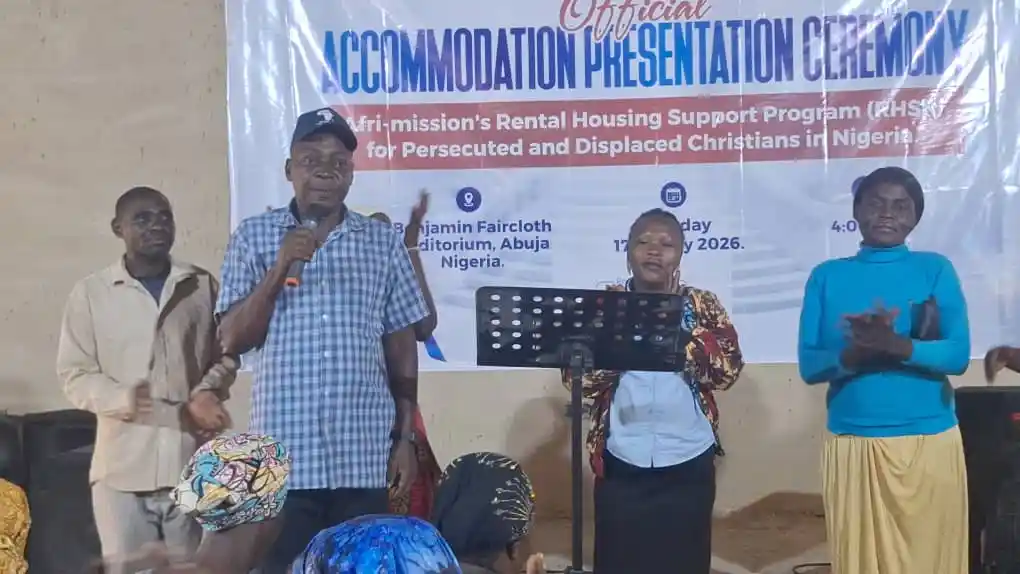
PREMIUM TIMES: Tell us a bit about your missionary activities: the highs, lows, challenges and your outlook.
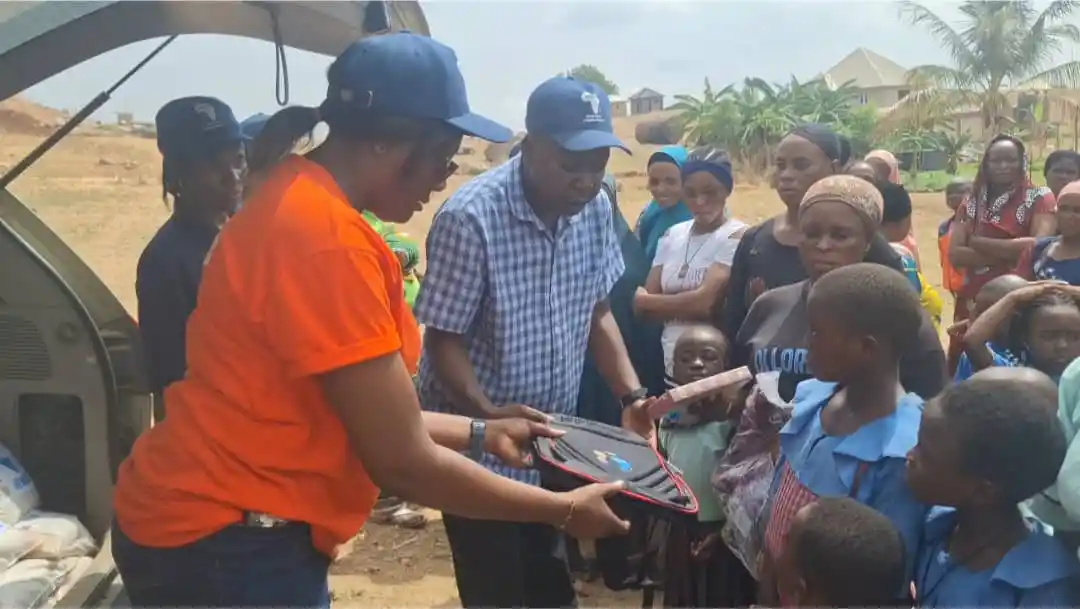
Oscar: I started as a missionary, but I now serve as both a missionary and a humanitarian worker. Initially, I wanted to take the Gospel and the love of Christ to the unreached. Still, upon reaching certain places, my team and I discovered that humanitarian intervention is necessary for people to acknowledge God’s love. We then developed the concept of Feed the Hungry, Clothe the Naked, Clean Water Programme, Education Programme, Orphan and Vulnerable Children Programme, Prison Ministry, Hospital Mission, Skill Acquisition Programme, Widows Project, Beggars Mandate, Micro-loan Discipleship Scheme, and Rental Housing Support Programme for displaced persons. Now we talk less and act more, presenting the love of Christ to the world.

The Highs
One of our greatest joys has been seeing people come to the saving knowledge of Christ through our Gospel and practical acts of love. We have seen widows, abandoned women and single mothers regain hope, children who have not gone to school since they were born are now in school through our educational support programme, displaced families receive shelter and relief assistance, the hungry have been fed, the naked have been clothed, prisoners received relief material and sewing machines for their skill acquisition, hundreds of women received training in Catering and baking and starter kits.
Many of them are doing very well in their businesses today. Our Micro-Loan discipleship scheme has helped hundreds of vulnerable women grow their businesses. Our highs are inexhaustible! Partnerships with Ignited Family and other compassionate individuals and organisations helped us expand our reach and impact.
The Lows
Like many mission organisations operating in Nigeria, we have experienced moments of helplessness and frustration when urgent, pressing needs far exceeded the resources available to us. Watching displaced persons who have lost their livelihoods and are living without adequate support has been challenging. There were occasions when we were forced to postpone or cancel worthwhile projects due to time constraints. Despite these challenges, we remain committed to our mission and continue to trust God for the resources and partnerships needed to serve vulnerable communities effectively. We do not budget by how much we have, but by how much our God can provide.
The Challenges
Our major challenges include insecurity, limited financial resources, increasing humanitarian needs, access to some unreached communities, inflation and rising economic pressures. How to sustain our support for displaced persons, women, and children remains a big challenge for us.
PREMIUM TIMES: There is a school of thought which believes Christians are victims of terrorist attacks and bandits in Nigeria. But it is clear that Muslims are not spared equally from this spate of insecurity and are also victims of attacks. How would you react to this based on your experience in the mission field?
Oscar: Both Christians and Muslims have been victims of terrorist attacks. No one deserves to be killed or persecuted by terrorists for any reason. We believe that God creates every person in His image and likeness and therefore that every person possesses inherent dignity and worth. The undeniable reality is that our nation is bleeding, and the blood is red. It does not matter whether those being killed are Christians or Muslims; every life is precious, and every loss is a tragedy.
When we provided rental housing support for displaced persons who had been driven from their homes by terrorism and were living in uncompleted buildings in Abuja, both Christians and Muslims benefited from the initiative. Our concern is not the religion of the victims but their humanity and their need for support. To address the security challenges facing our nation, all hands must be on deck to combat terrorism, insurgency, and banditry in Nigeria. Only through collective effort, justice, and compassion can we build a safer and more peaceful nation for all.
PREMIUM TIMES: What are the drivers of insecurity in the country, and how can these be addressed?
Oscar: The drivers of insecurity in Nigeria are multi-dimensional and include poverty, unemployment, illiteracy, weak governance, corruption, ethnicity, religious extremism and marginalisation. Climate change and lack of economic opportunities have significantly fuelled insecurity in Nigeria.
Addressing insecurity in Nigeria requires a multifaceted approach that combines improved security measures, job creation, quality education, good governance, climate adaptation, peacebuilding, and community development initiatives. Community and faith-based organisations also have a critical role to play in addressing insecurity in Nigeria. The messages preached in our churches and mosques should promote love, peace, tolerance and reconciliation.
As a missionary and humanitarian organisation, we believe that sustainable peace is achieved when physical needs are met. There is hunger in Nigeria, and it has created serious problems. Many Nigerians go to bed on an empty stomach and have difficulty sleeping at night. Unfortunately, those who are well-fed are also not sleeping at night because many hungry and poor people pick up weapons and move from house to house at night in search of something to eat. Neither the poor nor the rich are sleeping peacefully in Nigeria today.
PREMIUM TIMES: What is the prime motivation for you as a missionary working in the north?
Oscar: My prime motivation as a missionary working in Northern Nigeria is to demonstrate the love of Christ through both word and action. I am compelled by a passion to see lives transformed spiritually, socially, and economically. The immense needs of vulnerable communities, especially those affected by violence, displacement, poverty, and lack of access to education, compel me to serve with compassion and commitment.
I am also motivated by the conviction that every person is created in the image of God and that every soul is precious in the sight of God. We all deserve hope, dignity, and an opportunity to thrive. Seeing lives touched continues to inspire and strengthen my steadfastness in missionary and humanitarian service.
PREMIUM TIMES: How do you fund your activities?
Oscar: Our activities are funded through absolute dependency on God’s provisions. We strongly believe that God’s work done in God’s way will definitely attract God’s sponsorship. God uses those whose hearts are touched by Him to help us do what He has called us to do. He raises donations from individuals, support from churches and contributions from friends of the ministry.
While funding remains a challenge, we strive to use available resources meticulously and efficiently to maximise our impact among displaced persons, vulnerable women and girls, out-of-school children, prisoners, street beggars and the sick. We continue to trust God to raise additional partners and supporters who will join us in this mission.
PREMIUM TIMES: As a missionary, what is the Nigeria of your dream, and what is the pathway to achieving this vision?
Oscar: The Nigeria of my dream is a nation that is secured and terrorism, banditry and insurgency are completely wiped away; where peace, justice, and righteousness prevail; where people of different ethnicities and religions live together in harmony; where there is no discrimination, tribalism and nepotism; a nation where no tribe is superior to others and no one is marginalised; where poverty and hunger are greatly reduced; and where leaders serve with integrity and accountability. It is a Nigeria in which the dignity of every person is respected, and communities flourish spiritually, socially, and economically.
The pathway to achieving this vision includes promoting godly values, working very hard to enthrone a godly and responsible leadership through electoral participation, empowering vulnerable communities, and fostering interfaith dialogue and reconciliation. In the Afri-Mission and Evangelism Network, we contribute our quota by sharing the message of hope, serving communities, caring for the needy, discipling believers, and partnering with others to build a more peaceful and prosperous nation.
PREMIUM TIMES: Tell us the most interesting experience you have had as a missionary.
Oscar: I have had many interesting experiences, but the one that has left an indelible impact on my mind was my encounter with an unreached people group in one of the remote communities in Nigeria. When we arrived in the community, we realised the humanitarian crisis was alarming and decided to mobilise resources to address people’s needs.
The village head, along with some community members, summoned us to a meeting and asked why strangers like us would come into their community to help them. We explained to them that it was the love of Christ that motivated us to help those in need and that Jesus had sent us.
One of them then said, “This Jesus seems to be a very nice person. Whenever you come here, please bring Him with you. We want to know Him and thank Him for His love and kindness toward our community.” That statement allowed us to introduce Christ to them, and they embraced Him. That experience was truly remarkable and remains one of the most memorable moments of my missionary journey.
PREMIUM TIMES: What current projects are you working on as an organisation?
Oscar: We are currently constructing a Skills Acquisition Centre to empower vulnerable women and youth by equipping them with income-generating skills in tailoring, Catering, baking, cosmetology, beauty services, ICT, bead-making, bag-making, and shoe-making. We have almost completed the construction phase and are trusting God to provide the equipment needed to commence operations. We are also working diligently to return 200 out-of-school children who were displaced by insurgency and terrorism to school by September.
In addition, our Feed the Hungry Programme is ongoing and continues to provide much-needed support to vulnerable individuals and families. We recently provided accommodation support to 72 displaced families in the Federal Capital Territory and Nasarawa State, and we are currently working hard to implement the second phase of our 2026 Rental Housing Support Programme.
We are also currently pursuing the Five Million Souls Mandate that was handed down to us by my brother and mentor, Pastor Benjamin Faircloth, who graduated to heaven in February this year in Lavonia, Georgia, United States.
