

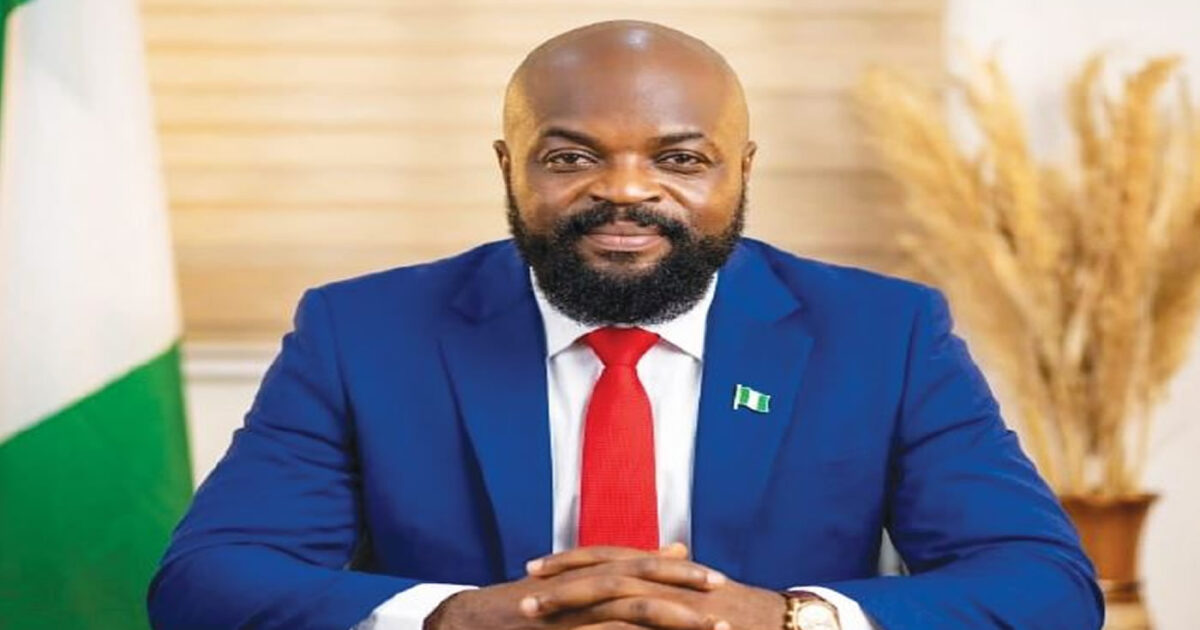
Executive Director of the Gold Minds Leadership Initiative and founder, Veterans with Bookey, Adebukola Olowoyeye, in a conversation with BIODUN BUSARI, shares how growing up in a military environment inspired him to interview and document the experiences of retired Nigerian military personnel
Can you let us into your childhood experience briefly?
I grew up in a military environment, at the Nigerian Air Force Base, Ikeja, Lagos, also known as Sam Ethnan Air Force Base. My father served in the military for 35 years. I attended Air Force Primary School and Command Day Secondary School, Oshodi.
So, I spent about 30 years of my life in that environment. When you spend that long a time in a particular setting, you naturally become shaped by it. In that military environment, we were like the first global village, because the whole of Nigeria was within a confined space.
We had Tiv, Igbira, Igala, Idoma, Igbo, Hausa, and Yoruba all living together in one environment. We co-existed for over three decades. There was also everything you can think of in a society, football, church, and other social activities, all within that same space.
For a long time, many people did not even step outside those four walls. Some lived there for 10 years without ever going to Oshodi market. That shows how self-contained and comfortable the environment was. All of these experiences over 30 years shaped who I have become today.
When I started interviewing veterans, some people criticised me, thinking I was just a civilian trying to trend. But when I posted my father’s pictures from his service years, the criticism reduced. People began to show more respect because they realised I truly grew up in a military environment.
What were the things you saw your dad do that still live with you?
My father served in the military, and as a child, I was part of that system. I watched him wash his uniform after work, lace his boots, and interact with his colleagues. They went to the mess, and we listened to their conversations. Everything around us became part of our upbringing.
This was not just my experience; many children shared it. Some have gone on to become captains of industry, and there are multi-billionaires around the world who also grew up in similar environments.
Did you think of joining the military while growing up?
Anyone who grew up in a military environment will tell you that, at some point, nine out of ten children wanted to wear the uniform. That was all we knew. I was one of those children.
I even wrote the 52 Regular Course entrance examination into the Nigerian Defence Academy twice. It didn’t work out for me, but some of my mates who got in are now colonels. My childhood dream was to become a military officer. For many of us, it was a shared aspiration. It was also a source of pride for our parents when their children got into the NDA.
Only a few of us wanted to become doctors, lawyers, or pursue other careers. For most of us, joining the military was the only career path we knew while growing up in that environment.
Did you eventually serve in the military?
I did something different. Eventually, I discovered that my passion was journalism, so I went back to broadcast school because I realised I love talking and I am naturally inquisitive. I also love history and read extensively.
I once read that when Lord Lugard came to Nigeria, he reportedly found the Sultan of Sokoto solving algebra at the palace. From there, I realised one of Africa’s major setbacks is poor documentation. That is why it is easy to say Mungo Park discovered the River Niger, when in reality, an African may have discovered it earlier, but there was no record.
That became a personal struggle for me and pushed me into journalism that engages with history. I want to document events from the 1960s and 1970s. As fate would have it, I decided to start from home, using my military background to interview and document the experiences of veterans.
Can you shed more light on why you are passionate about interviewing retired military personnel?
I got the idea about six years ago. I have conversations with family and friends, and I know that retired soldiers often share similar experiences. In the Nigerian Air Force, we call ourselves the Air Force family, so there is hardly anything I don’t know about that lifestyle.
The idea came from realising that many retired soldiers feel lonely, and some even die in loneliness. They are not celebrated enough and not adequately admired. That became my vision, to visit them, let them share their experiences, and ensure those stories are properly documented.
When I thought about the logistics of travelling across Nigeria to meet retired soldiers, it seemed challenging. But after much reflection, I began interviewing veterans last year. I had already spoken with some of them personally, and I felt their experiences needed to be preserved. I just believed it was something I could do.
I procrastinated for years until 2025. I started with those within my immediate environment, often buying toiletries and small gift items for them during visits, all from my personal funds. When I began, the first person I contacted declined, but I was not discouraged.
I later reached out to a friend whose father is a retired soldier. He spoke to him, and that became my first documented interview on December 25, 2025. Essentially, I started this journey to celebrate them.
What were the highlights of some of the interviews you conducted with these veterans?
One of my earliest experiences was with a veteran who joined the military in 1967. His emotional response when I presented him with small gifts was unforgettable. Though I know his children are well-to-do and have families of their own, I could see deep appreciation in his eyes. I even replayed the video several times just to fully grasp his expression. That moment became one of my strongest motivations.
Another recurring theme in my interviews is the reason they joined the military. Almost all of them gave similar answers; they felt proud to serve their country. I realised they served Nigeria with genuine pride and joy.
It also gives them happiness when they see someone travel a long distance just to visit and speak with them. For me, that is one of the most motivating aspects of this work.
Life, in my view, should be about impact. That is what I do with these veterans. A life without impact is meaningless. No matter what one is going through, life is about stepping outside one’s comfort zone to benefit others.
I do not have sponsors for this work. I fund it myself, and anyone who understands the cost of such an initiative in Nigeria today will appreciate the sacrifice involved. Yet, I derive joy and pride from making these veterans happy. That is my purpose, and it keeps me going. Purpose requires courage and consistency.
In your experience speaking with these military retirees, what do you think the government should do more to appreciate them?
From my experience interviewing over 35 veterans in just four months, I have realised that Nigeria can improve significantly if we begin to appreciate small but meaningful efforts.
All over the world, veterans are treated with honour and respect. They are celebrated and cared for. When civilians see how military personnel are treated, it inspires them to join the service.
In Nigeria, however, both veterans and active personnel are not adequately appreciated. Sometimes, it is not even about money but recognition. Beyond pensions, the government can do more, such as providing housing, inviting them to Abuja for recognition, and conferring national honours.
These gestures alone can inspire many Nigerians to willingly join the armed forces. A veteran once told me that if soldiers are given homes, they will go to war knowing their families are secure, even if they do not return.
The welfare of military personnel should be a top priority. When that is done, recruitment will no longer be a struggle because people will volunteer naturally. These are not complicated ideas; they are simple, practical steps the government can take.
We should treat soldiers with honour. Even in the United Kingdom, veterans receive subsidies and benefits such as discounted services. That is part of how they are respected.
Was there any time you were frightened about the risks connected to your father’s job?
News of soldiers dying in military bases was common, almost normal, so people were always mentally prepared for the worst. In those days, there were no communication gadgets, so information was not immediate.
I remember vividly, around May 1, 1991 or 1992, there were rumours that my father had died. He worked as a trailer supply officer, moving goods across Nigeria, and had travelled to Maiduguri, Borno State. He was away for days.
A neighbour came to inform my mother that he had died in an accident. The entire environment was thrown into mourning. People visited our home in sympathy. It later turned out that the information was false. My father eventually returned home, and my mother was shocked to see him alive.
Such rumours were common in the barracks, and we always prepared for the worst. I had friends whose fathers actually died, some in accidents, others during military operations, including ECOMOG missions in Liberia, Sierra Leone, and Angola.
During those times, when Nigeria was involved in peacekeeping operations across West Africa, some soldiers never returned. So we grew up with the mindset that any family could be affected.
That is why, when soldiers retire today, there is usually a sense of celebration and gratitude that they served and returned safely.
Do you have any of your siblings in the service?
None of my siblings joined the military. Even our last-born attempted the interview for his set but did not make it through. However, I have extended family members in the service, including uncles and cousins. My father’s immediate elder brother was also a soldier. I also have cousins whom my father helped into the Air Force through his influence.
But trust me, in another life, I would still be a military man because of the discipline it represents.
Are there special traits or lessons that have stayed with you from that environment?
Everything we learned in that environment has shaped who I am today. I once told the Chief of Air Staff during a short interview that the soft skills I use in broadcast journalism were learned from the military barracks.
Growing up there naturally teaches children how to speak boldly and defend themselves verbally. So, it is a common trait for those born in Air Force bases or military barracks to have what we jokingly call “sharp mouths.”
Discipline, neatness, time consciousness, and smartness are values that have stayed with me since childhood. We picked them up directly from that environment.
That is why I sometimes suggest that the federal government should introduce a one- or two-year programme for Nigerian youths, separate from the National Youth Service Corps. It would help instil discipline and other core values.
People that grew in such environment are committed and respect constituted authority. I have friends in Bangladesh who told me that every citizen has a service number. Nigeria could adopt something similar, where citizens go through structured national training. It would promote unity and a stronger sense of belonging.
Look at North Korea, for instance, everyone is defence-minded and puts the nation first.
Don’t you think many Nigerians may disagree with this idea, especially given the insecurity in the country and the fact that even politicians send their children abroad?
If I had the opportunity to speak in the House of Representatives or the Senate, I would say there are certain things everyone should go through. If we are all disciplined and time-conscious, there would be nothing like “African time.”
Some things are just common sense. If the right systems are in place; proper logistics, funding, and if soldiers are paid as well as politicians, trust me, insecurity would reduce significantly, and more people would willingly serve.
Even the children of the elite would not hesitate to join. In England, even members of the royal family serve in the military, so why can’t it happen in Nigeria?
I know the government is trying its best, and leading a country like Nigeria is not easy. But I still hope to see the glory days of the Nigerian military again, when Nigeria was a peacekeeping leader in West Africa.
When I speak with veterans, they often recall their service days with pride, how they were celebrated and honoured in their communities. I hope those in leadership will act quickly to restore that honour.
Away from veterans, you also have an initiative with teenagers. Can you briefly talk about it?
Yes, I started an initiative called the Gold Minds Leadership Initiative, which will be 12 years old on July 31 this year. I work with partners from different parts of the world.
The motivation behind it is to shift attention away from the negative news that dominates Nigeria’s headlines. I wanted to invest in the younger generation because complaints alone cannot solve our problems. We need a mindset shift.
I began by simply posting messages like “God bless Nigeria” and highlighting the positive side of the country. A friend saw it and asked if I had registered it. I said no. Another person also encouraged me to register it as an NGO.
Mahatma Gandhi once said, “If I sweep my street and you sweep yours, the whole world will be clean.” I strongly believe in that philosophy, and that is what drives the initiative.
We go into schools to talk to teenagers about leadership and engage them in mental re-engineering. We also encourage reading, because readers are leaders. Unfortunately, many young people today do not read enough, despite being surrounded by social media. It has become a distracted generation, and we are working to address that gap.
