

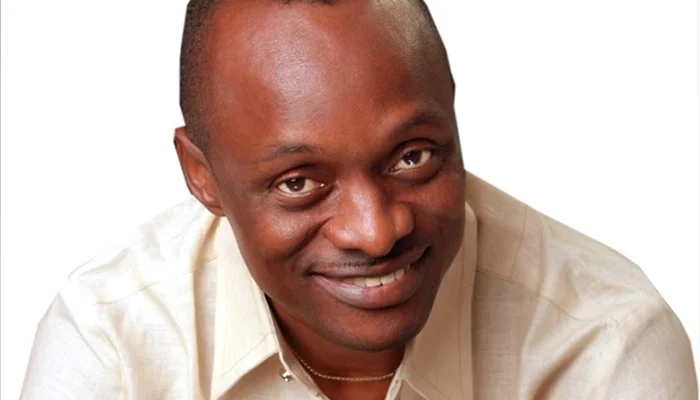
Veteran fashion designer, Mudiaga Enajemo, popularly known as Mudi Africa, tells TOFARATI IGE about his illustrious career, fashion on the continent and other issues
The Mudi brand has been around for decades. What is the newest thing you have up your sleeves?
I recently opened my flagship store in Lekki Phase One, Lagos. The project is almost two years old. That actually took a lot from me. Most times, I prefer to keep my plans close to my chest. People only get to see them after execution. That’s the way I work. I still have a lot of things lined up to do, exhibit and express, but I have to work towards them, pray over them and push until I achieve my goals.
A lot has changed about the fashion space over the years. Which of the changes have surprised you the most?
First of all, the market has really opened up. Demand alone drives innovation and pushes you to keep improving in order to satisfy your customers. Demand is key. When we started about 35 years ago, the market was small. There were no House of Assembly members or House of Representatives members wearing Nigerian clothes, particularly because it was the military era, and officers often wore their uniforms. Back then, people hardly wore Nigerian outfits. But today, they all wear them, and that has helped the industry tremendously.
You have to keep pushing yourself. By the grace of God, our designers are doing well. We have come a long way. There is still room for improvement, but we’ve done well. We operate in a country where you have to struggle on your own. Most times, it is difficult to access funds to grow, establish and expand your business. You have to fight your own battles. So, when I look back at where we started from, I believe we have done well.
On a different note, what are the areas where the industry has not done so well?
It is difficult to project and plan in Nigeria because of the situation of the country. There is so much uncertainty. Even when you have plans to improve, certain things can slow you down, especially resources and funding, which are very important. Also, there is the issue of human management. Sometimes, you want to expand and you have the capacity, but you may not have the right people or staff to help drive your vision. So, there are many challenges. Still, we keep working to improve and get to where we believe we ought to be. By the grace of God, we have done well.
Young people who are not familiar with your brand may not know that you’ve worked with presidents and many top personalities. Can you tell us about the most notable jobs you’ve done in your career?
I have met several top personalities in Nigeria, Ghana, Côte d’Ivoire, Kenya, South Africa and Senegal through what I do. Sometimes, when I look back at the calibre of people I’ve made clothes for, I wonder how I could have met them if not for this job. By the grace of God, I have been able to satisfy them and maintain those relationships.
Can you tell us about some of them and what challenged you most while working on their outfits?
The first president I made clothes for was former Ghanaian President John Kufuor in 2002. I met him through (Musiliu) Obanikoro, who was then Nigeria’s ambassador to Ghana. He (Kufuor) saw what Obanikoro wore to an event and was impressed by the detailing, so he asked to meet me. He bought a plane ticket for me to come to Ghana, where I took his measurements and made some clothes for him. He was so impressed that he ordered 10 additional outfits.
After he handed over (to his successor), I also made clothes for the next Ghanaian president, Atta Mills, before later working with yet another president of that country, John Mahama. I also made clothes for a former Kenyan Prime Minister, Raila Odinga; and Côte d’Ivoire’s former Prime Minister, Amadou Coulibaly.
Beyond politics, I have made clothes for top entertainers and footballers as well.
How do you approach designing for people of that calibre?
Most times, it happens through referrals. Someone sees what I made for another leader and compliments it. They ask questions and eventually invite me over. My tickets are paid for, I travel, take measurements and work with them.
I also study people carefully. I observe their body language and ask questions so I can understand what suits them. I usually create something African but with a touch of Western influence. By the grace of God, I have maintained good relationships with many of the people I have worked with, and I still send clothes to them.
You have also expanded and have branches in other African countries. What has that experience been like?
My first shop outside Nigeria was in Accra, Ghana, and I opened it in 2009. By the grace of God, if you go to Accra today and ask around, many people know the Mud brand. In Ghana, I became the first African designer to advertise on billboards. Even Ghanaians told me I inspired many local designers to start advertising on billboards.
The same thing happened in Côte d’Ivoire; and Nairobi, Kenya. Whenever I set up a shop, I make sure I invest heavily in marketing, because visibility is very important.
Did you face hostilities in the form of xenophobia when operating in a country like South Africa?
Yes, I actually had to shut down my South African shop about four years ago because of xenophobia. One of my staff members — a Nigerian working alongside a South African colleague — was attacked on his way to work. Out of fear, he called his parents and they asked him to come back home.
In all my foreign outlets, I usually employ both Nigerians and indigenes of the country to create balance and also create opportunities for our people abroad.
What about your experience in Ghana?
I have never had issues in Ghana because Ghanaians are very similar to Nigerians in terms of culture and lifestyle. I have been operating there for about 16 years, and my business is still thriving.
Some people still find it hard to believe that fashion designers can become wealthy through tailoring. What do you have to say to such people?
That is a question I get a lot. If you go to Balogun Market on Lagos Island, you will see women who sell fabrics, and who have built houses from that business. You can then imagine what happens when you’re designing clothes for presidents and top personalities.
The problem is the mindset some people have. Many people are still thinking like in the old days when tailoring was viewed differently. Things have changed. Now, we create fashion. People buy ready-made outfits and the market is much bigger. Every state has House of Assembly members and they all wear Nigerian clothes. The market is huge.
Our counterparts abroad own private jets, so why should it sound strange for fashion designers here to succeed financially? Some people speak out of ignorance, while others do so out of envy or jealousy.
At what point did you realise the importance of structure in building a long-term business?
Everything I have achieved came through hard work, consistency and years of experience. Thirty-five years is not a joke. I have paid my dues, learnt from my mistakes and, above all, I enjoy the job. I have spent 35 years doing just one thing. What you put into the work is what you get out of it.
What advice do you have for young fashion designers who want to scale their businesses?
Aside from having flair and passion for fashion, you must know the job. You need drive and discipline. Those four things are essential.
If you enjoy the work, you’ll naturally want to give it your best. Knowing the job means properly learning the craft. The drive is what pushes you to keep improving and promoting your brand. Discipline is also critical. Even at my level, I still get to work by 7am every day. Some young people resume work by 10 or 11am. You can’t build greatness that way.
Was there ever a time you felt tempted to give up?
No, because I genuinely enjoy the work. Right from the beginning, I always believed success was possible. I don’t like saying, “I must make it,” because it sounds arrogant. Instead, I embraced the mentality that success is possible. That mindset has guided me over the years.
I came to Lagos with no capital, no structure and no godfather. When I look back at where I am today, I thank God.
What were your early days in Lagos like?
I came to Lagos in 1990 and settled in Ketu. Because I have always been naturally artistic and needed a platform to express myself, I chose fashion designing. I learnt practical tailoring under an established roadside tailor, so I could understand cutting and proper stitching before opening my own business.
What were some of the toughest challenges you faced in those early days?
Building capital was the biggest challenge. Everything I have achieved came through sacrifice and discipline. You have to save continuously to build.
Every time I opened a branch outside Nigeria, I went broke and had to start saving again. Even after opening my Lekki flagship store, I went broke again and had to rebuild financially.
What legacy would like to leave behind?
Without sounding immodest, I believe I have made history in many ways. I am one of the first Nigerian designers to open outlets outside Nigeria, as well as advertise on billboards in some of those countries.
I also have a street named after my brand — Mudi Lane in Lagos — during Governor Babatunde Fashola’s administration. These are some of the legacies I will leave behind if God calls me home today.
Sometimes I look back and say to myself, “I’ve done well.” But everything has happened through God’s grace.
You once named a collection after former United Nations Secretary-General, Kofi Annan. Why?
The inspiration came to me while I was in Ghana for a fashion show. Since Kofi Annan was a Ghanaian and a globally respected figure, I decided to name the collection after him to capture people’s attention and create excitement around the show.
Over the years, you’ve received many awards. Are there any that touched you deeply?
One that really touched me was an award I received from the Urhobo people during the 100th anniversary celebration of the Urhobo Union. That recognition meant a lot to me.
What are your projections for the future of Nigerian fashion?
The future is bright because the market keeps expanding. People are becoming more fashion-conscious and Africans across the continent are embracing Nigerian fashion. Thirty years ago, the market was much smaller, but today it continues to grow.
What are your succession plans for the business?
My son is interested in fashion, but everything has to go through a process. Growth takes time. He needs to understand the business from the grassroots because fashion becomes spiritual in a way. When you learn from the ground up, working with tailors and understanding mistakes, the craft becomes part of you.
What are some common fashion mistakes you notice these days?
There are many. For instance, wearing hats with agbada is wrong because agbada is traditional while hats are Western. Fashion has rules. You can be expressive and creative, but there are principles you must follow.
The same applies to wearing sneakers with agbada. Formal dressing should remain formal. There is nothing wrong with self-expression, but fashion rules still matter.
Some people still believe the Nigerian fashion industry lacks proper structure. What’s your take on that?
People hold us to foreign standards without considering the realities we face here. Yes, there are global standards we should strive for, but we operate in an environment filled with uncertainty.
You can build structures, but you still need disciplined people to run them. Many times, workers are not focused enough and that affects the systems you’re trying to establish.
It is widely believed that the better a tailor is, the more likely they are to disappoint clients. How true is that?
Sometimes, a client may ask for 10 outfits within two days and, because you have the structure and workforce, you agree. But the next day, two workers may suddenly be absent due to illness or family emergencies. That affects delivery timelines.
As a designer, you can’t always explain these internal issues to clients. You simply have to manage the situation professionally. Nigerian customers are also very sentimental. Many want outfits urgently without considering that you already have other jobs lined up. Sometimes, it’s difficult to say “no”, and when staff issues arise, it affects delivery. It’s usually not intentional; it just happens.
